How to Cook Burger in Oven: A Practical Guide for Home Cooks
Learn how to cook burger in oven with even browning, juicy interior, and simple steps. This guide covers prep, bake times, cheese, toppings, and safety tips from Cooking Tips for home cooks.


By the end, you’ll know how to cook burger in oven to juicy, evenly browned perfection. This guide outlines the key requirements: ground beef (80/20), even patties, a preheated oven around 425°F, and a rack for air circulation. Follow the steps to bake, melt cheese, and rest before serving for best results.
Why oven cooking burgers is convenient
According to Cooking Tips, oven baking offers consistent results with less hands-on time and less monitoring than pan-frying. The Cooking Tips team found that using a wire rack elevates patties, allowing hot air to circulate all around and fat to drain away for a cleaner finish. This method also minimizes splatter and makes cleanup easier, which is especially helpful for weeknight dinners. When you bake burgers in the oven, you get uniform doneness from edge to center and easier control over the final texture. For home cooks juggling schedules, it’s a reliable, stress-free way to serve burgers without turning on the grill.
In addition, starting with the right fat content (about 80/20) helps preserve juiciness during the bake. You won’t need to press the meat to compact it, which can squeeze out moisture and result in a dense patty. With proper prep, oven-cooked burgers can rival grilled results in flavor and moisture.
Understanding heat transfer in the oven
The oven relies on convection (air movement) and radiant heat to cook food. When you bake burgers on a rack, hot air circulates around the patty, promoting even browning and preventing soggy bottoms. Maillard reactions—the crispy, browned surface—happen most effectively at temperatures above 400°F, which is why a hot oven (around 425°F/218°C) is recommended. Proper heat helps seal in juices without overcooking the interior, especially if you aim for a specific internal temperature. If your oven runs hot or uneven, you can rotate the pan halfway through to equalize heat exposure.
Balance heat with time: a shorter bake at a higher temperature creates a crisp exterior while preserving interior moisture, whereas a longer bake at a lower temp risks drying out the patty. Understanding this dynamic helps you tailor burger results to your preferred level of doneness and crust.
Selecting the right ground beef and seasonings
Ground beef with a balanced fat content—about 80/20—is ideal for oven burgers: enough fat to stay juicy, enough protein to set up firmly when baked. If you choose leaner meat, you may need to adjust cooking time or add a small amount of texture-enhancing mix-ins (like grated onion) to maintain moisture. Salt should be added just before cooking to maximize surface flavor without drawing out too much moisture. Pepper, garlic powder, smoked paprika, or onion powder can enhance flavor without complicating the bake. Avoid overworking the meat; gentle handling preserves a tender interior. For a crisp edge, consider a light brushing of oil on the patty surfaces.
Equipment and layout: sheet pan, rack, and parchment
Using a parchment-lined sheet pan with a wire rack promotes airflow and makes cleanup easier. The rack keeps each patty elevated, so fat drains away rather than pooling beneath. If you don’t own a rack, placing patties directly on parchment is acceptable, but you may miss the extra browning on the bottom. A standard large sheet pan provides enough space for 4–6 patties with ample room around each one. A reliable meat thermometer is essential for confirming doneness without guessing. Aluminum foil can be helpful for warming toppings or keeping buns warm while the burgers bake.
Preparing patties for even cooking
Aim for patties about 3/4 inch thick and roughly the same diameter as your buns to ensure uniform cooking. Gently pinch a shallow edge around each patty to minimize puffing in the oven. A light press of salt and pepper on the surface adds flavor, and avoiding mixed-in binders helps the patty retain a proper sear. Do not compress patties too tightly; air pockets inside help keep the interior juicy. If you’re making patties ahead, refrigerate them uncovered for 15–20 minutes to firm the shape before baking.
Preheating and arranging for even heat
Preheat your oven to 425°F (218°C) so the heat is ready the moment the patties go in. This preheat step reduces total bake time and promotes rapid surface browning. Arrange patties on the rack with at least 1/2 inch of space between them to allow air to circulate. Place the rack on the middle oven rack to balance heat exposure from top and bottom. If your oven runs hot, you can start checking earlier to avoid overbrowning the exterior.
Baking times and internal temperature targets
Bake patties for 8–10 minutes on the first side, then flip and bake for an additional 4–6 minutes. Use an instant-read thermometer to confirm an internal temperature of 160°F (71°C). Time can vary based on patty thickness and oven performance, so rely on thermometer readings over color alone. A fast, final 1–2 minute melt of cheese on top is optional but popular for cheeseburgers.
Finishing touches: cheese, toppings, and resting
If using cheese, add slices during the last 1–2 minutes of bake so they melt without overcooking. Remove patties and let them rest 3–5 minutes before assembling to reabsorb juices; this makes the burger juicier and easier to handle. Toast buns in the oven for 1–2 minutes if you like a toasted surface, then layer condiments, lettuce, tomato, pickles, and onions as desired. A quick rest also helps burgers slice cleanly when plating.
Troubleshooting common issues
If burgers turn out dry, that’s a sign of overcooking or using too lean meat; try 80/20 next time and monitor internal temperature closely. If the bottom browns too quickly, move the pan to a lower rack or reduce oven temperature by 25°F and extend the bake time slightly. If patties puff or slump, handle them lightly and avoid pressing during shaping. For uneven browning, ensure patties are of uniform thickness and spaced evenly to facilitate even heat exposure.
Variations: toppings and sauces
Experiment with cheddar, provolone, or pepper jack for different melted-cheese experiences. Try avocado, caramelized onions, sautéed mushrooms, or blue cheese crumbles for bold flavors. A dollop of garlic aioli, smoky ketchup, or chipotle mayo can transform a basic oven burger into a signature dish. You can even swap in different buns—sesame, brioche, or potato rolls—to change texture and flavor.
Food safety and serving guidelines
Ground beef should be cooked to a safe internal temperature of 160°F (71°C) to prevent foodborne illness. Use a clean plate for cooked patties and wash hands after handling raw meat. Serve burgers promptly after resting to preserve texture and moisture. If you’ll keep burgers warm, use a low oven (around 200°F) or a warming tray, but avoid holding too long, which can dry out the patty.
Quick reference: checklists and cheat sheet
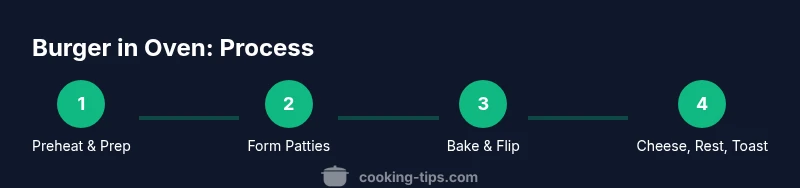
Checklist: preheat to 425°F, line pan with parchment, place pats on a rack, bake 8–10 min, flip, bake 4–6 min more, add cheese, rest 3–5 min, toast buns 1–2 min, assemble and serve. Cheat sheet: target 160°F internal temp, use 3/4 inch patties, space evenly, keep toppings simple for best flavor. “When in doubt, thermometer out.”
Tools & Materials
- Ground beef (80/20 lean-to-fat ratio)(1/4–1/3 lb per patty; uniform portions aid even cooking)
- Salt(Kosher salt or fine table salt; salt just before cooking)
- Black pepper(Freshly ground if possible; optional aromatics)
- Buns(Split and toast if desired)
- Oven (preheated to 425°F / 218°C)(Preheat 10–15 minutes before baking)
- Parchment paper or silicone mat(Line the sheet pan for easy cleanup)
- Wire rack (optional)(Elevates patties for better air circulation)
- Baking sheet(Large enough for 4–6 patties with space between)
- Meat thermometer(Confirm 160°F (71°C) internal temperature)
- Spatula or tongs(Turn patties safely without breaking them)
- Cooling rack(Rest burgers after baking without soggy bottoms)
- Cheese slices (optional)(American, cheddar, or preferred cheese)
Steps
Estimated time: 45-60 minutes
- 1
Preheat oven and prep workspace
Set the oven to 425°F (218°C) and allow it to preheat fully. Line a sheet pan with parchment and place a wire rack if you have one. This setup promotes even browning and makes cleanup easier.
Tip: Preheating ensures the first contact with heat starts browning immediately. - 2
Form patties to uniform thickness
Gently shape each patty to about 3/4 inch thick and the same diameter as your buns. Avoid overworking the meat; handling too much can create a dense burger. If you’re making multiple patties, keep them individually shaped.
Tip: Consistency is key—similar thickness means even cooking. - 3
Season patties on all surfaces
Season both sides with salt and pepper (and any preferred dry spices) just before cooking. This preserves surface moisture and enhances crust formation during baking.
Tip: Season at the end of shaping to prevent drawing out excess moisture. - 4
Arrange patties on rack with space
Place patties on the rack-lined sheet pan, ensuring at least 1/2 inch of space between each. Proper spacing allows hot air to circulate for uniform browning.
Tip: Avoid crowding; air needs room to move. - 5
Bake patties for 8–10 minutes
Bake the patties until the edges are starting to brown and the interior is cooking through. Rely on a thermometer rather than color alone to judge doneness.
Tip: Time helps, but internal temp is the truth. - 6
Flip patties halfway through
Turn patties halfway through the bake for even browning on both sides. This prevents one side from drying out and guarantees a consistent crust.
Tip: Use a gentle flip to keep patties intact. - 7
Add cheese in the last minute
If using cheese, place slices on tops of patties during the final 1–2 minutes so they melt smoothly without burning.
Tip: Cheese should melt, not burn. - 8
Rest patties and toast buns
Remove patties and let them rest 3–5 minutes. Toast buns in the hot oven for 1–2 minutes if you like. Resting helps redistribute juices for a juicier bite.
Tip: Resting prevents juices from all rushing out when you bite. - 9
Assemble and serve
Top patties with your favorite sauces and toppings, then assemble on warm buns. Serve promptly to enjoy the best texture and temperature.
Tip: Keep toppings simple to let the patty flavor shine.
Quick Answers
Can I use frozen hamburger patties in the oven?
Yes, you can bake frozen patties, but expect longer cook times and verify doneness with a thermometer. Thawing first yields more even cooking and juicier results.
You can bake frozen patties, but thawing first gives you more even cooking and juicier burgers.
What temperature should I bake burgers at?
A hot oven around 425°F (218°C) is ideal for browning and good interior doneness. Lower temperatures can dry out the patty even with longer cooking.
Bake at about 425 degrees for great browning and juicy interior.
Do I need to flip the burgers halfway through?
Yes, flipping halfway helps even browning on both sides and prevents one side from overcooking. Use a gentle turn to keep patties intact.
Yes, flip halfway for even browning.
How long should I bake burgers if they’re thick?
Thicker patties may require an extra 2–4 minutes per side. Always rely on a thermometer to reach 160°F (71°C).
Thicker patties may take a bit longer; check with a thermometer.
Can I bake burgers without a rack?
A rack is ideal, but you can bake on parchment directly. Space the patties and flip halfway to simulate airflow from a rack.
A rack is best, but parchment works too if you space the patties properly.
What toppings go best with oven-baked burgers?
Classic toppings like lettuce, tomato, onions, pickles, and cheese complement the beef. Sauces should enhance, not overpower, the patty flavor.
Classic toppings pair well; keep sauces balanced.
Watch Video
Top Takeaways
- Preheat to 425°F for browning and safety.
- Form patties to uniform thickness; don’t overwork the meat.
- Use a rack or space patties to promote airflow.
- Check internal temperature to 160°F before serving.
- Rest and toast for best texture and flavor.