How to Cook Burgers on a Grill: The Complete Guide
Master juicy, evenly cooked grill burgers with a step-by-step method. Learn patty prep, heat control, doneness targets, bun toasting, toppings, and safe handling for restaurant-quality results at home.


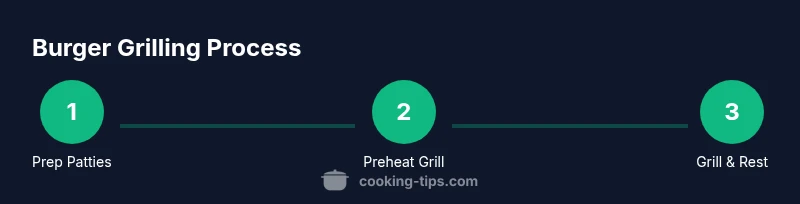
By following this guide, you will learn how to cook burgers on a grill that are juicy, evenly cooked, and well-seared. You’ll cover patty prep, grill heat management, timing, bun handling, and toppings, with safety tips and temperature targets. This step-by-step approach helps home cooks achieve restaurant-quality results on any outdoor grill.
Choosing the right beef for burgers
When you start with quality fat and meat, the burger can shine on the grill. Many home cooks prefer an 80/20 blend (80% lean, 20% fat) because the additional fat helps create a juicy interior and a flavorful crust. According to Cooking Tips, fat content is the single most important factor for juiciness, but you should also seek fresh beef from a reliable source and handle it gently to avoid tough patties. If you buy pre-formed patties, choose ones with visible fat marbling and a uniform thickness for even cooking. Ground beef from a trusted butcher or grocery store can be a good option, but you’ll get better control over texture if you grind your own from trim when possible. Keep the meat cold until you’re ready to shape; warmth can make fat seep and result in a flattened patty.
Ground beef vs. pre-formed patties
There are two main paths to burgers: grinding fresh beef at home versus using ready-made patties. Grinding allows you to control fat content, salt distribution, and texture, which can lead to a juicier burger. If you opt for pre-formed patties, look for consistent thickness and avoid fillers that can dry out on the grill. Regardless of approach, aim for patties around 3/4 inch (2 cm) thick to balance sear time and internal doneness. The Cooking Tips team notes that consistent patty thickness prevents hot spots that overcook edges while leaving the center underdone. 🧂
Patties: size, thickness, and handling
Form patties with care to avoid dense, compact meat. Lightly shape each patty to about 3/4 inch thickness and gently thumb a shallow dimple in the center to prevent bulging as it cooks. Handle as little as possible to keep the fat molecules intact and maintain juiciness. Don’t compress the surface too firmly; a looser surface helps the Maillard reaction form a crust. Salt and pepper just before cooking to maximize flavor and minimize moisture loss, unless you’re aiming for a saltier crust.
Seasoning and patty prep
Seasoning brings flavor without overwhelming the beef’s natural taste. A simple approach is to salt first (just before grilling) and add pepper right before the patty hits the grill. If you’re using garlic powder, onion powder, or paprika, sprinkle lightly so those flavors don’t dominate. For extra flavor, you can mix a small amount of grated onion or fresh herbs into the surface, but avoid mixing too deeply. Remember: the goal is a crusty exterior with a juicy interior, not a flavor-packed interior that overpowers the beef.
Grill setup and heat management
Preheating the grill is essential for a good crust. Aim for medium-high heat (roughly 425–475°F / 220–245°C) for gas grills, or hot charcoal banks with even distribution for charcoal grills. Clean the grates to remove old residue that could cause sticking or off flavors, then oil lightly with a high-heat oil to prevent sticking. If you see flare-ups, move patties away from the flames and control the air flow to settle the fire. Maintaining consistent heat is more important than chasing a perfect surface crust in a single moment; the crust forms as you maintain temperature.
Grilling technique: sear, flip, and internal temperature
Place the patties on the grill and resist the urge to press down with the spatula; this pushes juices out and dries the burger. Sear for about 2–3 minutes per side to form a crust, then flip once and cook to the target internal temperature. For safety and texture, aim for an internal temperature of 160°F (71°C) for ground beef. If you’re using cheese, add a slice during the last minute of cooking and close the lid to help it melt evenly. A well-seared exterior paired with a juicy interior is the hallmark of a great grilled burger.
Buns, toppings, and bun-toasting
Toast buns cut-side down on the grill for 1–2 minutes until lightly golden. Toasting adds texture and prevents soggy buns caused by juicy patties. Prepare toppings like lettuce, sliced tomato, onions, pickles, and condiments beforehand. A classic build includes a dollop of mayo or sauce, the burger patty, cheese if desired, and toppings that complement the beef’s flavor without masking it. Freshly toasted buns and a balanced topping combination elevate the overall eating experience.
Resting, assembling, and serving
Let the burger rest for a brief moment after removing from the grill; this helps redistribute the juices. Assemble promptly to preserve heat and texture, starting with a base sauce or spread, then the patty, cheese, toppings, and the top bun. Serving with a simple side like crisp fries, slaw, or a light salad can round out the meal. For meal prep, consider keeping toppings separate and assembling at the table to maintain texture and freshness. A rested burger with a crusty exterior and juicy interior is the ideal outcome.
Safety, cleaning, and leftovers
Practice safe grilling by keeping raw meat separate from ready-to-eat foods and washing hands after handling beef. Clean the grill grates after cooking to prevent cross-contamination and to maintain flavor. Store leftovers in a sealed container in the refrigerator for up to 3–4 days, or freeze patties for longer storage. Reheat gently to preserve moisture and flavor. Following these safety steps keeps grilling enjoyable and food-safe for future meals.
Tools & Materials
- Ground beef (80/20 blend)(About 1/4–1/3 lb per patty; keep cold until shaping)
- Salt(Kosher salt preferred; season just before grilling)
- Ground black pepper(Freshly ground if possible)
- Buns(Split and lightly toasted)
- Cheese slices (optional)(Cheddar, American, Swiss, etc.)
- Toppings (lettuce, tomato, onions, pickles)(As desired to suit taste)
- Grill or grill pan(Gas or charcoal grill works)
- Instant-read thermometer(Target 160°F / 71°C)
- Spatula and tongs(For flipping and handling patties)
- Oil spray or high-heat brush(Lightly oil grates to prevent sticking)
- Ice water or resting plate(Optional rest after grilling)
Steps
Estimated time: 30-40 minutes
- 1
Prepare and portion the meat
Keep the beef cold and portion into even, manageable pieces. Lightly form each portion into a loose ball, then gently flatten into discs of about 3/4 inch thickness. Handling should be minimal to preserve moisture and texture; overworking makes the patties dense.
Tip: Keep meat cold and use a light touch to preserve juiciness. - 2
Shape patties with even thickness
Create uniformly thick patties (about 3/4 inch) with a shallow center dimple. The dimples help prevent bulging as the fat renders, ensuring even cooking from edge to center. Do not compress the patty excessively; a looser surface helps browning.
Tip: A gentle touch preserves structure and juiciness. - 3
Preheat the grill
Preheat your grill to medium-high heat (approximately 425–475°F / 220–245°C). A hot grill starts the crust formation quickly, locking in juices. Clean and oil the grates lightly to prevent sticking and promote a clean sear.
Tip: A properly heated grill yields better crust and flavor. - 4
Season patties just before cooking
Season patties with salt and pepper just before they hit the grill. Salt too early can draw out moisture, while waiting too long can limit flavor absorption. If using additional spices, apply a light dusting so flavors remain harmonious with the beef.
Tip: Seasoning at the right moment preserves moisture and enhances crust. - 5
Grill patties and avoid touching
Place patties on the hot grill and avoid pressing them with the spatula. Let the crust form for about 2–3 minutes, then flip once using a steady motion. Cook on the second side until the internal temperature reaches 160°F / 71°C.
Tip: Only flip once to maximize crust and juiciness. - 6
Add cheese and toast buns
If using cheese, lay a slice on each patty during the final minute of cooking and close the lid to melt. While the burgers rest briefly, toast buns cut-side-down for 1–2 minutes until golden and crisp.
Tip: Melted cheese and toasted buns add texture and flavor balance. - 7
Rest, assemble, and serve
Allow burgers to rest for a few minutes after grilling to redistribute juices. Assemble with sauces, toppings, and the toasted buns. Serve immediately with your preferred sides for the best experience.
Tip: Resting improves juiciness and flavor perception. - 8
Safety, cleaning, and leftovers
Keep raw beef separate from ready-to-eat foods and wash hands after handling. Clean grates after cooking and store leftovers in a sealed container in the fridge up to 3–4 days; freeze for longer storage if possible.
Tip: Clean workspace and tools to prevent cross-contamination.
Quick Answers
What is the best beef fat ratio for grilled burgers?
An 80/20 blend (80% lean, 20% fat) yields a juicy burger with a good crust. Leaner mixes dry out more easily, especially on a hot grill. If you prefer lighter burgers, adjust fat to 85/15 and monitor cooking times closely.
Use an 80/20 beef mix for juiciness; adjust if you want leaner burgers.
How long should burgers cook on a gas grill?
Aim for about 3–4 minutes per side for medium doneness, depending on patty thickness. Use a thermometer to confirm 160°F (71°C) in the center.
Around 3 to 4 minutes per side, check with a thermometer for 160 degrees.
Should I salt the burgers before or after grilling?
Salt just before cooking to maximize flavor without drawing moisture. If you salt earlier, pat dry the surface gently before grilling to maintain a crust.
Salt right before grilling for best crust and flavor.
Do I need to rest burgers after cooking?
Yes, a brief rest (2–3 minutes) helps juices Redistribute and improves mouthfeel. Slice or serve promptly after resting.
Let them rest a few minutes before serving.
Can I grill burgers indoors?
Yes, using a grill pan or broiler can mimic outdoor grilling. Ensure good ventilation to manage smoke and monitor heat closely.
You can grill burgers indoors with a grill pan or broiler.
How do I know when burgers are safe to eat?
Check the internal temperature with an instant-read thermometer until it reaches 160°F (71°C). Trim fat carefully and avoid pink meat for safety.
Check with a thermometer to 160 degrees.
Watch Video
Top Takeaways
- Choose an 80/20 beef blend for juiciness.
- Season patties just before grilling for best flavor.
- Flip once and monitor internal temperature carefully.
- Toast buns for texture and assemble quickly.
- Rest briefly before serving to lock in juices.