How to Cook a Strip Steak: The Complete Guide
Learn how to cook a strip steak to a perfect sear and juicy center using skillet, grill, or oven finishes. This comprehensive guide covers doneness, seasoning, timing, resting, and common mistakes, with tips from Cooking Tips to help you achieve restaurant-quality results at home.


By the end you’ll learn how to cook a strip steak to a perfect sear and juicy center using a skillet, grill, or oven finish. This guide covers doneness targets, timing, seasoning, and resting, plus practical tips to avoid overcooking. You’ll gain step-by-step techniques, tool choices, and reliability for consistent, restaurant-worthy results at home.
Why this cut shines for home cooks
The strip steak, commonly called the New York strip, is a favorite for home cooks because it balances rich beef flavor with tender texture and consistent results. If you’re unsure how to cook a strip steak effectively, this guide provides a straightforward approach that works with pan-searing, grilling, or an oven finish. According to Cooking Tips, its modest marbling means you can achieve a superb crust without overcooking the interior. The Cooking Tips team has found that the key is starting with a very hot pan or grill, patting the surface dry, and avoiding frequent flipping. With those basics, you can reproduce a restaurant-style crust at home. Expect a crusty exterior, juicy center, and reliable doneness every time.
Choosing the right strip steak and buying tips
When you’re deciding how to cook a strip steak, thickness is a major variable. Look for a boneless strip about 1 inch to 1.5 inches thick with even marbling. The marbling determines flavor and how forgiving the cut is when you hit a slight overcook. For best results, choose steaks that are bright red with creamy-white fat edges and minimal discoloration. If you see moisture pooling on the surface, pat it dry before cooking to promote crust formation. Freshness matters, but a well-marbled steak from a reputable butcher or grocer will yield the best crust and tenderness. Always let the steak rest after purchase to come closer to room temperature before cooking.
Essential tools and kitchen setup
A reliable sear starts with the right tools. A heavy cast-iron skillet or heavy-duty stainless pan is ideal for even heat distribution and crust formation. Have tongs, an instant-read thermometer, and a small amount of high-heat oil on hand. Salt and pepper are your primary seasonings, with butter or aromatics optional for baste. Ensure your cooking surface is clean and preheated; a hot pan is essential for a fast, flavorful crust. If you’re grilling, preheat the grill to high heat and clean the grates. Prep counter space for a quick motion sequence—this helps maintain temperature and prevents overcooking.
Seasoning and flavor building
Seasoning should begin with a generous coating of kosher salt and freshly ground black pepper. Salt early enough to dissolve and season the surface, but not so long that it dries out the meat. Some cooks like a light spice rub or a hint of garlic powder, but simplicity often yields the best crust and beef flavor. If you choose to sear in butter, add it during the last minute of cooking to prevent burning and to impart a rich, toasty aroma. Finally, consider finishing with a touch of compound butter or a drizzle of the pan juices for extra richness.
Cooking methods overview: skillet, grill, oven finish, reverse sear
Pan-searing in a hot skillet creates a deep, caramelized crust and juicy interior. Grilling imparts smoky char and a slightly different texture, while finishing in the oven is ideal for thicker cuts. A reverse-sear approach—low-and-slow in the oven followed by a final sear—offers precision for thick steaks. Each method requires high heat to establish a crust, then a period of heat management to approach the desired internal temperature. Choose your method based on steak thickness, equipment, and preferred crust vs. smoke flavor.
Step-by-step plan overview for thick cuts
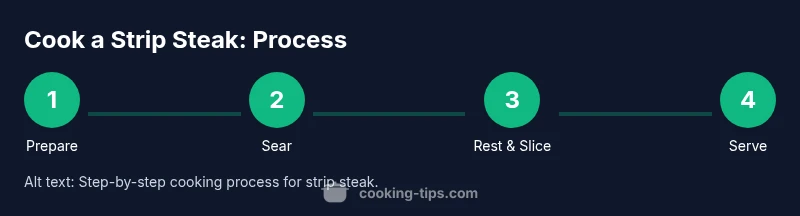
Thick strip steaks benefit from a deliberate plan: warm the meat, dry it thoroughly, season evenly, preheat the cooking surface, sear on one side without moving, flip and baste if using butter, and finish to target internal temperature. Use a thermometer to monitor doneness and anticipate carryover heat. For thick cuts, finishing in the oven after a good crust can ensure even doneness without charring the crust. Resting is essential to redistribute juices and maintain a juicy interior.
Temperature targets and carryover
Common targets for strip steak are in the range of 120–125°F for rare, 130–135°F for medium-rare, 135–145°F for medium, 150–155°F for medium-well, and 160°F+ for well done. Remember carryover warmth can raise the final temperature by about 5–10°F after removal from heat. To avoid guessing, rely on an instant-read thermometer and pull the steak from heat a few degrees shy of the final target. For even thickness, use consistent heat and avoid crowding the pan to ensure uniform doneness across the surface.
Resting, slicing, and serving
Resting the steak for 5–10 minutes after cooking is crucial; it allows juices to redistribute and reabsorb, improving tenderness and slicing ease. Slice against the grain to maximize tenderness, and present on a warm plate to maintain temperature. If you used butter or juices in the pan, spoon them over the steak for extra flavor. Serve with simple accompaniments like roasted potatoes, a green vegetable, or a light pan sauce made from the deglazed fond.
Troubleshooting common issues
If your crust isn’t crusty enough, increase heat slightly and avoid overcrowding the pan. If the inside is underseasoned, consider a light finish with salt after resting. A gray band around the edges often indicates uneven thickness; in this case, finish in the oven to even out doneness. If the steak overcooks, promptly rest briefly and slice to verify doneness before serving. Always pat dry before cooking to promote crust formation, and avoid constant flipping which interrupts crust development.
Quick-reference cheat sheet
- Thaw completely and pat dry for best crust. - Salt generously and season right before cooking. - Use a hot pan for a bold crust; avoid overcrowding. - Use a thermometer to hit your target doneness. - Rest before slicing for juicy results. - Slice against the grain for tenderness.
Tools & Materials
- Cast-iron skillet (12-inch recommended)(Heavy bottom and excellent heat retention for crust.)
- Kitchen tongs(Grip steak firmly without piercing the meat.)
- Instant-read meat thermometer(Monitor doneness precisely (target 130-135°F for medium-rare).)
- Oil with high smoke point (canola, grapeseed, or avocado)(Helps crust form without burning.)
- Kosher salt(Season generously; adjust based on thickness.)
- Freshly ground black pepper(Add before cooking for aroma and crust.)
- Butter (optional for basting)(Adds richness during the final baste (watch for burning).)
- Garlic cloves (optional)(Crushed lightly in the pan for extra aroma.)
- Oven (optional)(Useful for finishing thick steaks evenly.)
Steps
Estimated time: 25-40 minutes
- 1
Prepare the steak
Pat dry with paper towels to remove surface moisture. Allow 15–30 minutes at room temperature if time permits to promote even cooking. This reduces steaming and helps develop a better crust.
Tip: Dry surface is essential; moisture hinders crust formation. - 2
Season generously
Season all sides with kosher salt and pepper just before cooking. A light rub of salt on the surface helps draw out moisture and creates a flavorful crust.
Tip: Salt early enough to flavor but not so long that meat dries out. - 3
Preheat your cooking surface
Preheat the skillet over high heat until it shimmers. Add oil and wait for it to just begin to smoke, indicating it's hot enough for searing.
Tip: A hot pan is the crust-building key; avoid crowding the steak. - 4
Sear the first side
Place the steak in the pan away from you to prevent splatters. Do not move it; allow 1.5–2 minutes for a crust to form on one side.
Tip: Resist the urge to flip early—crust formation comes from contact time. - 5
Flip and baste
Turn the steak and, if using butter, add it to the pan along with garlic. Baste for 1–2 minutes to enrich the crust and flavor.
Tip: Basting distributes melted fat and aromatics for a richer crust. - 6
Finish to target doneness
Check internal temperature with an instant-read thermometer. Remove from heat when you are 5–10°F below your target to account for carryover.
Tip: Thinner steaks finish quickly; thick steaks require oven finishing or longer time in pan. - 7
Rest the steak
Let the steak rest on a cutting board for 5–10 minutes. Resting allows juices to reabsorb, ensuring a moist slice.
Tip: Tent loosely with foil if needed to retain warmth without sweating the crust. - 8
Slice and serve
Slice against the grain for maximum tenderness. Spoon any pan juices over the slices and serve immediately.
Tip: Serve with simple sides to keep beef flavor front and center.
Quick Answers
What is the best doneness for a strip steak?
Most people prefer medium-rare (130-135°F) or medium (135-145°F) for a balance of flavor and tenderness. Use a thermometer to dial in your target and monitor carryover heat after removing from the pan.
Aim for medium-rare or medium for the best balance of texture and flavor; use a thermometer to avoid guessing.
Can I cook a strip steak from frozen?
Cooking from frozen is not ideal because it sears poorly and can lead to uneven doneness. Thaw the steak fully for even cooking, then pat dry before searing.
It's best to thaw the steak first for even cooking and crust, then sear.
Is marinating necessary for a strip steak?
Marinating is optional for strip steak; dry-seasoning with salt and pepper often yields the best crust. If you do marinate, keep it short to avoid overpowering beef flavor.
Marinating isn't required; a simple salt-and-pepper seasoning often works best.
What’s the difference between pan-searing and grilling?
Pan-searing delivers a consistent crust with controlled heat, while grilling adds smoky flavor and char. Both can reach the same internal temperature with proper timing.
Pan-searing gives a consistent crust; grilling adds smoke and char.
How long should I rest the steak?
Rest the steak for 5–10 minutes after cooking to redistribute juices. Thicker cuts may benefit from longer rest, up to 15 minutes.
Rest for 5–10 minutes to keep juices in the meat.
Can I reuse pan juices for a sauce?
Yes. Deglaze the pan with wine or stock to lift browned bits, then simmer to create a quick pan sauce. This enhances flavor without extra ingredients.
Yes—deglaze the pan and reduce for a quick sauce.
Watch Video
Top Takeaways
- Season boldly and dry surface before cooking
- Use high heat for crust and temperature awareness for doneness
- Rest before slicing to preserve juiciness
- Slice against the grain for tenderness