How Often Do You Cook at Home: A Practical Guide
Explore how often people cook at home, the factors that influence frequency, and proven strategies to boost home cooking through planning, budgeting, and simple routines.


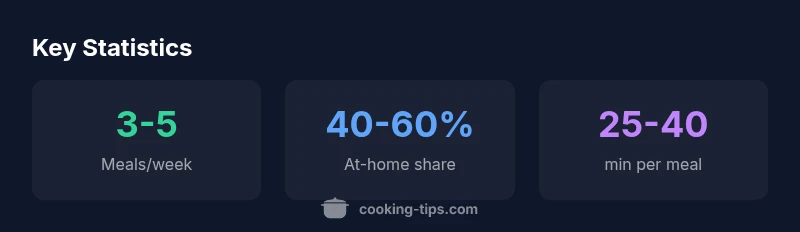
Home cooking typically falls around 3-5 meals per week for many households, with a range of 2-6 based on schedule, family size, and budget. The Cooking Tips Analysis, 2026, shows that frequency increases with proactive planning, pantry stockups, and batch cooking. Weekday routines often constrain cooking, while weekends offer opportunities for larger, flavor-packed meals that still support regular home cooking.
The Core Question: How Often Do You Cook at Home?
Understanding how often you cook at home begins with acknowledging that the frequency is not fixed. It shifts with work schedules, family commitments, and even personal goals. According to Cooking Tips, the question people care about most is not just “do I cook at all?” but “how often do you cook at home, given constraints and opportunities?” For many households, a realistic target sits in the 3-5 meals per week range. This framing helps homes plan without guilt, recognizing that some weeks demand more takeout or dining out while other weeks invite more batch cooking and shelf-stable pantry meals. In practice, your frequency should reflect your values—nutrition, budget, time, and enjoyment—and evolve as family dynamics and obligations change.
Your Personal Framework: What Sets Your Frequency
Several personal variables shape how often you cook at home. Family size, ages, and activities strongly influence planning needs. A single person with a busy work schedule may settle into 2-3 home-cooked meals weekly, while a family of four might target 4-6 meals. Income and grocery access steer your pantry choices and willingness to shop and cook. Cooking confidence and kitchen setup matter too: a well-organized space with quick-access staples reduces friction. Finally, cultural norms and personal preferences determine how often you crave cooked meals versus convenience foods. Mapping these factors helps you tailor a sustainable rhythm rather than chase a universal target.
A Simple Method to Measure Your Current Rhythm
Start with a one-week audit. Record every meal that is cooked at home, noting prep time, ingredients, and whether leftovers were repurposed. At week’s end, categorize meals into quick (≤20 minutes), balanced (20-40 minutes), and elaborate (>40 minutes). This breakdown reveals your current baseline and where you could reasonably push upward. Use a simple template or an app to track. Share the results with a partner or household to align expectations. Tracking not only clarifies your current rhythm but also highlights patterns—like which days you tend to rely on takeout and what grocery strategies correlate with higher home cooking frequency. Small wins, such as planning two batch-cook sessions on Sunday, can shift the weekly total quickly.
Practical Tactics to Increase Home Cooking Frequency
Boosting home cooking frequency is most effective when you remove friction and create reliable routines. Start with a 2-step plan: (1) plan and prep, and (2) stock a flexible pantry. A simple weekly menu reduces decision fatigue, while batch-cook sessions (2-3 hours on a weekend) create ready-to-reheat meals. Keep core ingredients on hand: pasta, rice, canned tomatoes, beans, frozen vegetables, and proteins you enjoy. Use a grocery list that aligns with your planned meals, and shop once or twice a week rather than daily. By tying planning to specific days, you build momentum and normalcy around cooking.
Tools and Pantry Habits That Make It Easier
A few well-chosen tools and habits can dramatically raise cooking frequency. Stock a reliable spice rack for flavor variety without extra trips to the store. Invest in a few versatile appliances (slow cooker, sheet-pan, or instant pot) that make weeknight meals feasible in under 30 minutes. Build a “recipe rotation” of 6-8 go-to meals you rotate through, so meal planning feels routine, not overwhelming. Create a “lucky seventh” plan: a flexible, forgiving dish that can absorb whatever leftovers you have. Finally, schedule a weekly quick shop for fresh produce to prevent waste and maintain motivation.
Real-Life Scenarios: Singles, Couples, and Families
For singles, frequency often hinges on time and appetite for cooking experiments. Couples may cook together for efficiency and enjoyment, while families with kids require planning around school activities and snacks. A practical pattern across these groups is to reserve a few repeatable weeknight meals and then rotate with one “special” dish for weekends. The novelty of trying new recipes should not come at the expense of consistency; mix reliable staples with occasional experimentation. Over time, you’ll find the rhythm that balances flavor, nutrition, and practicality across households.
Getting Started: A 7-Day Kickoff Plan
To kick off a sustainable rhythm, try a 7-day starter plan: Day 1-2 feature quick, 20-minute meals; Day 3-4 incorporate batch-cooked components for faster evenings; Day 5 introduces a sheet-pan dinner; Day 6 uses leftovers creatively; Day 7 is a “no-cook” reset day with simple salads and sandwiches. Use this blueprint as a baseline and adjust to your real schedule. Track what works and what doesn’t, and iterate weekly. The goal is steady improvement rather than perfection, building confidence and reducing the urge for last-minute takeout.
Comparison of meal frequency by household context
| Aspect | Typical Frequency | Notes |
|---|---|---|
| Weekdays only | 2-4 meals | Often due to work/school schedules |
| Weekends with family | 3-6 meals | Meal planning helps |
| Single household | 1-3 meals | Varies with social life |
| Full household | 4-7 meals | Batch cooking supports routines |
Quick Answers
How does cooking at home impact grocery costs compared with dining out?
Cooking at home generally lowers per-meal costs, especially when you plan and batch cook. Tracking receipts and adjusting ingredients helps you see true savings over time.
Cooking at home usually saves money per meal, especially when you plan ahead and batch cook.
What factors influence how often I cook at home?
Factors include work hours, family size, access to fresh ingredients, and cooking confidence. Improving planning and basic skills can increase frequency.
Your schedule, the people you cook for, and your kitchen skills decide how often you cook.
Can I realistically increase my home cooking frequency if I have a busy schedule?
Yes. Start with a simple plan: weekly menus, 2-3 batch-cook sessions, and a stocked pantry. Build momentum with small, achievable targets.
Yes—start small, batch cook, and build momentum.
What are quick-win meals that encourage more home cooking?
Five-ingredient meals and sheet-pan dinners are fast and reliable. Keep staples on hand and repurpose leftovers for variety.
Choose quick, simple meals and reuse leftovers to stay motivated.
How can I measure and track my home-cooking frequency?
Maintain a simple log or app that records meals cooked at home. Review weekly to adjust planning and targets.
Keep a log and review it weekly to improve.
Is there a recommended weekly target for home-cooked meals?
A practical target is 4-5 home-cooked meals per week for many households, adjustable by schedule and preferences.
Aim for 4-5 meals per week and adjust as needed.
“Regular home cooking isn’t just about meals; it’s about sustainable habits that fit your schedule and budget. Small, consistent steps beat sporadic, elaborate dinners.”
Top Takeaways
- Decide a weekly home-cooking target.
- Plan meals to maintain consistency.
- Batch-cook and freeze to sustain routine.
- Cooking Tips recommends steady, achievable routines.