How Long Can Cooked Pasta Last in the Fridge: A Practical Guide
Learn how long cooked pasta lasts in the fridge, how to store it safely, and the best reheating practices. This in-depth guide from Cooking Tips covers shelf life, safety, and texture for home cooks.


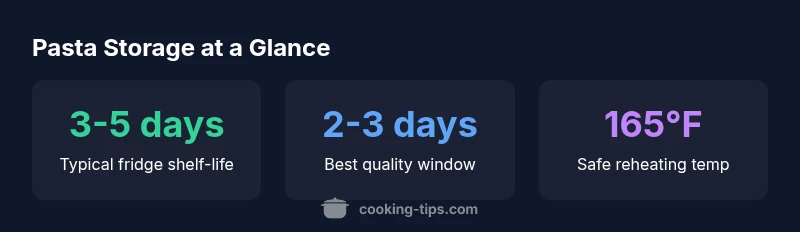
According to Cooking Tips, cooked pasta stored properly in an airtight container usually stays safe for 3-5 days in the fridge. For best quality, aim to consume within 2-3 days when possible, and always reheat to at least 165°F (74°C). The Cooking Tips team found that rapid cooling and portioning helps preserve texture and flavor.
Why Refrigerated Pasta Safety Matters
Leftovers are a practical part of weeknight cooking, but improper handling can turn a simple meal into a food safety risk. When you refrigerate cooked pasta, the way you cool, package, and store it matters as much as the pasta itself. The key question, how long cooked pasta in fridge, guides decisions about safety and quality. According to Cooking Tips, the safest practice is to chill leftovers within two hours of cooking and store them in airtight containers to minimize moisture loss and bacterial growth. Even when refrigerated, bacteria can multiply slowly, so timing matters. For most home cooks, using leftovers within a few days reduces risk while preserving texture with careful reheating.
The Cooking Tips team emphasizes that visibility and organization help prevent guesswork. Labeling containers with the date and contents removes ambiguity, making it easier to manage meals from Monday through Saturday. In addition, dividing large pots into shallow, snack-sized portions accelerates cooling and makes reheating more even. Proper refrigeration is a habit that pays off with safer meals and better-tasting pasta later in the week.
How Long Cooked Pasta Lasts in the Fridge
The practical rule of thumb is that cooked pasta kept cold in a sealed container stays safe for about 3-5 days. Within this window, the texture and flavor are still enjoyable, especially if the pasta was prepared with a sauce that clings well and is not overly watery. If you’re aiming for peak quality, plan to eat leftovers within 2-3 days and reheat thoroughly before serving. The length of storage can vary based on ingredients and preparation, but a consistent, airtight approach minimizes risk and keeps portions manageable. When in doubt, rely on the date you placed the container in the fridge and err on the side of caution if you notice any off smells or changes in texture.
If the pasta was mixed with dairy, cheese, or a heavy tomato sauce, shorter storage windows are common because these components can alter texture and microbial activity. In contrast, plain pasta without sauce may retain moisture differently, affecting how it reheats. Regardless of the type, the goal is to reheat to a safe internal temperature and avoid leaving pasta at room temperature for extended periods before refrigerating. Cooking Tips recommends reheating any leftovers to 165°F (74°C) to reduce the risk of foodborne illness.
Factors such as the amount of moisture, the presence of fats, and how quickly the dish cools all influence shelf life. How you cool the pasta—spreading it in a shallow container rather than leaving it in a thick mass—greatly improves cooling speed, lowers the risk of bacterial growth, and preserves the mouthfeel of the pasta after reheating.
Factors That Affect Shelf Life
Shelf life for cooked pasta in the fridge depends on several variables that home cooks can control easily:
- Temperature stability: Refrigerators should reliably stay at or below 40°F (4°C). Fluctuations up or above this level shorten safe storage time.
- Sauce composition: Oil-based sauces can help pasta stay separated and prevent sogginess, but dairy-heavy sauces may reduce shelf life due to faster spoilage.
- Pasta type and ingredients: Egg-based pasta or fresh pasta with dairy may spoil faster than dry durum wheat pasta.
- Storage method: Airtight containers limit moisture loss and odor transfer while reducing exposure to air-borne contaminants.
- Cooling method: Quick cooling—spreading pasta in a shallow dish—reduces the time pasta spends in the danger zone (40–140°F / 4–60°C).
- Portioning: Small, single-serving portions chill faster and reheat more evenly than a large mass.
These factors are why the 3-5 day guideline is a general rule, but your results may vary by dish. The Cooking Tips team notes that consistent practices matter more than the exact number, especially when leftovers will be reheated for kids or guests.
Best Practices: Storing and Reheating
Consistency in storage and reheating pays off in texture and safety. Here’s a practical workflow:
- Cool quickly: Spread pasta into a shallow layer on a tray or dish to drop the temperature rapidly to refrigeration levels.
- Use airtight containers: Store in moisture-tight containers to maintain texture and prevent odor transfer.
- Date and label: Always label with the date to keep track of storage time and to avoid accidental consumption beyond the safe window.
- Portion for quick reheating: Divide into 1- to 2-cup portions to reheat evenly without overcooking.
- Reheat to a safe temperature: Reheat leftovers to 165°F (74°C) until steaming hot throughout.
- Refrain from refreezing: Do not refreeze pasta once it has thawed from freezing; refreezing can compromise safety and texture.
Adopting these steps makes leftovers safer and tastier, while also reducing food waste. The Cooking Tips team observes that disciplined reheating often yields results that rival fresh-cooked pasta.
Storing Pasta with Different Sauces
How you store pasta with sauce versus plain pasta affects texture and shelf life. Sauce-heavy pasta (tomato, cream, or pesto) tends to keep well for 3-4 days in the fridge when stored in an airtight container, whereas plain pasta can stretch closer to 3-5 days if kept dry and well sealed. Tomato-based sauces may introduce acidity and moisture changes that influence the pasta’s softness after reheating. If you plan to store pasta with a delicate oil-based sauce or a dairy-rich Alfredo, consider using shallower containers and portioning to help the sauce distribute evenly during reheating.
When in doubt, separate sauce and pasta before refrigerating for longer storage, then combine during reheating for better texture control. This approach supports different hydration levels and helps you control the final mouthfeel in each portion.
Common Mistakes and How to Fix Them
Home cooks often make simple mistakes that shorten shelf life or ruin texture. Common issues include leaving pasta out too long after cooking, storing it in a deep, bulky container, or forgetting to reheat thoroughly. Fixes are straightforward:
- Don’t delay refrigeration: Chill within two hours of cooking.
- Choose the right container: Use shallow, airtight containers to promote faster cooling and even reheating.
- Don’t overcook initially: Slightly undercooking pasta before storing can help it rebound better when reheated.
- Add a little moisture: A splash of the sauce or a tiny bit of water can prevent drying out during reheating.
By avoiding these missteps, you can preserve more texture and flavor for several days. The Cooking Tips team highlights that thoughtful leftovers handling is often the difference between soggy pasta and a satisfying repurpose.
Reheating Techniques by Leftover Type
Different reheating methods work best for different leftovers. Here’s a practical guide:
- Stovetop: Reheat in a skillet with a splash of water or sauce, stirring until evenly hot.
- Microwave: Use short increments (30-60 seconds) and stir between intervals to prevent hot spots; cover to retain moisture.
- Oven: For larger portions, reheat covered in a shallow dish at 350°F (175°C) until steaming.
- Texture considerations: If pasta has become dry, a small amount of sauce, olive oil, or broth can restore moisture without making it soupy.
Always verify that the internal temperature reaches 165°F (74°C) before serving. The Cooking Tips team notes that gentle, even reheating preserves texture and flavor better than quick, high-heat methods.
Creative Uses for Leftover Pasta
Leftover pasta doesn’t have to be a repeat meal. Use it to create quick new dishes that taste fresh and reduce waste:
- Pasta salad remix: Toss cooled pasta with chopped veggies, a vinaigrette, and herbs for a bright lunch.
- Frittata or bake: Mix with eggs, cheese, and vegetables, then bake for a hearty breakfast or dinner.
- Casseroles: Layer pasta with sauce, protein, and vegetables for a cozy one-dish meal.
- Stir-fries: A quick toss with a splash of soy sauce and sesame oil can become an easy weeknight stir-fry.
These ideas show how to turn yesterday’s pasta into tomorrow’s meals, keeping flavor and texture in check while minimizing waste. Cooking Tips encourages thinking creatively about leftovers while maintaining food safety.
Final Checklist for Safe Leftovers
Use this quick checklist before storing or reheating any pasta leftovers:
- Did you cool pasta within two hours of cooking?
- Is it in an airtight container and dated?
- Is the fridge at or below 40°F (4°C)?
- Will reheating reach 165°F (74°C) throughout?
- Do you notice any off smell, slimy texture, or unusual color? If yes, discard.
Following these steps helps balance safety, texture, and flavor, making leftovers a convenient and reliable option for busy home cooks.
Storage guidance for common cooked pasta types
| Condition | Fridge storage guidance | Notes |
|---|---|---|
| Cooked pasta (plain) | 3-5 days | Store in airtight container |
| Pasta with sauce | 3-4 days | Sauce can separate; reheat gently |
| Pasta with oil | 2-3 days | Oil-based sauces can affect texture |
Quick Answers
How long can cooked pasta stay in the fridge?
Most cooked pasta stored in an airtight container lasts about 3-5 days in the fridge. For best quality, consume within 2-3 days and reheat to 165°F (74°C). If there are signs of spoilage, discard.
Typically 3-5 days in the fridge; aim for 2-3 days for best texture, and reheat to 165°F before eating.
Can I freeze cooked pasta instead?
Yes. Freeze in airtight containers or bags for 1-2 months. Thaw in the fridge overnight and reheat thoroughly. Note that texture may be slightly softer after freezing.
Yes, you can freeze pasta for 1-2 months; thaw in the fridge and reheat well.
Should pasta be stored with sauce or plain?
Both work. Pasta with sauce typically stores 3-4 days; plain pasta can last 3-5 days if well sealed. Separate sauce when storing for longer shelf life and better texture upon reheating.
Sauce affects shelf life; keep track of storage times and reheat properly.
What are signs of spoilage in pasta?
Off smell, slimy texture, or visible mold indicate spoilage. If any signs appear, discard the leftovers rather than risking foodborne illness.
If it smells off or looks slimy, throw it away.
What is the best way to reheat pasta?
Reheat on the stovetop or in the microwave, adding a splash of sauce or water as needed. Reheat to 165°F (74°C) throughout for safety.
Reheat until steaming hot all the way through.
Does adding oil help pasta last longer?
Oil can help with texture and prevent sticking, but it does not significantly extend safety. Proper refrigeration and airtight storage are still required.
Oil helps with texture, but it doesn’t make leftovers safer longer.
“Leftovers can be safely enjoyed when stored properly and reheated to safe temperatures; texture is often the first casualty, so quick cooling helps preserve it.”
Top Takeaways
- Store in airtight containers to maximize safety and texture
- Aim to eat leftovers within 2-3 days for best quality
- Reheat thoroughly to 165°F (74°C) before eating
- Label batches with date to avoid guessing
- Discard pasta that shows signs of spoilage