Crispy Fish in the Air Fryer: The Complete Guide
Master air-fryer fish with crisp exteriors and juicy centers. This guide covers best fish types, prep, coatings, timing, troubleshooting, and serving ideas for quick weeknight dinners.


Pat dry the fillet, lightly spray with oil, season, and cook at 400°F for 8–12 minutes, flipping halfway. Check for an internal temperature of 145°F and rest 2–3 minutes before serving. For best results, avoid overcrowding, preheat if your model requires it, and choose lean fillets like cod, tilapia, or salmon for even browning.
Understanding the benefits of air frying fish
Air frying fish leverages a convection-style cooking process that circulates hot air to create a crisp exterior while keeping the inside juicy. For home cooks, this method reduces added fats compared with pan-searing or deep-frying, speeds up cooking time, and minimizes splatter. According to Cooking Tips, many people are surprised at how versatile a single appliance can handle a variety of fillets, including cod, salmon, and tilapia. The key is understanding how the heat transfer and moisture retention work in an enclosed basket. When done correctly, you’ll achieve delicate flakes, a light crust, and a clean kitchen compared with traditional frying. The technique also scales well for weeknight meals, where you can prep several fillets at once if your air fryer basket has space. For seafood, the goal is even browning with minimal oil; the surface should be lightly lacquered rather than dripping with fat. Practically, choose a model with a reliable timer and a temperature range that covers 320–400°F (160–205°C). This flexibility lets you switch between a quick sear and a longer finish depending on thickness. As you practice, you’ll learn which fillets respond best to direct heat versus those that need extra rest to reabsorb moisture.
Best fish types for air fryer
When selecting fish for the air fryer, look for fillets that cook evenly and stay moist. Salmon brings rich flavor and natural fats that crisp nicely with minimal coating. Cod and haddock offer a mild, flaky texture that benefits from a light crust. Tilapia and pollock are budget-friendly options that crisp quickly without drying out. For thicker cuts, consider halibut or swordfish, but adjust time carefully to avoid overcooking. Regardless of type, start with fresh fillets if possible; if you use frozen, thaw completely and pat dry before cooking. Always remove bones for a smoother finish and check for any cold spots by flipping halfway through. A well-chosen fish will yield a beautifully browned surface and a juicy center with very little added oil. If you’re new to air frying fish, begin with one of the common options—salmon, cod, or tilapia—and broaden your repertoire as you gain confidence. The Cooking Tips team suggests keeping an eye on thickness and adjusting time by a minute or two as needed to maintain tenderness.
Preparing fish for air frying
Preparation starts with moisture management. Pat fillets dry with paper towels to minimize steam and encourage browning. If you’re marinating, keep it light—long marinades can make the coating soggy or overpower the natural fish flavor. A light oil mist improves browning and helps coatings adhere, but you don’t need to drown the fillets. For breaded options, a thin coat of flour or cornstarch can improve texture by creating a micro-crust that crisps nicely in the hot air. Extra tips include removing pin bones with tweezers and trimming any ragged edges for even cooking. Seasonings should be balanced; salt, pepper, lemon zest, garlic powder, and paprika are reliable pairings that won’t overshadow the fish’s natural flavor. If you’re cooking skin-on fillets, place skin-side down to help release moisture gradually and achieve a crisp skin. Remember to preheat if your device requires it, so the surface hits the target temperature immediately and browns evenly.
Coatings and seasonings that work
A light coating often yields the best balance between texture and flavor. Panko or finely chopped nuts (like almonds) can create an extra-crisp crust without overpowering the fish. Traditional breadcrumb coatings also work well when mixed with a touch of grated Parmesan or lemon zest. For a lighter approach, simply season with salt, pepper, and a squeeze of lemon, then brush with a little oil to encourage browning. Cornstarch or potato starch coatings are another reliable option, producing a delicate crust with minimal fat. If you’re using flour-based coatings, shake off excess to prevent clumping and uneven browning. For a gluten-free option, try crushed rice crackers or almond flour with paprika and garlic powder. Coatings should be applied evenly and not too thick; a heavy layer can prevent heat from reaching the surface and result in a pale finish. Finally, consider a glaze or a light citrus-infused oil after cooking to brighten flavors without adding excess fat.
Temperature, time, and airflow considerations
Air-fryer efficiency depends on consistent airflow and proper space around each fillet. Always arrange fillets in a single layer with space between pieces to allow hot air to circulate. Preheating helps set a quick sear and avoid steam loss, but only if your model requires it. Start with 400°F (200°C) as a baseline and adjust by 25°F (10–15°C) if needed to avoid overcooking thinner fillets. Cooking times typically fall in the 8–12 minute range for standard fillets, but thicker pieces may require a minute or two more. If you’re cooking multiple fillets, consider cooking in batches to maintain a crisp exterior on each piece. A short flip at the halfway point promotes even browning on both sides. Finally, use a reliable instant-read thermometer; the safe internal temperature for most fish is 145°F (63°C).
Basic step-by-step guide for a simple fillet
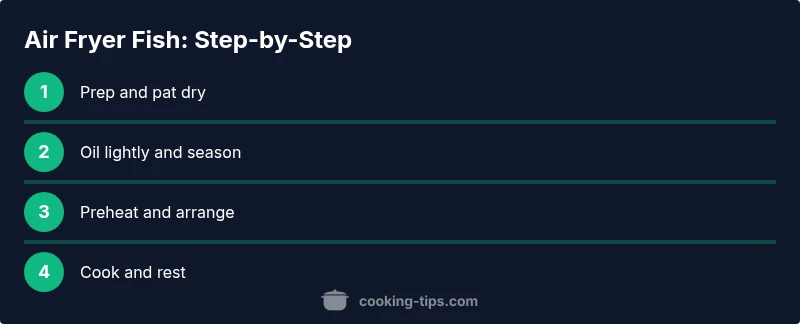
- Pat dry and trim the fillet. 2) Lightly spray with oil and season on both sides. 3) Preheat the air fryer to 400°F (200°C). 4) Place the fillet in the basket with space around it. 5) Cook for 8–12 minutes, flipping halfway. 6) Check for 145°F internal temperature and rest 2–3 minutes. 7) Plate and finish with a squeeze of lemon or fresh herbs.
Troubleshooting and common problems
If your fillets look pale or lack browning, extend cooking time by 1–2 minutes and ensure the basket isn’t overcrowded. A soggy coating usually means too much moisture or a coating that’s too thick; reduce moisture by patting dry and applying a thinner layer. If the exterior browns too quickly before the inside cooks, lower the temperature by 25°F and extend the cooking time slightly. Sticking is typically caused by insufficient oil or the fillet not being dry enough; spray lightly and pat dry again before re-cooking. For best results, select fillets of similar thickness to promote uniform cooking, and avoid cross-contamination by using separate utensils for raw and cooked fish.
Cleaning, storage, and safety
After cooking, unplug your air fryer and let it cool before cleaning. Remove the basket and wash with warm soapy water; wipe down the interior with a damp cloth once dry. If you use parchment liners, remove and discard them after cooking to prevent buildup. Store any leftovers in a covered container in the refrigerator for up to 2 days. Reheat gently in the air fryer at a lower temperature to avoid dryness. Always check the internal temperature to ensure food safety before serving, especially when reheating.
Flavor ideas and serving suggestions
Finish your air-fried fish with bright flavor accents: a squeeze of lemon, a dollop of tartar sauce, or a simple herb butter. Pair with light sides like steamed vegetables, quinoa, or a green salad for a balanced meal. For a smoky touch, add a pinch of smoked paprika to the seasoning mix. If you prefer a coconut or curry note, try a light glaze made with coconut milk and lime zest. Finally, consider topping with chopped parsley, chives, or dill for a fresh finish. With a little experimentation, you can tailor the flavors to suit your mood and the type of fish you’re cooking.
Tools & Materials
- Air fryer(Essential appliance for best results.)
- Fresh or thawed fish fillets(Choose even-thickness fillets for uniform cooking.)
- Oil spray or brushing oil(Helps browning without excess fat.)
- Parchment liners or foil (optional)(Makes cleanup easier; avoid touching the heating elements.)
- Tongs or fish spatula(For safe turning without breaking the fillet.)
- Instant-read thermometer(To verify 145°F (63°C) internal temp.)
- Paper towels(Pat fillets dry before cooking.)
- Measuring spoons(For precise seasoning.)
- Lemon and fresh herbs(For finishing and aroma.)
Steps
Estimated time: 15-25 minutes
- 1
Pat dry and trim
Use paper towels to pat the fillet dry and trim any ragged edges. Removing surface moisture helps achieve a crisp exterior and prevents steaming. This step also reduces chances of sticking later.
Tip: Dry surfaces brown more evenly; moisture is the enemy of crispness. - 2
Oil lightly and season
Mist or brush a light film of oil on both sides. Season with salt, pepper, and a simple mix like lemon zest and paprika. Oil helps browning without making the fish greasy.
Tip: Keep coatings thin; thick coatings can trap moisture and hinder browning. - 3
Preheat and arrange
Preheat the air fryer to 400°F (200°C) if your model requires it. Place fillets in a single layer with space between them for even air circulation.
Tip: Avoid overcrowding; crowding slows heat transfer and softens the crust. - 4
Cook and flip
Cook for 8–12 minutes, flipping halfway to ensure even browning on both sides. Check for an appealing crust and no translucent edges.
Tip: Use tongs to flip gently to prevent breaking the fillet. - 5
Check internal temp
Use an instant-read thermometer to confirm 145°F (63°C) at the thickest point. If not reached, cook in 1–2 minute increments until done.
Tip: Temperature is your best safety and quality indicator. - 6
Rest before serving
Let the fish rest 2–3 minutes after cooking to allow juices to redistribute. Resting improves texture and flavor perception.
Tip: Resting time helps prevent a dry bite. - 7
Clean up and store
Cool leftovers, store in a sealed container in the fridge for up to 2 days. Reheat in the air fryer at a lower temperature to retain moisture.
Tip: Always reheat to 165°F (74°C) if reheating from chilled leftovers.
Quick Answers
Can I cook frozen fish in the air fryer?
Yes, you can cook frozen fillets in the air fryer. Add a few extra minutes and avoid overcrowding. Separate fillets if they have frozen together and check for doneness with a thermometer.
Yes, you can cook frozen fish in the air fryer, but you’ll need a few extra minutes and careful spacing to ensure even cooking.
Should I preheat the air fryer for fish?
Preheating helps with even browning and reduces cooking time. If your model recommends it, allow 2–5 minutes before adding the fish.
Preheating helps the fish brown evenly and cook consistently.
What internal temperature should fish reach in the air fryer?
Aim for 145°F (63°C) at the thickest part. Use an instant-read thermometer to verify doneness and avoid overcooking.
Cook the fish until it reaches 145 degrees, then rest briefly.
Which coatings work best for air-fried fish?
Light coatings like panko, cornmeal, or crushed nuts can add crispness without overpowering flavor. For a simpler approach, seasoning with a light oil spray is effective.
Crispy coatings like panko or cornmeal work well with light oil spray.
Can I cook fish with skin on in an air fryer?
Yes, skin-on fillets can cook beautifully. Place skin-side down for best moisture retention and crisp skin.
Skin-on fillets cook nicely; put the skin down to crisp and keep juices in.
How do I prevent sticking to the basket?
Pat dry, spray lightly with oil, and consider parchment liners or non-stick spray to reduce sticking.
Dry the fish and use a light oil or parchment to prevent sticking.
Watch Video
Top Takeaways
- Pat dry fillets for crispness
- Cook at 400°F for 8–12 minutes depending on thickness
- Check for 145°F internal temperature and rest briefly
- Avoid overcrowding; air flow is essential for even browning