Salmon in Air Fryer: Crisp, Juicy Every Time
Learn how to cook salmon in the air fryer for perfectly crisp edges and tender flesh. This comprehensive guide covers skin-on vs skinless, timing, seasoning, and serving ideas for reliable weeknight dinners.


Goal: perfectly cook salmon in an air fryer with crispy edges and moist, flaky flesh. You’ll learn timing, temperatures, and seasoning options that work for skin-on and skinless fillets. Essentials include an air fryer, a light coating of oil, a thermometer, and basic pantry seasonings. By the end, you’ll confidently prepare salmon in the air fryer for weeknight dinners and impressive plates.
What is salmon in air fryer and why it works
Salmon is one of the easiest proteins to cook in an air fryer because the rapid convection heat creates a crisp exterior while keeping the interior moist. With little oil, this method yields browning similar to pan-searing but without the extra fat. An air fryer gently circulates hot air around the fish, cooking from all sides for even doneness. According to Cooking Tips, the technique shines when you start with a cold, fully thawed fillet and pat it dry to remove surface moisture before cooking. For thick fillets, you may need a touch longer than a thinner portion, but the general principle remains: quick heat, minimal moisture, and careful timing produce reliable results. This makes salmon in the air fryer ideal for busy weeknights, date-night meals, or simply dinner with less cleanup. By understanding the core mechanics and limits of your specific air fryer model, you can tailor the process to obtain restaurant-quality texture at home.
Flavor and texture options: skin-on vs skinless
Skin-on salmon tends to yield a crisp, flavorful skin that acts as a barrier, helping retain moisture while browning. The skin also offers extra texture contrast when you bite into the fillet. Skinless salmon cooks a bit faster and can be easier to portion, but you miss out on that crunchy skin and the added layer of flavor protection. Both options respond well to light oil coatings and simple seasonings like salt, pepper, and lemon zest. If you are new to air frying, start with skin-on fillets to build confidence; you can experiment with skinless once you are comfortable with timing. Cooking Tips notes that the same heat works for both forms, with slight adjustments to time. In short, choose based on preference for texture and presentation, then tailor time accordingly.
Choosing salmon and prep tips
Buy firm, fresh-looking fillets with a clean, ocean-like aroma. Look for even thickness to promote uniform cooking. If you buy frozen fillets, thaw completely and pat dry before seasoning to prevent excess moisture from steaming the surface. Remove any pin bones with tweezers, and pat dry again to ensure maximum browning. Dry surfaces brown better under high heat, so a quick pat-down with paper towels is worth it. For best results, aim for fillets around 1 inch (2.5 cm) thick; thicker pieces will require longer cooking, thinner pieces less time. When in doubt, start with a shorter cooking window and check doneness with a thermometer.
Seasoning and marinade ideas
Simple salt and pepper are reliable, but you can elevate salmon with a few kitchen staples. A light lemon-dill rub, garlic powder with paprika, or a soy-garlic glaze provides flavor without masking the fish. A dab of olive oil or a light spray helps with browning and prevents sticking. If you prefer brighter citrus notes, finish with a squeeze of lemon just before serving. For a richer finish, a small pat of herb butter after cooking adds a glossy, restaurant-like finish. Avoid heavy marinades that contain lots of sugar or acid, as they can cause uneven browning or mushy texture under high heat.
Prepping for air fryer: parchment, oil, spacing
Preheating the air fryer for a few minutes helps achieve an immediate sear on contact. Lightly oil the salmon or spray the basket to prevent sticking. Use parchment liners or a silicone mat if your basket tends to cling, but ensure there is still adequate airflow—do not blanket the basket with liners that block air. Arrange fillets in a single layer with at least 1/2 inch of space between them to ensure even air circulation. If you have skinnier fillets, you may fit two pieces, but avoid crowding. A quick pat with a paper towel before cooking removes surface moisture that would steam instead of sear.
Cooking times and temperatures by thickness
In general, air fryers perform best at 400°F (200°C) for salmon. Thickness matters: about 3/4 inch (2 cm) fillets typically take 8–10 minutes; 1 inch (2.5 cm) fillets take 10–12 minutes; 1.5 inches (3.8 cm) fillets may require 12–14 minutes. If the fillet has skin, start skin-side down and flip only if your model cooks unevenly. The goal is an internal temperature around 125–135°F (52–57°C) depending on how you prefer doneness; always use a thermometer to confirm. Remember to adjust for your specific air fryer model, as some run hotter or cooler than others.
Finishing touches: resting, sauce, and serving ideas
Resting for 3–5 minutes after cooking allows juices to redistribute and prevents a knife from letting all the moisture escape. A light lemon-butter sauce, herb drizzle, or caper vinaigrette can brighten the dish without overpowering the fish. Serve salmon with bright sides like roasted asparagus, a quinoa salad, or a simple greens salad. A dollop of yogurt-based dill sauce also pairs well with the delicate flavor. For leftovers, refrigerate promptly in an airtight container and reheat gently to preserve texture.
Troubleshooting common issues
If the salmon looks pale or feels mushy, you probably cooked it too slowly or used too much liquid. Overcooking yields a dry, crumbly texture and a loss of moisture—watch the thermometer and remove as soon as you reach the target temperature. If the surface isn’t browning, preheat longer or increase the temperature slightly by 25°F for the next batch. Fishy aromas often indicate fish that is past its prime or not dried well before cooking. Finally, if the skin isn’t crisp, increase the time in the last few minutes or switch to a higher fat rub that promotes browning without burning.
Storing leftovers and meal prep tips
Store cooked salmon in an airtight container in the fridge for up to 3 days. Reheat gently in the air fryer for 2–3 minutes at 375°F (190°C) to preserve texture, checking after each minute. For meal prep, portion into single-serving fillets, season lightly, and freeze raw in individual portions if you plan to cook later. Thaw overnight in the fridge before cooking for best texture. Pair leftovers with steamed vegetables, a grain bowl, or a tossed salad for quick meals.
Safety and cleaning after air frying salmon
Always unplug and let the air fryer cool before cleaning. Remove the basket and wash with warm soapy water; dry thoroughly before reassembly. Escaped oil and food particles can accumulate; wipe the interior with a damp cloth and avoid abrasive cleaners. If you used parchment liners, remove them before cleaning to prevent scorching. Regularly check seals and gaskets for signs of wear, and replace parts as needed. Proper cleaning extends the life of your appliance and keeps flavors fresh for your next salmon in the air fryer.
Tools & Materials
- Air fryer(Preheat to 400°F (200°C) for best browning)
- Olive oil spray or light oil(Coat salmon lightly to promote browning)
- Digital meat thermometer(Target 125–135°F depending on doneness)
- Kosher salt(Even small amounts improve texture)
- Freshly ground black pepper(Equally important for flavor)
- Lemon or lemon wedges(Brightens finish)
- Parchment paper or silicone liner(Use to prevent sticking if basket is prone)
- Tongs or fish spatula(Gentle handling to avoid breaking fillets)
- Paper towels(Pat dry fillets and mop up surface moisture)
Steps
Estimated time: Total time: 25-35 minutes
- 1
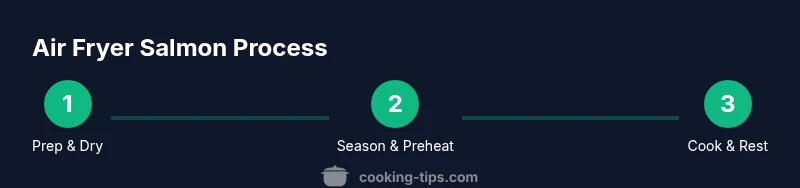
Pat dry and trim fillet
Pat the salmon dry with paper towels to remove surface moisture, then trim any thin edges for uniform thickness. Dry surfaces brown better under high heat, promoting a crisp exterior. This step reduces steaming that can soften the skin and reduce browning.
Tip: Use clean, dry towels and remove any visible pin bones before cooking. - 2
Season fillet evenly
Season both sides with salt and pepper. For more flavor, add a light rub of garlic powder and paprika, or a squeeze of lemon after cooking. Seasoning helps enhance browning and depth of flavor without overwhelming the fish.
Tip: Salt lightly but evenly; it helps with moisture retention during cooking. - 3
Preheat the air fryer
Preheating ensures the fillet starts cooking immediately, promoting quick browning and reducing moisture loss. If your model lacks a preheat setting, run the basket empty for 2–3 minutes at 400°F before adding the salmon.
Tip: Preheating can shave a few minutes off total cook time. - 4
Oil and arrange skin-side down
Lightly oil the salmon or spray the basket to prevent sticking, then place fillets in a single layer with space between them. For skin-on fillets, lay skin-side down to help crisp and protect the flesh.
Tip: Avoid overlapping fillets; air needs space for circulation. - 5
Cook skin-side down for half the time
Cook the salmon skin-side down for about half of the total cooking time. This helps develop a crisp skin while the flesh sets. Flip only if your model cooks unevenly or if you prefer browned tops.
Tip: Do not flip too early; browning happens best on contact. - 6
Check internal temperature and finish
Probe the thickest part with a thermometer. Remove when reach 125–135°F depending on doneness preference. If under, return to air fryer for 1–2 minutes and recheck.
Tip: Better to undercook slightly and finish with a rest than overcook. - 7
Rest briefly before serving
Let the fillet rest for 3–5 minutes after removing from the air fryer. Resting allows juices to redistribute for juicier bites. Slice to serve with minimal disruption to the texture.
Tip: Tent loosely with foil if desired to keep warm. - 8
Finish and serving ideas
Drizzle with a light lemon-herb sauce or a dab of herb butter. Pair with quick sides like green beans, quinoa, or a crisp salad. Fresh herbs add fragrance without overpowering the fish.
Tip: A fresh squeeze of lemon brightens the dish beautifully. - 9
Handle leftovers safely
Cool promptly and refrigerate in an airtight container within two hours. Reheat in the air fryer at 375°F for 2–3 minutes to restore crispness, avoiding overcooking.
Tip: Store separate from strong-smelling foods to avoid flavor transfer.
Quick Answers
Can I cook frozen salmon in the air fryer?
Yes, you can cook frozen salmon, but expect longer cooking times and a less even sear. Thawing first gives the surface a better chance to brown evenly. If you do cook from frozen, add 4–6 minutes and check doneness with a thermometer.
Yes, you can cook frozen salmon, but thawing first gives a better sear. If cooking from frozen, expect longer time and check doneness with a thermometer.
Skin-on or skinless for air fryer salmon?
Skin-on fillets tend to produce crisper skin and help protect the flesh. Skinless fillets cook a bit faster and can be easier to portion. Start with skin-on if you’re new to air frying, then experiment with skinless as you gain confidence.
Skin-on gives crisper skin and protects the flesh; skinless cooks faster but lacks that crisp skin.
What temperature should I use?
Most fillets do well at 400°F (200°C). If your model tends to run hot or you’re using very thick fillets, you may adjust by a few degrees. Always verify doneness with a meat thermometer.
Try 400°F and check with a thermometer to reach your preferred doneness.
How do I prevent salmon from drying out?
Pat the fillet dry, avoid overcooking, and use a light oil to promote browning. Thicker cuts need more time, but bypass the temptation to cook past 135°F. Resting briefly after cooking helps lock in moisture.
Dry the surface, don’t overcook, and rest the fish to keep it juicy.
Can I marinate before air frying?
Yes, you can marinate salmon for up to 30 minutes, but avoid highly acidic marinades for extended times as they can start to break down the protein. Dry rubs or light marinades work best with air frying.
You can marinate briefly, but don’t overdo acidic marinades.
What should I serve with air-fried salmon?
Lemon wedges, fresh herbs, and a bright sauce pair well with salmon. Side options include steamed vegetables, quinoa, or roasted potatoes. Keep sides simple to let the fish shine.
Pair salmon with lemon, herbs, and a light side like veggies or grains.
Watch Video
Top Takeaways
- Choose skin-on for extra flavor and moisture protection.
- Pat dry, space fillets, and preheat for even browning.
- Aim for 125–135°F internal temp based on doneness.
- Rest briefly and finish with bright, simple sauces.