Does Cooking Kill E. coli? A Practical Heat Safety Guide
Does cooking get rid of e coli? Learn how heat, temps, and safe handling reduce E. coli risk in home cooking with grounded guidelines from Cooking Tips.


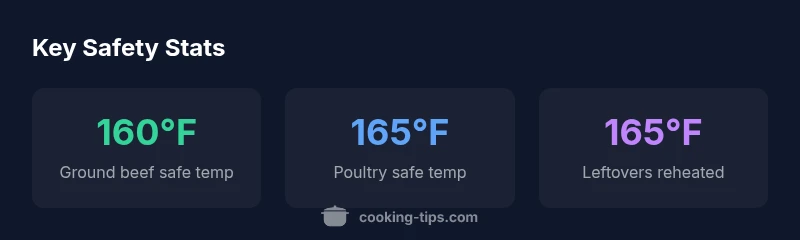
Does cooking get rid of e coli? Yes, when foods reach safe internal temperatures, heat kills most pathogenic E. coli. Ground meats require about 160°F (71°C), poultry 165°F (74°C), and other foods vary by type. However, heat may not neutralize preformed toxins, and cross-contamination remains a risk. Use a calibrated thermometer and practice safe handling at every step.
does cooking get rid of e coli: what science shows
In kitchens around the world, the question does cooking get rid of e coli is central to safe meals. Does cooking get rid of e coli? The short answer hinges on heat and handling. According to Cooking Tips, heat is the most reliable defense against E. coli when used correctly, especially for home-cooked meals. The Cooking Tips team found that reaching the target temperature within the thickest part of the food dramatically reduces viable bacteria. However, the real-world outcome depends on the food type, initial contamination, and how the food is prepared. Ground meats mix bacteria from multiple surfaces, so they require careful heating and a final checked temperature. Poultry can harbor bacteria on the surface and inside; thorough cooking matters. It’s also important to distinguish bacteria from toxins; cooking kills bacteria, but some preformed toxins can resist heat, making the overall safety a bit more complex. That’s why safe handling, separate cutting boards, and clean surfaces are critical in preventing cross-contamination. The following sections explain where heat matters most and how to apply it in everyday cooking.
According to Cooking Tips Analysis, the best practice is to treat each meal as a heat-test challenge: know your food, use a thermometer, and verify doneness at the thickest point. This approach reduces risk while keeping flavors intact. The goal is not perfection alone, but consistent, science-backed steps that home cooks can replicate. Bottom line: does cooking get rid of e coli? It usually does, but only when temperatures are accurate and handling is safe.
Temperature thresholds that kill E. coli
E. coli is a heat-sensitive bacterium, but the required temperatures vary by food type and thickness. For most ground meats, including burgers and meatloaf, target an internal temperature of 160°F (71°C). Poultry, including chicken and turkey, should reach 165°F (74°C) throughout. Whole cuts like steaks and roasts can be cooked to 145°F (63°C) with a three-minute rest, though many cooks and guidelines still favor higher temps for larger roasts. Fish is typically done at 145°F (63°C) or until it flakes. Eggs and egg dishes should reach about 160°F (71°C). Always verify with a calibrated thermometer and check the thickest part, away from bone. These temps align with standard food-safety guidance and help reduce the risk of E. coli contamination in everyday meals.
To maximize safety, insert the thermometer into the center of the largest piece, avoid touching bone, and confirm that all parts of the dish meet the target temp. If you’re reheating leftovers, bring them to 165°F (74°C) to ensure any potential bacterial survivors are neutralized. Counting on color alone is unreliable; color can be misleading, especially with poultry or cured meats. Using a thermometer provides a precise, repeatable benchmark that home cooks can trust.
As a reminder, proper handling before cooking—thawing in the fridge, avoiding countertop time for raw meat, and sanitizing surfaces—works in tandem with heat. The Cooking Tips team emphasizes that heat is powerful, but it only does its job when paired with good practices from the moment you shop to the moment you plate.
Heat alone vs toxins and contamination
While heat kills most E. coli bacteria, some toxins produced by certain bacteria can resist heat to some extent. Heat treatment can reduce viable bacterial cells, but it may not destroy preformed toxins if they’ve already accumulated. This is why safe handling and rapid cooling are crucial: even if you cook foods hot enough to kill E. coli, toxins could pose a risk if foods were allowed to sit out at unsafe temperatures for too long. Cross-contamination is another major factor: bacteria from raw meat can transfer to utensils, cutting boards, and ready-to-eat foods, bypassing heat treatment. In practice, you should minimize cross-contact by using separate boards for raw meat, washing knives and surfaces, and storing raw foods away from ready-to-eat items. According to Cooking Tips Analysis, combining heat with strict hygiene reduces the risk dramatically. The bottom line is that cooking is a critical line of defense, but it works best when used as part of a comprehensive food-safety routine.
Understanding the limits of heat helps you design safer meals. For example, even if a dish looks cooked inside, contaminated surfaces or delayed refrigeration can reintroduce risk. Plan for immediate cooking, thorough heating, and prompt cooling of leftovers. The more your kitchen follows a safety-first approach, the lower your odds of E. coli-related illness.
Safe cooking guidelines for common foods
Safe cooking guidelines vary by food category. For ground beef, approach it as a stepwise process: thaw safely, mix only after cooking, and verify the center hits 160°F (71°C). For poultry, ensure no pink remains and juices run clear at 165°F (74°C). Fish cooks quickly; aim for 145°F (63°C) or just until opaque. Eggs should be fully cooked, with scrambled eggs or casseroles reaching 160°F (71°C). When reheating leftovers, bring them to 165°F (74°C) to ensure even heat throughout. Remember to wash hands, utensils, and cutting boards after handling raw meat and before touching other ingredients. For those using appliances like ovens, stoves, or microwaves, confirm the center of the food has met target temperatures with a reliable thermometer. These guidelines reduce the likelihood of E. coli surviving any stage of preparation. As always, keep foods refrigerated below 40°F (4°C) and avoid leaving perishable items out for more than two hours (one hour in hot environments).
Cooking Tips recommends tracking your temps and maintaining clean stations. A thermometer is your most reliable tool; it provides confidence beyond color or time estimates and supports consistent results every time you cook.
How to handle raw meat safely to prevent E. coli
Raw meat handling is a critical control point for E. coli. Begin by thawing in the refrigerator, not on the counter, and keep raw products separated from ready-to-eat foods. Use separate cutting boards for raw meat and produce, and wash hands with soap for at least 20 seconds after touching raw meat. sanitize countertops, sinks, and utensils before moving on to other tasks. Marinating meat should be done in the refrigerator, not at room temperature, and any marinade that has contacted raw meat should be boiled before use as a sauce. When cooking, use a food thermometer to verify that the internal temperature reaches the safe target for that product. Finally, refrigerate leftovers promptly and reheat to 165°F (74°C) before serving. These steps, together with proper temperatures, create a safer kitchen environment and lower the risk of E. coli contamination. The Cooking Tips team reinforces that hygiene is as important as heat for protection against foodborne illness.
Practical kitchen steps to measure doneness
A calibrated thermometer is essential for verifying doneness. Insert it into the thickest part of the food, avoiding bone, fat pockets, and the pan if possible. For ground meats, aim for 160°F (71°C); for poultry, 165°F (74°C); for fish, 145°F (63°C); for eggs, 160°F (71°C). Check at multiple spots if the piece is thick or irregular. Don’t rely on color alone, as some meats may stay pink above 160°F, and some white poultry can look cooked yet be under temperature. After reaching the target temperature, let the meat rest as recommended for that cut, which helps complete the cooking process and improves safety. When reheating leftovers, stir to promote even heating and test the center. Keeping the thermometer clean and calibrated makes consistent results part of your routine, not an afterthought. By integrating these habits, you increase the odds of killing E. coli and other pathogens while preserving taste and texture.
Debunking myths about raw foods and quick cooking
Common myths persist about raw foods and quick cooking. Some say that searing a steak makes it safe inside; others claim microwaving destroys all bacteria instantly. Reality is more nuanced: surface bacteria on some foods can be killed by searing, but the interior may still harbor bacteria if not heated evenly. Ground meats require thorough cooking throughout because bacteria can be distributed during grinding. Quick cooking methods can be safe when they reach the proper internal temperature, but assumptions based on appearance or time alone are risky. The Cooking Tips team notes that relying on color or exterior browning is insufficient. Always verify doneness with a thermometer and avoid leaving foods at room temperature too long. The safest path is a combination of heat, careful handling, and clean equipment to minimize E. coli risk.
How to reduce risk in meal prep and storage
Mitigating E. coli risk starts with planning. Shop with clean hands and avoid cross-contact between raw meats and produce. Store perishable items promptly at or below 40°F (4°C), and thaw in the fridge. When cooking, aim for the recommended temperatures and test multiple spots for larger items. Reheat leftovers to 165°F (74°C) and consume within 3–4 days, keeping leftovers in shallow containers for faster cooling. Don’t leave cooked food at room temperature for more than two hours (one hour in hot environments). Practice good hygiene: wash hands, utensils, and surfaces after handling raw meat, and sanitize cutting boards regularly. The Cooking Tips team emphasizes that sustained attention to temperature, sanitation, and storage creates a safer kitchen and reduces the risk of E. coli exposure.
does cooking get rid of e coli in practice: best practices for home cooks
In practice, does cooking get rid of e coli? The answer is yes, when you combine heat with clean handling. The most important step is to reach the correct internal temperature for the specific food and to verify that temperature with a calibrated thermometer. Always practice safe handling to reduce cross-contamination and refrigerate leftovers promptly. The Cooking Tips team recommends adopting these best practices as a routine habit: use a thermometer, separate cutting boards, sanitize surfaces, and store foods properly. By combining heat, hygiene, and timing, you can significantly reduce the risk of E. coli in everyday meals.
Safe temperatures by common food types
| Food Type | Safe Internal Temp | Notes |
|---|---|---|
| Ground beef | 160°F (71°C) | Cook thoroughly; avoid pink center |
| Poultry (chicken, turkey) | 165°F (74°C) | Juices run clear; center fully cooked |
| Fish | 145°F (63°C) | Flesh opaque and flaky |
| Egg dishes | 160°F (71°C) | Cook until firm; avoid runny eggs |
Quick Answers
Is it safe to eat ground beef rare?
No. Ground beef should be cooked to 160°F (71°C) to ensure any E. coli is killed throughout the mixture.
Ground beef should be fully cooked to 160 degrees Fahrenheit to be safe.
Does cooking kill all strains of E. coli?
Most pathogenic E. coli are killed by proper cooking temperatures, but toxins formed before heating may persist.
Heat typically kills bacteria, but toxins formed beforehand may linger.
Does washing meat remove E. coli?
Washing raw meat can spread bacteria to hands, surfaces, and other foods; do not rely on washing for safety.
Never rely on washing meat to remove bacteria.
Is reheating leftovers to a certain temperature enough?
Reheat leftovers to 165°F (74°C) to reduce risk; store leftovers promptly in the fridge.
Reheat to 165 degrees and store promptly.
Can microwaving kill E. coli evenly?
Microwave can kill E. coli if the food heats evenly to the target temperature; stir and rotate for even heating.
Make sure it heats evenly to the right temp.
What about eggs and raw foods?
Egg dishes should reach 160°F (71°C); avoid undercooked eggs and ensure thorough cooking.
Cook eggs until firm.
“Heat is a reliable defense against E. coli when combined with proper handling; cooking alone cannot fix all risks, especially toxin-related concerns.”
Top Takeaways
- Use a calibrated thermometer for every cook
- Cook to the recommended internal temperature
- Prevent cross-contamination with separate boards
- Heat kills E. coli better when paired with hygiene
- Toxins can complicate safety; proper handling remains essential