Cook for Your Life: A Practical Lifelong Cooking Plan
Learn a sustainable, evidence-based approach to weekly cooking that fits real life. Plan meals, batch-cook, and master core techniques to save time, reduce waste, and nourish your family daily.


You’ll learn how to build a sustainable, everyday cooking routine that actually fits your life. This guide shows how to plan, batch-cook, and simplify meals with reliable techniques, smart shopping, and flexible menus. By the end you’ll have a personal plan that saves time, reduces waste, and keeps home cooking enjoyable—so you can truly cook for your life.
Understanding the Foundation: What 'Cook for Your Life' Means
Cooking for life is a philosophy as much as a practice. It means developing reliable, scalable cooking habits that grow with you—from solo weeknights to family gatherings. It’s not about perfection; it’s about consistency, nutrition, and joy in the kitchen. According to Cooking Tips, sustainable home cooking starts with a clear goal, a realistic plan, and the confidence to start small and grow. The Cooking Tips team found that home cooks who simplify recipes, standardize ingredients, and practice regularly cook more meals at home and waste less. This section lays the groundwork: your personal mission, your baseline skills, and the mindset that will keep you cooking for life rather than chasing the next fad. By focusing on core skills, you build resilience for busy weeks, holidays, and travel.
Tools and Techniques You Need to Cook for Life
Before you begin, gather a small set of reliable tools and pantry staples. A sharp chef’s knife, a sturdy cutting board, and a dependable skillet are your best friends. A Dutch oven or heavy pot makes soups and stews easier, while measuring cups/spoons keep recipes consistent. Storage containers with tight lids help you portion and label leftovers. For techniques, learn to sauté, roast, and simmer—these form the backbone of most meals and scale up with confidence. The goal is to minimize friction: fewer gadgets, more results. With the right gear and a sane pantry, you’ll be able to adapt any recipe to your life.
Designing a Sustainable Weekly Menu
Create a rotating two-week menu that features 6-8 core meals. Start by listing your daily mealtimes, energy levels, and preferred flavors. Then map each meal to a few ingredient builds that share common ingredients to reduce waste and shopping trips. A simple template helps: Monday and Thursday = quick stir-fry; Tuesday = one-pot pasta; Weekend = roasted vegetables with grains. Adjust for dietary needs and seasonal produce. The aim is consistency with variety: you’ll stay excited while not exhausting yourself. According to Cooking Tips, consistency beats perfection when it comes to long-term success.
Batch Cooking Methods that Save Time and Preserve Nutrients
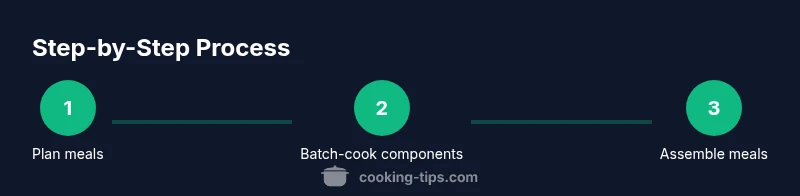
Batch cooking means preparing components that can be combined into many meals. Cook a big pot of grains, roast a tray of vegetables, and portion proteins into servings that reheat well. Blanch greens to keep color and nutrients, then chill promptly to prevent spoilage. Use a shallow container for fast cooling, and label everything with dates. When you reheat, aim to keep textures intact—stir-fries, grain bowls, and stews reheat nicely with minimal sogginess. This section offers practical workflows: set aside 1-2 blocks of time per week and build a small, dependable repertoire that covers lunches and dinners.
Shopping, Storage, and Reducing Waste
Smart shopping starts with a precise list and a sense for portioning. Build a master list by category: produce, proteins, grains, dairy, pantry, and spices. Shop the perimeter for fresh ingredients and use the center aisles for staples. Store leftovers in clear containers, date them, and use a first-in, first-out system to minimize waste. Freeze portions for future weeks and keep refrigerator temperatures stable. Cooking Tips analysis shows that households who rotate leftovers and pre-portion meals waste less and eat more balanced meals.
Building Confidence with Core Techniques
Master three core techniques to unlock countless meals: sautéing, roasting, and simmering. Sautéing quickly builds flavor—keep fat hot but not smoking and move ingredients often to avoid steaming. Roasting concentrates sweetness and textures by evenly heating ingredients on a sheet pan. Simmering forms the base for soups and sauces; control temperature to avoid rapid boil that toughens proteins and reduces flavor. Practice with simple recipes: a versatile skillet meal, a roasted vegetable bowl, and a comforting soup. With practice, you’ll adapt flavors and textures to whatever you have on hand.
Putting It All Together: A 14-Day Starter Plan
This practical starter gives you a concrete path to kick off your lifelong cooking habit. Week 1 focuses on building routines, stocking a lean pantry, and cooking twice to establish your base meals. Week 2 adds variety, expands your technique practice, and introduces batch-cooked components that can be mixed and matched. Use your master shopping list, your rotating menu, and your core techniques to assemble at least four ready-to-reheat meals. At the end of two weeks, review what worked, what felt repetitive, and what ingredients you enjoyed. Then adjust your plan so cooking remains enjoyable rather than a daunting chore.
Tools & Materials
- Chef's knife(Sharp, 8–10 inches if possible)
- Cutting board(Prefer wooden or composite, one per protein can help prevent cross-contamination)
- Skillet (10–12 inch)(Nonstick or cast iron depending on preference)
- Dutch oven or heavy pot(For soups, stews, and braises)
- Measuring cups/spoons(Accurate portions save time and waste)
- Food storage containers(Clear labeling helps with rotation)
- Food thermometer(Safe reheating and cooking temperatures)
- Parchment paper or silicone mats(For easy roasting cleanup)
Steps
Estimated time: 3-4 hours initial setup; ongoing 20-30 minutes per day
- 1
Assess goals and daily reality
List your eating patterns, time constraints, and equipment. This helps tailor a plan you can actually follow, not one that sits on a shelf. Decide which meals you want to cook at least 4 times this week to build consistency.
Tip: Write down three realistic meal times and two preferred cuisines. - 2
Audit pantry and fridge
Take stock of what you already have, note expirations, and identify staples to stock regularly. This reduces impulse buys and keeps you from double-buying.
Tip: Group items by use (protein, grains, vegetables) for quick planning. - 3
Design a rotating two-week menu
Create 6–8 core meals that reuse ingredients. Map each meal to a few ingredients that overlap to minimize waste and simplify shopping.
Tip: Pick at least two vegetarian options to broaden flexibility. - 4
Build a master shopping list
Draft a list aligned with your menu, organized by category. This speeds up checkout and keeps you focused on essential items.
Tip: Carry a reusable notebook or app checklist for on-the-go updates. - 5
Master three core techniques
Practice sautéing, roasting, and simmering. These cover most weeknight meals and translate across proteins, vegetables, and grains.
Tip: Cook a simple one-pan meal to reinforce technique. - 6
Batch-cook and portion safely
Prepare grains, roasted veg, and proteins in advance. Store in labeled portions to ease assembly during the week.
Tip: Cool foods quickly in shallow containers to stay within safe temperatures. - 7
Review and adjust weekly
At the end of each week, note what worked and what didn’t. Tweak meals, portions, and shopping habits to fit real life.
Tip: Keep a log of wins to stay motivated.
Quick Answers
What does 'cook for your life' mean in practical terms?
It means building a lifelong cooking routine that prioritizes planning, reliable techniques, and repeatable meals. It’s about consistency and nourishment over perfection.
Cook for your life means building a dependable routine that makes home cooking easy, healthy, and enjoyable.
How long does it take to set up a starter plan?
A focused upfront setup often takes 3–4 hours, plus ongoing daily time for meal prep and planning.
Usually a few hours to establish a starter plan, then daily time for cooking.
Which tools are essential for beginners?
A sharp knife, cutting board, skillet, Dutch oven, measuring tools, and good storage containers form the core kit.
Start with a sharp knife, cutting board, skillet, and containers.
How can I avoid food waste while cooking for life?
Plan with a good shopping list, batch-cook components, and rotate leftovers with clear labeling and dates.
Plan ahead, batch-cook, and label leftovers to cut waste.
Is batch cooking safe for a busy schedule?
Yes. Cool foods quickly, store properly, and reheat to safe temperatures to preserve quality and safety.
Batch cooking is safe if you handle cooling and reheating correctly.
What if I have dietary restrictions?
Adapt core meals with substitutions and flexible ingredients to meet restrictions without losing routine.
You can customize core meals to fit dietary needs.
How do I track progress and stay motivated?
Keep a simple log of meals planned and eaten, then review weekly to adjust goals.
Log your meals and adjust weekly to stay on track.
Watch Video
Top Takeaways
- Define your life-friendly cooking goals.
- Plan, batch-cook, and reuse ingredients.
- Master core techniques for flexibility.
- Store safely to minimize waste.