How to Cook Can Chicken: A Practical Home Guide
Learn to cook can chicken safely and deliciously with practical, step-by-step guidance, storage tips, and quick meal ideas from Cooking Tips for weeknight success.


In this guide, you will learn how to cook can chicken safely, quickly, and tastily using common pantry ingredients. You'll confirm safe reheating temperatures, avoid common mistakes, and adapt the can chicken into soups, salads, and skillet meals. By following these steps, you’ll turn canned chicken into a versatile pantry staple for weeknights.
Why Learning to cook can chicken matters
Cooking from pantry staples saves time and reduces last-minute grocery runs. If you want to cook can chicken, you can turn a simple can into flavorful meals with minimal effort. This section explains why canned chicken is a reliable base for weeknight dinners. According to Cooking Tips, practicing efficient reheating and flavor-boosting techniques can elevate a humble can into a centerpiece.
For home cooks, embracing shelf-stable proteins like canned chicken expands menu options without requiring a trip to the store. You’ll learn how to transform this humble ingredient into everything from quick lunches to hearty dinners, using only a few common ingredients. The goal is consistent, safe results that taste delicious, with minimal waste and maximum versatility.
From a practical standpoint, canned chicken is inexpensive, shelf-stable, and already cooked. The key is to handle it safely, heat it properly, and pair it with flavors that brighten its mild taste. As you read on, you’ll see how a few pantry staples can elevate this convenient protein into a weeknight hero.
note
Tools & Materials
- Large skillet (12-inch or larger)(Even heating for browning and even reheating)
- Can opener(Needed if the can isn’t pop-top)
- Fine-mesh strainer(Drain liquid thoroughly to reduce saltiness)
- Spatula or wooden spoon(For turning and scraping the pan)
- Measuring spoons(For salt, pepper, and optional spices)
- Salt and pepper(Season gradually and taste as you go)
- Optional: chicken broth or stock(Adds moisture and depth if desired)
- Instant-read thermometer(Aim for safe reheating temperature (165°F / 74°C))
Steps
Estimated time: 40-60 minutes
- 1
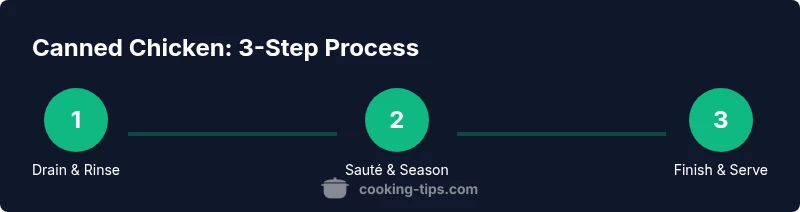
Drain and rinse the can
Open the can and drain the liquids into the sink. Rinse the chicken briefly under cold water to remove excess brine, then gently pat dry with a paper towel. This reduces overly salty flavor and helps the texture stay tender.
Tip: Use a fine-mesh strainer to press out as much liquid as possible; pat dry if needed. - 2
Preheat the pan and add fat
Place a skillet on medium heat and add a small amount of oil or butter. Allow it to warm for 1–2 minutes until shimmering. A properly heated pan ensures the chicken browns rather than steams.
Tip: Avoid overcrowding the pan; work in batches if necessary to keep contact with the surface. - 3
Add chicken to hot pan and brown lightly
Spread the chicken pieces evenly and cook for 1–2 minutes to warm through and develop a light color. Stir occasionally so all pieces heat evenly and you don’t scorch any portions.
Tip: If the pieces are very small, watch closely; overcooking can dry the meat quickly. - 4
Season and finish with sauce or broth
Season with a pinch of salt, pepper, and optional spices. Deglaze the pan with a small splash of broth or citrus juice, then simmer 2–4 minutes to meld flavors. This helps rehydrate the chicken and boosts aroma.
Tip: Don’t add too much salt; canned chicken can be salty from the canning liquid. - 5
Adjust texture and serve
If you want a creamier texture, fold in a spoonful of yogurt or mayo after heating, or use it in a sauce. For soups or casseroles, add additional liquid and simmer until the dish is cohesive.
Tip: Taste and adjust acidity with a squeeze of lemon juice or a splash of vinegar to brighten the dish. - 6
Store leftovers safely
Cool any leftovers within 2 hours and transfer to airtight containers. Refrigerate promptly and reheat to steaming hot before serving.
Tip: Portion into smaller containers for faster cooling and easier future meals.
Quick Answers
Is canned chicken safe to eat straight from the can?
Canned chicken is pre-cooked and safe to eat straight from the can, though most people heat it to improve texture and flavor. Reheating to steaming hot is a common practice for better taste and safety. Always check the label for any brand-specific guidance.
Yes, canned chicken is pre-cooked and safe to eat directly, but heating it improves texture and flavor. Reheat until steaming hot for best results.
How long can I refrigerate canned chicken after opening?
Opened canned chicken should be stored in an airtight container in the refrigerator and used within 3–4 days for best quality and safety.
Store opened canned chicken in the fridge and use within 3 to 4 days for best taste and safety.
Can I freeze canned chicken after opening?
Yes. Freeze leftovers in portion-sized containers or bags. Frozen canned chicken remains best for 2–3 months, with gradual quality loss afterward.
Yes, you can freeze leftovers for about 2 to 3 months. Portion into servings for easier reheating.
What can I add to canned chicken to boost flavor?
Lemon juice or vinegar, garlic, dried or fresh herbs, low-sodium stock, and a touch of salsa or tomato sauce can brighten canned chicken without overpowering it.
Add lemon, garlic, herbs, and a little stock to boost flavor without adding too much salt.
Why is my canned chicken dry after reheating?
Canned chicken can dry if overheated or overcooked. Reheat gently, add moisture with broth or sauce, and remove from heat as soon as it’s hot.
It can dry if reheated too long. Reheat gently and add a little liquid if needed.
Watch Video
Top Takeaways
- Drain liquid well before heating to control saltiness.
- Heat gently and avoid overcooking to keep moisture.
- Boost flavor with herbs, citrus, and low-sodium broths.
- Store any leftovers promptly and reheat to a safe serving temperature.
- Canned chicken is versatile for salads, soups, and easy skillet meals.