Can You Defrost, Cook, and Refreeze Meat? A Practical Safety Guide
Learn safe methods to thaw meat, cook it, and refreeze leftovers. This comprehensive guide covers fridge thaw, cold-water and microwave options, proper cooling, and best practices to avoid foodborne illness.


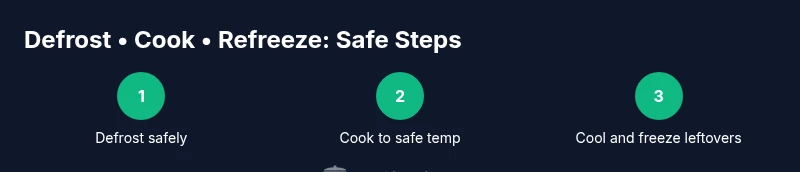
You can defrost meat safely, cook it, and refreeze portions that were cooked or leftovers. The safest approach is to thaw in the fridge, then cook promptly, cool quickly, and repackage for freezing. Do not refreeze raw meat that has thawed at room temperature. For step-by-step guidance, see the full article.
Understanding the Safety Basics
Defrosting meat safely starts with clean handling, correct temperatures, and sensible timing. The danger zone for bacterial growth is roughly between 40°F and 140°F (4°C–60°C); keeping meat out of this zone minimizes risk. The question can you defrost, cook, and refreeze meat is answered by following a clear sequence: thaw safely, cook thoroughly, and freeze leftovers promptly. According to Cooking Tips, the safest approach begins with fridge thaw whenever possible, followed by proper cooling and freezing of any cooked portions. The Cooking Tips team found that adherence to these steps reduces bacterial activity and preserves flavor and texture. In practice, this means planning ahead, using airtight packaging, and labeling portions so you can reuse them confidently later on.
From a home-cook perspective, the process becomes a balance of time, temperature, and handling. If you choose rapid thawing methods, you must commit to cooking the meat immediately afterward to avoid lingering unsafe temps. If you have time, fridge thaw is the simplest and safest route. The goal is to minimize time spent with thawed meat in the danger zone while preserving quality for refreezing later.
note
Tools & Materials
- Refrigerator thermometer(To ensure the fridge stays at or below 40°F (4°C).)
- Food thermometer(For checking internal meat temperature (e.g., 165°F/74°C for poultry).)
- Freezer-safe bags or containers(Label with date and contents.)
- Ice bath setup (bowl + ice)(Helpful for rapidly cooling cooked meat before freezing.)
- Sharp knife and cutting board(For portioning cooked meat after thaw.)
- Permanent marker(Labeling for date and contents.)
Steps
Estimated time: 1-2 days for safe fridge thaw of typical portions; 1-2 hours for cooking and cooling; total process depends on meat size and thaw method
- 1
Choose a thaw method
Assess your timeline and meat type. Fridge thaw is safest and slows bacterial growth, but it takes time. Cold-water thaw is faster but requires more attention, and microwave thawing is fastest but demands immediate cooking to prevent safety issues.
Tip: Always keep meat in a sealed bag during any thaw to prevent cross-contamination. - 2
Defrost safely in the fridge
Place meat on a tray to catch drips and store on the bottom shelf to prevent contaminating other foods. Keep the fridge at or below 40°F (4°C) and allow adequate time for thaw based on size. If you’re unsure, plan for an overnight thaw.
Tip: If you’re thawing multiple pieces, rotate them so they all stay evenly cold. - 3
Use cold-water or microwave if time is tight
Submerge sealed meat in cold water, changing the water every 30 minutes to maintain a safe temperature. For faster results, a microwave can be used, but cook immediately after thawing to prevent partial cooking and bacterial growth.
Tip: Stop when the outer areas are thawed; transfer to the fridge to finish if possible. - 4
Cook to a safe internal temperature
Cook thawed meat to the recommended internal temperature for its type (poultry higher, beef/pork moderate). Use a food thermometer to verify. Let the meat rest as required by the cut to ensure juices redistribute and safety is maintained.
Tip: If you’re unsure of target temps, consult a reliable cooking guide or the USDA guidelines. - 5
Cool quickly before freezing leftovers
Divide cooked meat into shallow portions and cool rapidly. Use an ice bath or spread on a tray to drop to 40°F (4°C) within a couple of hours. Refrigerate promptly if you plan to freeze later.
Tip: Avoid stacking hot containers; this slows cooling and promotes bacterial growth. - 6
Package and freeze leftovers
Seal portions in freezer-safe bags or containers, removing as much air as possible to prevent freezer burn. Label with the date and content. Place in the freezer at a steady temperature and aim to use within a reasonable timeframe for best quality.
Tip: For better texture, freeze in meal-sized portions you can thaw and cook in one go.
Quick Answers
Is it safe to thaw meat on the counter?
No. Thawing on the counter allows the meat to spend too much time in the unsafe temperature range, increasing the risk of bacterial growth. Use fridge thaw, cold-water thaw with sealed packaging, or microwave thaw followed by immediate cooking.
No, thawing on the counter is unsafe; use fridge, cold-water, or microwave methods with immediate cooking.
Can I refreeze meat after thawing in the fridge?
Yes, you can refreeze meat that has thawed in the fridge as long as it has remained at a safe temperature and has not been left out at room temperature. If it was cooked after thawing, you can refreeze the leftovers after proper cooling.
Yes, as long as it stayed cold and wasn’t left out; cooked leftovers can also be frozen after proper cooling.
Can I refreeze cooked meat?
Yes. Cooked meat can be refrozen after it has been cooled promptly and stored properly in freezer-safe packaging.
Yes, cooked meat can be refrozen if cooled quickly and stored correctly.
How long can thawed meat stay in the fridge before cooking?
It depends on the meat, but generally thawed meat should be cooked within a day or two when kept in the fridge.
In the fridge, thawed meat should be cooked within a day or two for safety.
Does refreezing affect meat quality?
Refreezing can affect texture and moisture, which may reduce quality, but it remains safe if handled properly.
Refreezing can affect texture, but it’s safe when done correctly.
What about thawing meat safely using water or microwave?
Cold-water thawing is faster but requires attention, changing the water and cooking immediately after thaw. Microwave thawing is the fastest but should be followed by immediate cooking to avoid safety issues.
Water thawing is faster but needs care; microwave thawing requires immediate cooking afterward.
Watch Video
Top Takeaways
- Thaw safely in the fridge whenever possible.
- Cook to safe temperatures and cool quickly before freezing.
- Label and date all frozen portions for easy use later.
- Avoid room-temperature thawing to reduce food safety risk.
- Refreezing cooked leftovers is generally safe when handled properly.