Can You Cook Sausages When Frozen? Safe Methods and Tips
Can you cook sausages when frozen? Learn safe, practical methods for stove, oven, air fryer, and grill. Get doneness tips and leftover guidance from Cooking Tips.


Yes. You can cook sausages from frozen without thawing first, though you’ll cook longer and need a reliable thermometer to ensure doneness. Choose a method (stovetop, oven, air fryer, or grill) and monitor internal temperature to reach a safe level. Start with steady heat and avoid overcrowding.
Why Cooking Sausages from Frozen Is Safe and Practical
According to Cooking Tips, cooking sausages from frozen is a safe and convenient option when you don’t have time to thaw. The technique can preserve moisture and deliver a satisfying texture if you manage heat properly and avoid crowding the pan. Whether you’re using pork, chicken, or turkey sausages, starting from frozen simply means adjusting time and heat. The Cooking Tips team found that the key is to heat slowly enough to thaw the interior while browning the exterior. You’ll get flavorful, juicy sausages without waiting for the thaw, making this approach ideal for busy weeknights and quick weekend meals. For best results, plan your method around your equipment and the number of sausages you’re cooking, not the clock alone.
From a home-cooking perspective, frozen sausages can be cooked safely as long as they reach the recommended internal temperature and are handled with clean utensils. Keep in mind that different sausages have different fat contents, casings, and water content, which can affect browning and how quickly the center cooks. Use steady heat and turn the sausages regularly to prevent uneven heating and to promote even browning on all sides.
Key Food-Safety Basics When Cooking Frozen Sausages
Food safety matters twice as much when you’re cooking from frozen. First, never thaw sausages at room temperature; plan consistent, safe handling to avoid bacteria growth. Second, verify doneness with a reliable thermometer and the guidance you trust. Sausages should reach a safe internal temperature to ensure any harmful bacteria are neutralized and the flavor is preserved. If you’re unsure about the sausage type (pork vs poultry), check the label for any cooking notes, but follow the core rule: cook to a safe interior temperature and rest briefly before serving. Always wash hands, utensils, and surfaces after handling raw meat, even when starting from frozen.
Cooking Methods at a Glance
There isn’t a single best method for frozen sausages; the choice depends on your kitchen setup and desired texture. Stovetop pan-browning yields a crisp exterior with a moist interior, while oven-baking delivers hands-off even cooking for larger batches. An air fryer offers rapid browning with less added fat, and grilling gives a smoky finish when weather and equipment permit. Regardless of method, plan for longer total cooking time than you would for thawed sausages and use a thermometer to confirm doneness. Pair with onions, peppers, or a simple mustard glaze to elevate the dish quickly.
Stove-Top Method for Frozen Sausages
To start on the stove, place a skillet over medium heat and add a light coating of oil. Arrange sausages in a single layer with space between them. Cook for several minutes, turning occasionally to brown all sides; then reduce heat if the exterior browns too quickly while the interior remains underdone. Add a splash of liquid (water, broth, or beer) to help gently heat the center without drying the casing. Check internal temperature and let the sausages rest a minute or two before serving.
Oven-Baked Method for Frozen Sausages
Preheat your oven to a moderate temperature and line a baking sheet with foil or parchment for easy cleanup. Place sausages in a single layer, leaving space between each piece. Bake for longer than thawed sausages, turning once or twice for even browning. If you want crisper casings, finish under the broiler for a minute or two. Use a thermometer to verify the center hits a safe temperature before serving.
Air Fryer Method for Frozen Sausages
Preheat the air fryer if your model requires it. Arrange sausages in a single layer with room to circulate air. Air fry at a steady heat, turning once, until the outside is browned and the interior is fully cooked. Because air fryers vary, start with shorter runs and check for doneness frequently. A thermometer remains the best way to confirm doneness without guessing.
Grilling Frozen Sausages: Pros and Cons
Grilling from frozen can yield a delicious smoky exterior, but it’s easy for the center to lag behind the outside if the grill isn’t hot enough. Use indirect heat for the initial stage if you’re cooking more than a few sausages, then finish directly over higher heat to brown the casings. Keep the lid closed to maintain even heat and avoid flare-ups that can char the exterior too aggressively. Always check the internal temperature before serving.
How to Tell When Sausages Are Done
The most reliable method is a meat thermometer. Sausages should reach 160°F (71°C) for pork and most poultry varieties, though check label guidance for specific sausage types. If you don’t have a thermometer, cut into one sausage to check that the center is opaque and steaming, with no pink remaining. Allow a brief rest after cooking to redistribute juices and improve flavor.
Common Mistakes to Avoid
Avoid overcrowding; crowded sausages steam rather than brown. Don’t pierce the casing, which can cause juices to escape and dry the interior. Don’t rely on time alone—different sizes and fat contents cook differently, especially when starting from frozen. Also, skipping the rest period can affect texture and juiciness. Finally, neglecting proper hand hygiene and cross-contamination controls can spoil a perfectly good meal.
Flavor Tricks: Add-Ins and Pairings
Enhance frozen sausages with quick glaze options, such as a simple mix of mustard, honey, and a splash of apple cider or orange juice. Sauté sliced onions and peppers in the same pan after browning the sausages to build a complete dish. Fresh herbs or a pinch of smoked paprika can add depth without much extra effort. Serving suggestions include crusty bread, a light salad, or roasted vegetables for balance.
Quick Reference: Cooking Times and Temperatures (Guidelines)
When starting from frozen, plan for longer total cooking times compared to thawed sausages. Use medium heat to prevent scorching the exterior while the interior finishes cooking. This section provides general guidelines for different methods, but always rely on a thermometer to confirm safety. Adjust times based on sausage size and your stove, oven, or air fryer model.
What to Do With Leftovers
Cool leftovers promptly and store in shallow containers to promote quick cooling. Reheat thoroughly to a safe temperature before serving again, and avoid re-freezing already cooked sausages. If you have a big batch, portion them into serving-size amounts for easier future meals. With proper handling, leftovers can be a convenient option for another quick meal.
Tools & Materials
- Meat thermometer(To verify internal temperature reaches 160°F (71°C))
- Skillet or frying pan(Large, heavy-bottom pan for even browning)
- Oven-safe baking sheet(Line with foil/parchment for easy cleanup)
- Tongs(Turn sausages without piercing casings)
- Plate for resting/serving(Let sausages rest briefly before serving)
- Kitchen timer(Helpful for tracking cooking intervals)
- Cutting board(For optional prep like slicing onions)
- Air fryer(Optional, for air-fryer method)
Steps
Estimated time: Total time: about 25-40 minutes depending on method and sausage size
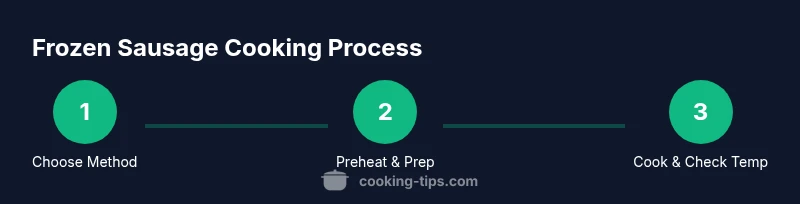
- 1
Choose the cooking method
Decide whether you’ll cook frozen sausages on the stove, in the oven, in an air fryer, or on the grill. Each method has pros and cons, and your choice should depend on how much time you have and the equipment you own. Pick the method that best fits your meal plan and crowd size.
Tip: Selecting the method based on batch size prevents overcrowding and uneven cooking. - 2
Preheat the chosen equipment
Preheat your pan, oven, or air fryer to the appropriate temperature before adding the sausages. This helps begin thawing the interior evenly and prevents sticking or uneven browning. If using a grill, preheat to a medium-high setting.
Tip: Preheating reduces the risk of undercooking the center while over-browning the exterior. - 3
Arrange sausages in a single layer
Place sausages in a single layer with space between each piece to allow heat to circulate. Avoid stacking or crowding, which traps moisture and slows browning. For most methods, a little oil or nonstick spray helps prevent sticking.
Tip: Spacing is essential for even cooking; multiple pans work for large batches. - 4
Cook and turn regularly
Cook the sausages, turning occasionally, until evenly browned on all sides. For ovens and air fryers, flip halfway through cooking. This ensures uniform interior heating and a browned exterior.
Tip: Use tongs to avoid piercing the casings and losing juices. - 5
Check internal temperature
Use a meat thermometer to confirm the center reaches at least 160°F (71°C). If below, continue cooking in 2–3 minute increments until safe.
Tip: If you don’t have a thermometer, cut into one to check for pink inside; ensure steaming and opaque center. - 6
Rest and serve
Let the sausages rest for 2–3 minutes after cooking to reabsorb juices. This step improves moisture and flavor. Slice or serve whole with preferred sides.
Tip: Resting prevents juice loss when you bite into the sausage.
Quick Answers
Can you cook sausages from frozen without thawing?
Yes, you can cook frozen sausages without thawing first. It will take longer, but it’s safe when you reach the proper internal temperature. Use a thermometer to verify doneness.
Yes, you can cook them from frozen; just expect longer cooking, and check with a thermometer to ensure safety.
Do frozen sausages require different cooking times?
Yes, cooking from frozen generally takes longer than thawed sausages. Times vary by size and method, so rely on internal temperature rather than the clock.
Yes, expect longer cooking times when starting from frozen, and always check the temperature.
Is it safe to microwave frozen sausages?
Microwaving frozen sausages is possible but not ideal for texture. If you choose this method, heat in short bursts, turn often, and finish with a browning step on the stove or oven.
You can microwave them, but they may cook unevenly; flip and finish with browning if possible.
What is the safe internal temperature for sausages?
Aim for 160°F (71°C) internal temperature for pork and many poultry sausages. Use a thermometer to verify before serving.
Cook to 160 degrees Fahrenheit to be safe.
Should I thaw sausages if they’re stuck together?
If sausages are stuck, thaw just enough to separate them and then cook individually. Use kitchen scissors if needed.
If they’re stuck, thaw slightly and separate with scissors, then cook.
Can I reuse leftovers from frozen-cooked sausages?
Cool leftovers promptly, refrigerate, and reheat to a safe temperature. Do not re-freeze already cooked leftovers.
Cool, refrigerate, and reheat to safe temps; don’t refreeze.
Watch Video
Top Takeaways
- Cook sausages from frozen safely with proper heat
- Always use a thermometer to confirm doneness
- Choose a method based on batch size and equipment
- Avoid overcrowding for even browning
- Rest sausages before serving