Can You Cook Sausages from Frozen? A Practical Guide
Learn safe, reliable ways to cook sausages from frozen using pan-fry, bake, or air-fryer. Includes temps, timing, tips, and troubleshooting for tasty results.


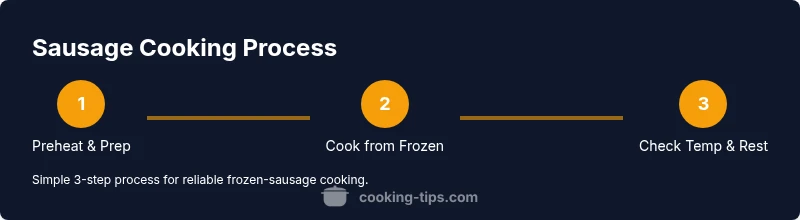
You can safely cook sausages from frozen using pan-frying, baking, or air-frying. Start by preheating your chosen appliance, then cook until browned and the internal temperature hits the recommended safety range, about 160-165°F (71-74°C). If you’re unsure, check with a meat thermometer and rest before serving. These methods work with most sausages, including links that are frozen.
Why You Can Can Cook Sausages from Frozen and How It Works
According to Cooking Tips, cooking sausages from frozen is a convenient option when you’re short on time or you’ve forgotten to thaw. The key is to use reliable heat, avoid crowding, and monitor the internal temperature to ensure safety. Whether you prefer the crusty exterior from pan-frying, the even browning from baking, or the crisp finish from an air fryer, you’ll achieve a safe, tasty result by following a few core principles. This approach also reduces waste, letting you round out a weeknight meal without postponing dinner. Throughout this guide, you’ll see how to balance texture, flavor, and safety while can cook sausages from frozen.
Safety First: Handling Frozen Sausages
Safety is the cornerstone of cooking frozen sausages. Keep everything clean, cook to safe internal temperatures, and avoid leaving raw meat at room temperature. The Cooking Tips team emphasizes practicing good kitchen hygiene, sanitation of tools, and using a thermometer to confirm doneness. When cooking from frozen, you’ll likely need a slightly longer cook time, but the process remains straightforward and repeatable if you follow the steps outlined below. Always wash hands after handling raw sausages and clean surfaces that contact raw meat.
Thawing vs. Frozen-Cooking: When to Thaw and When to Go Frozen
Thawing sausages before cooking can shorten total cook time and may reduce the chance of splitting the casing. However, thawing is not strictly necessary for many types of sausages; it’s perfectly safe to cook from frozen if you choose the right method and temperature. Cooking Tips analysis shows that for most everyday sausages, starting from frozen yields reliable browning and a thorough cook when you manage heat and time. If you’re in a hurry, frozen cooking can be a time-saver without sacrificing safety or flavor.
Methods at a Glance: Pan-Fry, Bake, or Air-Fry from Frozen
- Pan-Fry: Best for a classic crust and a quick finish. With a light coating of oil, frozen sausages brown nicely in a preheated skillet. Expect a longer cook time than thawed sausage, and turn frequently for even browning.
- Bake: Great for cooking larger batches with less hands-on time. Arrange sausages on a lined sheet and bake until browned and cooked through. Rotating them halfway helps with even color.
- Air-Fry: A fast, energy-efficient option that yields crisp exteriors. Space sausages in a single layer and shake the basket halfway through.
Across methods, the critical goal is an appropriate internal temperature and a browned exterior. The Cooking Tips team notes that uniform heat and avoiding overcrowding are essential regardless of the chosen path. For best results, pick a method that matches your texture preference and cookware availability.
Temperature, Time, and Doneness: Getting It Right
Internal temperature is the safest guide to doneness. Pork sausages should reach about 160°F (71°C); poultry sausages should reach about 165°F (74°C). If you’re using a thin-link or delicate sausage, you may need to adjust timing slightly and check earlier. When cooking from frozen, expect 5–20 minutes longer than thawed counterparts, depending on size and method. Always verify doneness with a calibrated thermometer and allow sausages to rest briefly before serving to retain juices.
Texture Tweaks and Flavor Boosters
- For a crisper exterior, pat dry the surface after thawing (if applicable) and use a higher heat step toward the end of cooking.
- If you like extra flavor, brush a light glaze or toss sausages with a quick herb oil during the last few minutes of cooking.
- A splash of stock or water in the pan during pan-frying can prevent sticking and promote even browning by creating gentle steam.
- Resting for 2–3 minutes after cooking helps redistribute juices and keeps the interior juicy.
Common Pitfalls and How to Avoid Them
- Overcrowding the pan or baking sheet leads to steaming rather than browning. Give each sausage space so heat can circulate.
- Puncturing sausages to speed up cooking can leak juices and dry the meat. Let the casing brown instead of piercing.
- Relying on color alone is unreliable. Use a thermometer to confirm the safe internal temperature rather than chasing a perfect brown.
- Neglecting to rest can cause juices to run out when cut; rest briefly to preserve juiciness.
Tools & Materials
- Frozen sausages(Link sausages or breakfast sausages; do not thaw unless a specific method requires it.)
- Cooking oil or nonstick spray(Small amount for pan-frying (optional for nonstick pans))
- Skillet or frying pan(Prefer a heavy skillet for even heat, such as cast iron or stainless steel.)
- Baking sheet with parchment(For oven-baking method to prevent sticking.)
- Air fryer (optional)(If using an air fryer, ensure sausage links fit in a single layer.)
- Meat thermometer(Check internal temperature to ensure safety.)
- Tongs(Turn sausages for even cooking.)
- Cooling rack or plate(Let sausages rest after cooking.)
Steps
Estimated time: 40-60 minutes
- 1
Gather ingredients and tools
Collect frozen sausages, oil, thermometer, and the appropriate cooking equipment. Having everything within reach reduces mistakes and keeps the process smooth.
Tip: Lay out a dedicated workspace to keep raw meat away from ready-to-eat foods. - 2
Preheat your chosen method
Preheat the pan, oven, or air fryer to the recommended temperature for frozen sausages (pan: medium heat; oven: about 425°F/220°C; air fryer: about 400°F/200°C). This ensures even cooking from the start.
Tip: Preheating prevents sticking and gives a consistent browning throughout. - 3
Pan-fry from frozen
Place sausages in a preheated skillet with a light coat of oil if needed. Cook for 8–12 minutes, turning every few minutes until browned and heated through.
Tip: If they stick, loosen with a gentle lift and adjust the heat slightly. - 4
Bake from frozen
Arrange sausages on a lined baking sheet in a single layer. Bake 20–30 minutes, turning once, until browned and the center is hot.
Tip: Rotate halfway so sides brown evenly. - 5
Air-fry from frozen
Place sausages in a single layer in the air fryer basket. Cook 10–15 minutes, shaking halfway for even browning.
Tip: Avoid overcrowding the basket to maintain crisp texture. - 6
Check internal temperature
Insert a meat thermometer into the center of a sausage to confirm safe doneness. Pork should read around 160°F (71°C); poultry sausages about 165°F (74°C).
Tip: If needed, return to heat in 2–3 minute increments until the target temp is reached. - 7
Rest and serve
Let sausages rest for 2–3 minutes before serving to reabsorb juices and improve texture.
Tip: Resting prevents juices from running out when you bite into them. - 8
Clean up and store
Wash used utensils and clean surfaces to prevent cross-contamination. Refrigerate any leftovers within 2 hours and reheat to 165°F (74°C) before serving again.
Tip: Label leftovers with date to track freshness.
Quick Answers
Can you cook sausages from frozen?
Yes. You can cook sausages from frozen using pan-fry, bake, or air-fry. Be sure to preheat, monitor the internal temperature, and rest before serving.
Yes, you can cook sausages from frozen using common methods like pan-frying, baking, or air-frying, as long as you check that they reach a safe internal temperature.
Should I thaw sausages before cooking?
Thawing is optional for many sausages, but it can shorten overall cook time and help even cooking. If you’re short on time, frozen cooking is safe when you follow proper temps.
Thawing isn’t required for many sausages, but it can reduce cooking time and help the sausages cook evenly.
What internal temperature should pork sausages reach?
Pork sausages should reach about 160°F (71°C) for safe consumption. Poultry sausages require about 165°F (74°C). Always verify with a thermometer.
Pork sausages should hit around 160 degrees, poultry about 165, and a thermometer is the best way to check.
Why do sausages sometimes burst while cooking frozen?
Bursting often happens from rapid heat. Prevent it by cooking at a steady, moderate heat and turning sausages regularly without piercing the casings.
Sausages can burst if the heat is too high or if you poke them. Cook gently and turn them for even browning.
How should I reheat leftovers safely?
Reheat leftovers to 165°F (74°C) to ensure safety. Consume within 3–4 days and store properly in the refrigerator.
Reheat leftovers to 165 degrees and use within a few days for safety.
Watch Video
Top Takeaways
- Cook sausages from frozen safely using pan-fry, bake, or air-fry.
- Always preheat the chosen method for best browning and even cooking.
- Verify doneness with a thermometer (160°F/71°C for pork, 165°F/74°C for poultry).
- Rest sausages 2–3 minutes before serving for juicier results.
- Avoid overcrowding and puncturing the sausage casing to prevent uneven cooking.