Can you cook beef from frozen? A practical guide for home cooks
Learn safe, reliable methods to cook beef from frozen, with step-by-step guidance, tips, and troubleshooting. Discover how searing, braising, and oven finishing can yield juicy results when thawing isn't an option.


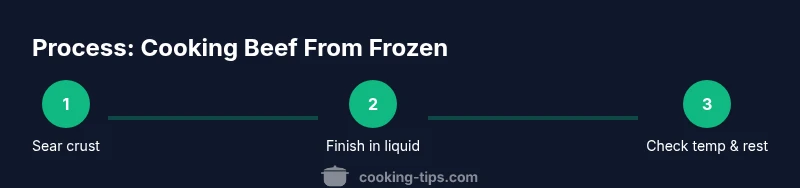
Can you cook beef from frozen? Yes. You can, but use a two-stage method: sear to develop a crust, then finish with braising or oven finishing until the interior reaches a safe temperature. Expect longer total cook times and a potential texture difference. Choose cuts wisely (steaks, roasts, or thick ground beef portions) and monitor with a thermometer for safety and juiciness.
Why home cooks ask about frozen beef and what to expect
According to Cooking Tips, many home cooks wonder how to handle beef that isn’t thawed. The goal is safe, juicy meat without compromising texture or wasting time. Cooking from frozen is feasible, but it requires a deliberate plan: you’ll need to manage heat carefully, use a two-stage approach, and rely on a thermometer to verify doneness. This section grounds you in the practical expectations and why method choices matter for different cuts and thicknesses.
Methods you can use: searing, braising, and oven finishing
There isn’t a single magic trick for frozen beef; the best results come from a two-stage method. Start with a hot, well-oiled pan to sear the exterior, which creates a crust and helps control moisture loss. Then switch to a gentler finish—braising on the stovetop or moving to an oven—to bring the interior up to a safe temperature without overcooking the surface. For very small portions, a covered sauté with a small amount of liquid can work; for larger roasts, braising or oven finishing is more reliable. In all cases, a thermometer is your most trusted ally to confirm doneness without guessing.
Cut and thickness: how they change the plan
Steaks and thick-cut roasts behave differently when starting from frozen. Thinner pieces heat through quickly and can be overcooked before a crust forms, so a shorter sear followed by quick rest in a warm pan is often best. Heavier, thicker roasts benefit from a longer initial sear to build flavor, followed by braising to reach the middle. Ground beef also behaves differently; while some cuts can be cooked from frozen, it's typically best to thaw ground beef for even texture and safety, then cook using your preferred method.
Temperature and safety: doneness without guesswork
Don’t rely on color alone when cooking frozen beef. Use a meat thermometer to target safe internal temperatures: steaks and roasts should reach about 145°F (63°C) with a brief rest, while ground beef should reach 160°F (71°C). This two-tier approach helps ensure safety while preserving as much juiciness as possible. Remember that cooking from frozen often means longer total time, and the internal texture may be slightly firmer than thawed meat.
Practical scenarios: from thick steaks to small roasts
For thick steaks, a heavy skillet that can withstand high heat is ideal; sear both sides, then finish in the oven or with a gentle simmer in a small amount of liquid. For roasts, start with a long sear to develop flavor and then braise in stock or water until the center is tender. If you’re dealing with smaller portions, you can use a covered pan to trap steam, letting the meat heat through while maintaining moisture. Each scenario rewards patience and careful temperature control.
Common mistakes and how to fix them
Common mistakes include skipping thawing when feasible, overcrowding the pan (which steams instead of sears), and relying on color or time alone to judge doneness. To fix these, keep batches small for crisp browning, use a thermometer, and allow for a two-stage process with a crust first and a gentle finish. Always finish with a brief rest to redistribute juices and improve tenderness.
Tools & Materials
- Heavy skillet or cast-iron pan(Even heat distribution for a good crust)
- Oven-safe dish or Dutch oven(Finishing in oven or braising)
- Meat thermometer(Essential for safe doneness)
- Cooking oil with high smoke point(Prevents burning during sear)
- Aluminum foil(Keeps moisture in while resting or braising)
- Tongs(Easy handling of frozen meat)
- Cutting board and knife(Safe prep and portioning)
- Liquid for braising (broth or water)(Helps moisture control and flavor)
Steps
Estimated time: 60-90 minutes
- 1
Assess the cut and choose your method
Evaluate the type of beef (steak, roast, or ground) and its thickness. Decide whether you’ll start with a quick sear and finish by braising or oven finishing, or if a shorter, gentler finish will suffice for very thin pieces.
Tip: Thicker cuts benefit from a longer initial sear to build flavor; thinner pieces require a careful, shorter crust. - 2
Preheat equipment and prep surface
Preheat your pan on medium-high until it shimmers, then have your oven ready if you plan to finish there. Pat the frozen surface dry to promote even browning and reduce moisture that can stall searing.
Tip: Dry surfaces dry brown better; moisture undercuts crust formation. - 3
Sear the frozen beef
Place the beef in the hot oil and sear all visible surfaces until a crust forms. Expect moisture to release as you sear; resist the urge to move it constantly.
Tip: Let the meat meet the pan; constant flipping inhibits crust formation. - 4
Add liquid and switch to a gentle finish
Add a small amount of broth or water to the pan to create steam for finishing. Move the pan to a lower heat or into the oven and cover to braise until the center is close to target doneness.
Tip: Covering traps steam and helps cook the center without burning the exterior. - 5
Check temperature and finish cooking
Insert a thermometer into the center of the thickest part to verify doneness. Aim for about 145°F for steaks/roasts and 160°F for ground beef, adjusting as needed based on cut and preference.
Tip: Avoid slicing right away; a short rest improves juiciness. - 6
Rest, slice, and serve
Let the meat rest loosely tented with foil for 5-10 minutes before slicing to redistribute juices. Slice against the grain where possible to maximize tenderness.
Tip: Resting is not optional; it makes the meat juicier and easier to cut.
Quick Answers
Is it safe to cook beef from frozen?
Yes, it is safe as long as the beef reaches the proper internal temperature. Cooking from frozen simply takes longer and requires careful heat management.
Yes, you can cook beef from frozen, but you’ll need extra time and a thermometer to ensure safety.
Should I thaw beef before cooking?
Thawing is recommended for most cuts to promote even cooking and texture. If you’re in a rush, you can cook from frozen, but plan for longer cooking and check doneness carefully.
Thaw when you can; if not, use a two-stage method and monitor doneness with a thermometer.
What temperatures define doneness for frozen beef?
Steaks and roasts should reach about 145°F with a short rest; ground beef should reach 160°F. These targets ensure safety and improved texture.
Steaks or roasts to 145, ground beef to 160, with a rest.
Which cuts work best from frozen?
Thin or moderately thick steaks and roasts adapt best to frozen-to-finish methods. Very thick roasts require more time and careful heat control to avoid overcooking the exterior.
Thin or moderately thick cuts work best; very thick roasts need patience and heat control.
Can I microwave thaw before cooking?
Microwave thawing can start uneven cooking and lead to uneven doneness. Prefer refrigerator or cold-water thawing, or plan to cook from frozen with a two-stage method.
Microwave thawing can cause uneven doneness; thaw if you can, otherwise cook with care.
What are common mistakes to avoid?
Skipping thawing when possible, overcrowding the pan, and not using a thermometer are frequent errors. Also avoid rushing the finish; give the meat time to reach the target temperature.
Avoid overcrowding, skip guessing on doneness, and use a thermometer.
Watch Video
Top Takeaways
- Choose method based on cut and thickness.
- Sear first, then braise or finish in oven for best texture.
- Use a thermometer to hit safe temperatures reliably.
- Allow meat to rest before slicing for juicier results.