How to Cook Fresh Green Beans: A Practical Guide
A practical guide to cooking fresh green beans with blanching, steaming, and sautéing methods that preserve color and crisp texture, plus seasoning, serving ideas, and storage tips.


Learn how to cook fresh green beans with blanching, shocking, and a quick sauté. You'll need fresh green beans, a pot of boiling water, ice for shocking, a skillet, and basic seasonings. This guide covers timing, texture, and serving ideas.
Preparing Fresh Green Beans for Cooking
To begin mastering how to cook fresh green beans, start with selecting the best beans available. Look for pods that are bright green, firm, and free of brown spots or limp areas. Beans that snap when bent are a sign of freshness. At the market, aim for uniform thickness so they cook evenly, and avoid beans with mushy or wrinkled skins. Once home, store them in a perforated plastic bag in the refrigerator and use them within 3–5 days for maximum color and crunch. Before you cook, rinse the beans under cold running water to remove any dirt or dust. Pat them dry with a clean towel, then trim the stem end with a sharp knife. For longer beans, you can snap them into evenly sized pieces to fit your pan. Proper preparation makes every cooking method easier and yields more consistent results.
If you plan to serve the beans as a simple side, consider leaving them whole for a clean shape, then finishing with a touch of butter and a squeeze of lemon. For meal prep, you can wash and trim several pounds ahead of time and lay the beans on a sheet pan in a single layer so they stay crisp when stored briefly.
Methods at a Glance: Blanching, Steaming, Sautéing
There are several reliable routes to cook fresh green beans, each yielding a different texture and flavor profile. The most versatile approach combines blanching with a quick finish in a hot pan. Blanching sets the color and tenderness, while a final sizzle in butter or oil adds depth. Steaming preserves more of the bean’s natural sweetness and is superb for a light, crisp bite. Sautéing with garlic, herbs, or citrus brings aroma and a glossy finish. Choose the method that matches your meal plan and time constraints. In this guide, you’ll learn how to blanch and shock for color, then finish in a skillet for a classic, crowd-pleasing result. For a faster weeknight option, a simple steam or a quick sauté can be enough, especially when you’re cooking other dishes simultaneously.
Blanching: The Foundation for Color and Texture
Blanching is a foundational technique for how to cook fresh green beans if you want a bright color and crisp-tender texture. Start with a large pot of salted water brought to a vigorous boil. Add the trimmed beans in small batches to avoid crowding. Boil for 2 to 3 minutes, depending on thickness, then immediately transfer the beans to an ice bath to halt the cooking process. The cold shock helps lock in color and stops the beans from becoming mushy. After 3 to 5 minutes in ice water, drain well. The beans should be vibrant, tender at the center, and still have a slight snap when bitten. If you skip the blanching step, beans may taste flat and appear dull, especially if you plan to store leftovers.
Shocking and Draining: Stopping the Cooking Process
Shocking is a crucial step that prevents overcooking and preserves the beans’ bright color. After blanching, plunge the beans directly into a bowl of ice water and let them rest until completely cooled. This rapid cool-down halts enzymatic reactions that would continue to cook the beans in the residual heat of the pot. When you remove the beans, pat them completely dry with clean towels or a salad spinner. Excess moisture can cause splattering and make your final sauté greasy rather than glossy. Drain thoroughly and lay the beans on a towel to soak up any remaining moisture before finishing in the skillet.
Sautéing for Flavor: Quick Finish in a Pan
Finish your beans with a fast, high-heat sauté to rewarm and impart rich flavor. Heat a skillet over medium-high heat, add a tablespoon of oil or butter, and swirl to coat the bottom. Add the blanched and cooled beans in a single layer; avoid overcrowding, which steams rather than browns. Sauté for 1 to 2 minutes, stirring occasionally, until the beans regain a slight sear and a glossy surface. If you like, add minced garlic, red pepper flakes, or fresh herbs during the last 30 seconds for an aromatic finish. Taste and adjust salt and pepper before serving.
Steaming and Steamed-then-Toss Variations
Steaming is a gentler path to tenderness and is ideal when you want a lighter, more delicate bite. Place a steamer basket over a pot of simmering water and steam the beans for 4 to 6 minutes, checking frequently for your desired texture. For a brighter sheen, you can toss the steamed beans with a teaspoon of lemon juice or a knob of butter immediately after cooking. If you prefer a more intense finish, continue to toss in a hot pan for another minute to lightly blister the surface. Steam timing can vary depending on thickness and whether the beans were cold from the fridge, so start checking early.
Seasoning and Finishes: Salt, Fats, and Bright Acidity
Seasoning is the last step, and it makes or breaks the final dish. Keep the beans warm and add salt gradually, tasting as you go. A little toasted butter, olive oil, or avocado oil can add gloss without overpowering the green bean flavor. For brightness, finish with a squeeze of lemon juice or a dusting of lemon zest. If you’re using garlic, add it early in the sauté so its aroma becomes part of the bean’s flavor rather than a raw bite. For a more savory profile, a sprinkle of finely grated Parmesan or a pinch of crushed red pepper adds complexity. Remember: you can always add more salt, but you can’t remove it, so taste often.
Flavor Pairings and Serving Ideas
Green beans pair beautifully with many dishes, from roasted potatoes to grilled chicken or fish. For a classic, serve them with a pat of butter and a touch of sea salt. They also shine with almonds, sesame seeds, or crispy fried shallots for texture. A simple lemon-garlic butter glaze is perfect for weeknights, while a Herbed olive oil drizzle can elevate a holiday spread. When plating, consider the contrast of green beans against a light base like mashed potatoes or quinoa to make the color pop. A splash of bright acidity like balsamic or lemon can brighten heavier sauces.
Troubleshooting Common Issues
Issues you might encounter while learning how to cook fresh green beans include limp texture, dull color, or beans that taste bland. If your beans come out mushy, reduce cooking time next round and ensure you shock them properly. For pale color, either under-blanch or crowd the pot, or use too little salt in the blanching water. If the beans taste flat, finish with a small amount of butter and a squeeze of citrus to brighten the flavor. For beans that steam rather than sear, make sure your pan is hot and dry, and do not overcrowd the pan.
Storage, Make-Ahead, and Leftovers
Store cooked green beans in an airtight container in the refrigerator for up to 3 days. For longer storage, freeze blanched beans for up to 3 months and thaw before reheating. To reheat, warm quickly in a hot skillet or in a microwave with a splash of water to restore moisture. When reheating, avoid overcooking to maintain texture. You can also use leftovers in salads, frittatas, or stir-fries to ensure they aren’t wasted. If you plan to repurpose beans into a different dish, consider dicing and adding to a warm pasta or rice bowl for color and nutrition.
Tools & Materials
- Fresh green beans (1 lb)(Look for 6–7 inch pods with bright color)
- Large pot for blanching(Capacity 6-8 qt; salted water if possible)
- Ice bath(Bowl with ice and cold water)
- Slotted spoon or tongs(For gentle transfer)
- Skillet for finishing(Heavy-bottom 10-12 inch)
- Butter or olive oil(2 tbsp for finish)
- Salt and pepper(Kosher salt preferred)
- Knife and cutting board(Trim ends evenly)
- Lemon (optional)(Zest or juice for brightness)
Steps
Estimated time: 30-40 minutes
- 1
Gather ingredients and set up
Collect all ingredients and assemble tools. This reduces disruptions during cooking and helps you maintain consistent timing.
Tip: Have all items within arm’s reach so you don’t lose heat from the cooking surface. - 2
Rinse and trim the beans
Rinse under cold water to remove dirt. Trim the stem ends with a sharp knife for uniform texture, and snap longer beans into even lengths if desired.
Tip: Trim only the tough ends; you can leave tiny leaves if they’re fresh. - 3
Prepare blanching water and equipment
Fill a large pot with water and bring to a rolling boil. Lightly salt the water to enhance flavor and color. Prepare an ice bath nearby.
Tip: Salt helps set the green color and flavor in the beans. - 4
Blanch the beans
Add beans to the boiling water and cook for 2–3 minutes until vibrant green and just tender. Stir occasionally for even cooking.
Tip: Keep the lid off or ajar to maintain rolling boil. - 5
Shock and drain
Immediately transfer beans to the ice bath for 3–5 minutes to stop cooking. Drain thoroughly to prevent sogginess.
Tip: Dry beans well to avoid splattering when you finish in the skillet. - 6
Finish with a quick sauté
Pat beans dry, then sauté in a hot skillet with a bit of oil or butter for 1–2 minutes to reheat and add gloss.
Tip: Don’t overcook during this step to keep crisp texture. - 7
Season and taste
Season with salt, pepper, and optional lemon zest or garlic. Toss to coat evenly and taste before serving.
Tip: Taste and adjust salt at the end, as blanching can reduce perceived saltiness. - 8
Serve or store
Serve immediately for best texture. If making ahead, cool quickly and refrigerate in a shallow container for up to 3 days.
Tip: Reheat quickly in a hot skillet to restore shine. - 9
Clean up
Wash utensils and cookware. Wipe down surfaces to prevent cross-contamination and keep your kitchen ready for the next task.
Tip: Wash cutting boards and knives separately if you’ve handled raw vegetables.
Quick Answers
What is the best method for cooking fresh green beans?
Blanching followed by immediate finishing in a hot pan or steam yields the most consistent texture and color. This method preserves tenderness while preventing mushiness.
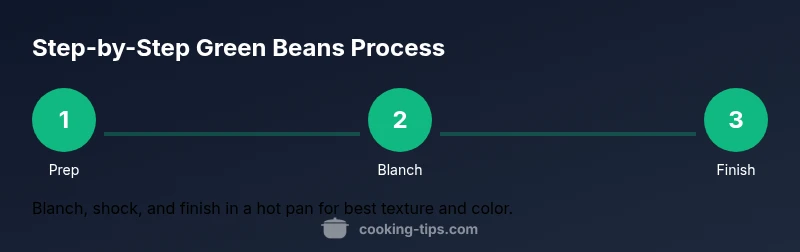
Blanch, shock, and finish in a hot pan for best texture.
How long should I boil or blanch green beans?
Blanch green beans for about 2 to 3 minutes until they turn bright green and are just tender. Overcooking can lead to a dull color and mushy texture.
Blanch for 2-3 minutes until bright green.
Can I cook green beans in the microwave?
Yes, you can microwave with a splash of water and a covered dish for 3-5 minutes, shaking halfway. This method may yield softer beans than blanching.
Microwave with water for a quick finish.
Should I trim the ends or cut beans into pieces?
Trim the stem end for clean texture. Cutting into uniform pieces helps with even cooking if you plan to add them to salads or stews.
Trim ends for uniform cooking.
How should I store leftover green beans?
Store in a shallow container in the fridge for up to 3 days. Reheat quickly in a hot pan to restore shine and texture.
Store in fridge 3 days; reheat quickly.
Are canned green beans a good substitute?
Canned beans are convenient but typically softer and lack the crisp-tender texture of fresh beans. Use them when fresh aren’t available and adjust cooking time accordingly.
Canned beans are convenient but softer.
Watch Video
Top Takeaways
- Choose fresh beans with vibrant color and snap when bent.
- Blanch, shock, and finish for best texture.
- Season at the end to prevent bitterness and retain brightness.
- Store leftovers properly to maintain flavor and texture.