French Beans How to Cook: A Practical Guide
Master french beans how to cook with practical methods: blanching, steaming, sautéing, and roasting. Learn prep, timing, seasoning, and serving ideas for bright, crisp green beans.


In this guide you will learn exactly how to cook french beans for crisp, bright flavor and tender texture. You’ll choose between blanching, steaming, sautéing, and roasting, with timing for different cuts and batch sizes, plus seasoning ideas and tips to avoid mushiness. By the end you’ll cook french beans confidently for any dish.
french beans how to cook: What are French beans and why they deserve careful cooking
French beans, also known as haricot verts, are slender, stringless green beans prized for their bright flavor and tender snap. They cook quickly, so a light touch and exact timing matter. When done right, they stay vibrant green and crisp, with a delicate sweetness that pairs with everything from citrus to butter and herbs. In this section we explore the basics of what makes these beans special and why the exact approach to cooking them can elevate a simple side into a star. According to Cooking Tips, fresh beans retain color best when cooked briefly and cooled quickly. That quick, cool stop helps preserve texture and color for plates that look as good as they taste. As you read, keep in mind that french beans how to cook is less about a single method and more about choosing the right method for your dish and your schedule.
French beans: a quick intro to varietal choices and texture
Most French beans are slender and uniformly green, with a crisp bite when blanched lightly. They are usually harvested young, which means their skins are tender and their seeds small. The texture is the key: a properly cooked bean should have a gentle resistance when bitten, not a dull mush. The flavor ranges from grassy and bright to slightly nutty when finished with fat or toasted seeds. Knowing the bean’s natural texture helps you select a method that respects its qualities rather than masking them with heavy sauces.
Why the method matters: color, texture, and flavor retention
Different techniques yield different results. Blanching preserves color and blast-free crispness but needs a quick ice bath to stop the cooking. Steaming is gentler on the bean’s surface, while sautéing or roasting adds depth through browning and fat-based flavor. The goal is a crisp-tender bite, not a limp or rubbery texture. This nuance matters for plates that feature the beans alongside proteins or grains, where balance is essential.
Tools & Materials
- Fresh French beans (trimmed ends)(Choose beans that are bright green and firm, not wilted)
- Large pot with salted water(Enough space for beans to move; salt for flavor)
- Ice bath or cold water(Stops cooking quickly after blanching)
- Slotted spoon or spider skimmer(Handles beans gently when transferring)
- Colander or drain rack(Drain well after blanching or washing)
- Large skillet or sauté pan(For sautéing and finishing with fat)
- Tongs(For turning beans during cooking)
- Chef’s knife and cutting board(Trim ends and cut beans if needed)
- Butter, olive oil, or other fat(Optional for flavor and browning)
- Lemon zest or herbs (optional)(Bright finish and aroma)
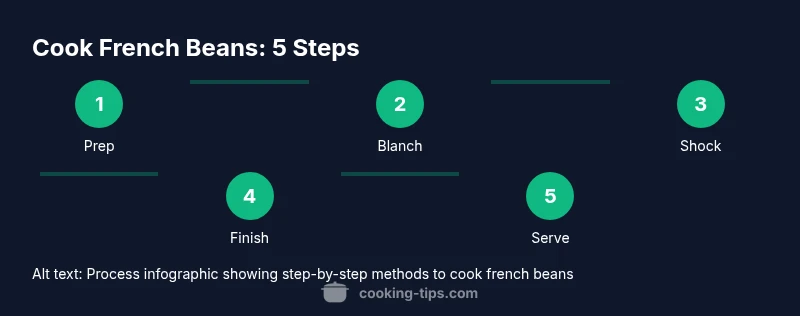
Steps
Estimated time: 20-30 minutes
- 1
Prepare the beans
Rinse the beans under cool water and trim the ends. Pat them dry to remove surface moisture, which helps them brown evenly if you are sautéing. If you will blanch, keep the trimming minimal to maintain uniform size for even cooking.
Tip: Dry beans so they don’t steam when you start cooking. - 2
Boil water and season generously
Fill a wide pot with water and bring to a rolling boil. Salt the water like pasta water; this seasons the beans from the inside as they cook. Have your ice bath ready to stop the cooking immediately after blanching.
Tip: A large pot prevents crowding, which ensures even cooking. - 3
Blanch for color and crispness
Add trimmed beans to the boiling water and cook for a brief time until they turn vibrant green and just tender. Remove with the slotted spoon and plunge into the ice bath to halt the cooking process.
Tip: Keep blanching times short to avoid dull color and mushy texture. - 4
Shock, drain, and dry
Transfer beans from the ice bath to a colander and drain well. Pat dry or spin in a clean towel to remove excess moisture; this improves browning when finishing in a pan.
Tip: Dry beans absorb seasonings better during sautéing. - 5
Choose your finish method
Decide if you will sauté, steam, roast, or simply serve blanched. Each method changes texture and flavor, so pick based on your dish and available time.
Tip: Prep sauces or aromatics ahead so finishing comes together quickly. - 6
Cook with flavor and timing
If sautéing, heat a light layer of fat, add beans, and cook 3-5 minutes, turning frequently. For roasting, spread on a sheet and roast until edges brown lightly. For steaming, keep the beans barely touching water and cover to trap steam.
Tip: Watch closely; beans can go from crisp-tender to overdone quickly. - 7
Finish and taste
Season to taste with salt, pepper, and a final drizzle of fat or citrus if desired. Toss gently to coat and adjust seasoning before serving.
Tip: A pinch of citrus zest or fresh herbs lifts the dish without masking the bean flavor.
Quick Answers
What is the best method to cook french beans for most meals?
Blanching preserves color and texture, while sautéing adds flavor. Choose blanching for color retention and quick serving, or sautéing for richer taste.
Blanch to keep color, or sauté for richer flavor.
Should I trim the ends of french beans?
Yes, trimming both ends and removing any fibrous strings helps with even cooking and a clean bite.
Trim both ends for even cooking and a clean bite.
How long should I blanch french beans?
Blanch until bright green and just tender, usually a couple of minutes depending on bean thickness.
Blanch until bright green and tender, just a couple of minutes.
Can I cook french beans in advance?
Yes, blanch and shock, then refrigerate. Reheat briefly with oil or butter and finish with fresh seasoning.
Blanch and shock, refrigerate, then reheat briefly.
How do I know when beans are done?
They should be crisp-tender with a vivid green color. If they feel mushy, they are overcooked.
Look for crisp-tender texture and bright color.
Can I freeze cooked french beans?
Yes, cool quickly and freeze; reheat gently to retain texture and flavor.
Freeze after cooling and reheat gently.
Watch Video
Top Takeaways
- Choose uniform beans for even cooking
- Blanch for color, then finish with your preferred method
- Season well and don’t overcook
- Finish with fat and bright notes for flavor
- Adapt methods to suit the dish you’re making