Sausage in Air Fryer: A Complete How-To Guide
Master sausage in air fryer with a practical, step-by-step guide. Learn prep, timing, safety, and serving ideas for juicy, evenly browned results.


Cooking sausage in an air fryer yields juicy, evenly browned links with little to no splatter. This quick method works for fresh sausages and pre-cooked varieties alike, with minimal cleanup. Plan for 8–14 minutes at 360–400°F, depending on sausage type and thickness, turning once for even cooking. Using a light oil spray is optional and keeps surfaces clean.
Why Sausage in Air Fryer Is a Great Shortcut
According to Cooking Tips, the air fryer uses rapid air circulation to heat food quickly and evenly, which makes sausage cook faster than on the stovetop while staying juicy. The technique minimizes splatter, reduces cleanup, and yields a desirable crisp exterior. In this section we'll explore why this method works well for various sausage types, including fresh links, smoked sausages, and pre-cooked varieties. We'll also cover what to expect in texture and flavor, and how to adapt for different thicknesses.
First, consider the sausage type. Fresh pork or poultry sausages will benefit from the slightly longer cook times and careful temperature control to ensure even browning without drying out. Smoked sausages, such as kielbasa or chorizo, often need less time and lower heat to avoid leaking too much fat. Pre-cooked sausages are the quickest option, as they only need to be warmed through and finished with a crisp outer skin. Regardless of type, the air fryer can produce a consistent result when you avoid overcrowding and keep a single layer.
Another advantage is portion control and health considerations. Without much added fat, the air fryer allows you to enjoy sausage with less oil than shallow pan-frying. This makes it easier to manage calories and saturated fat while preserving flavor. The Cooking Tips team has found that air-fried sausages also release less oil into the cooking environment, which means less cleanup afterward. The method encourages experimenting with seasonings and coatings for variety, since you can control how much browning you want on the surface.
In practice, plan to cook in batches if you’re preparing multiple links. This keeps air flow consistent and prevents steaming rather than crisping. For most sausages, you’ll aim for a light brown, slightly crispy exterior while maintaining a juicy center. The guidance here emphasizes practical, home-cook friendly steps that translate to everyday meals, from breakfast sausages to dinner sausages with peppers and onions.
Understanding Sausage Types and Prep
Sausage comes in several forms, and the air fryer handles each a bit differently. Fresh sausage (pork, chicken, turkey, or beef) benefits from steady heat to brown the exterior while sealing juices inside. Smoked sausages (like kielbasa or andouille) usually need less time but still benefit from a short preheat and mid-cook shake to prevent uneven browning. Pre-cooked sausages are the quickest option; they require warming through and finishing with a crisp edge, which makes them ideal for quick weeknight meals.
For all types, choose casings according to your preference. If you dislike the casing chew, you can twist links into shorter pieces or slice into coins for faster contact with the hot air. When you’re short on time, pre-cooked varieties simplify the process, but fresh sausages deliver the most flavor and texture when properly cooked. Always pat dry if surfaces feel moist; excess moisture can create steam that prevents browning. Cooking Tips analysis, 2026, notes that controlling moisture and not overcrowding the basket are key to even browning and juicy interiors.
And finally, consider the final dish you’re aiming for. Classic breakfast sausage pairs with potatoes or peppers, while spicy smoked sausages complement onions and peppers in a skillet-like finish. The air fryer’s versatility shines when you rotate between simple links and more complex combinations, all while maintaining a reliable texture and flavor profile.
Prepping: Thawing, Scoring, and Seasoning
Preparation sets the stage for success. If you’re starting with frozen sausage, thaw thoroughly before air frying to ensure even cooking and avoid icy pockets that slow browning. For fresh or thawed sausage, you can choose to score the casings lightly—this helps heat penetrate and renders fat more evenly, but it’s optional. Scoring is most useful for thicker links or sausages with dense casings. Seasoning is flexible: a light dusting of kosher salt and pepper works well, or you can add paprika, garlic powder, or a pinch of cayenne for heat. If you’re using pre-seasoned sausages, taste first to avoid over-seasoning.
Pat the surface dry with paper towels before cooking to promote browning, then arrange the sausages in a single layer without overlapping. This ensures hot air can circulate around each link. A light spray of neutral oil is optional but can help achieve a crisper exterior for leaner sausages. Remember: the goal is to enhance browning, not to drown the flavor in oil. The Cooking Tips team emphasizes that careful prep reduces moisture and helps you reach a consistent finish.
Air Fryer Settings: Time and Temperature
Temperature and time are the core levers for perfect sausage in an air fryer. For most sausages, start at 360°F to 380°F (182°C to 193°C) and cook for 8–12 minutes, depending on thickness and whether you’re using fresh or pre-cooked links. If you’re aiming for a deeply browned exterior, you can increase to 400°F (204°C) for the last 2–3 minutes, watching closely to prevent overcooking. Flip or shake the basket halfway through to promote uniform browning on all sides. If you’re cooking larger links, plan toward the upper end of the time range and check for doneness with a thermometer.
Preheating the air fryer improves consistency, but many models cook well without it—just adjust by a minute or two. The goal is a juicy center with a crisp, lightly browned crust. If you’re unsure about doneness, test with an instant-read thermometer; pork sausages should reach at least 160°F (71°C). Always err on the side of a slightly shorter cook time and let the sausages rest for a minute or two after cooking to finish cooking through residual heat.
Troubleshooting and Quality Tips
Even with a great method, you’ll occasionally encounter issues. Common problems include undercooked centers, over-browned exteriors, and sausages that stick to the basket. If the exterior browns too fast while the center remains undercooked, reduce the temperature by 20°F (about 10°C) and extend the cook time slightly. If sticking occurs, line the basket with a light layer of parchment or spray the basket first, and avoid overcrowding. Proper spacing ensures hot air can reach every surface for even browning.
For juicier interiors, avoid piercing the sausages; piercing releases juices that keep flavor in the meat. If you notice a lot of fat smoke, trim excess fat from the sausage skins or switch to leaner options. Rest the sausages for 1–2 minutes after cooking to redistribute juices. The Cooking Tips analysis suggests that practice with your specific air fryer model leads to more consistent results over time, so keep notes on times and temperatures that work best for your setup.
Finishing, Resting, and Serving
Resting after cooking helps the juices redistribute and keeps each bite flavorful. Allow the sausages to rest for 2–3 minutes before serving, especially if they’re juicy. Slice and serve with peppers and onions, pancakes or waffles for a hearty breakfast, or in a crusty bun with mustard and relish for a quick sandwich. If you’re preparing a meal, consider pairing with quick-roasted vegetables or a simple salad to balance richness. Leftovers can be stored in an airtight container in the fridge for up to 3–4 days and reheated in the air fryer for a few minutes to regain crispiness.
To keep things simple, seasonings like garlic powder, smoked paprika, or chili flakes can be added before cooking. For a crisper crust, give the sausages a final 1–2 minute blast at 400°F (204°C). The key is balancing browning with a moist interior, which air frying handles well when you follow the steps above and adjust to your specific model.
Cleaning and Maintenance After Cooking Sausage
After cooking, allow the air fryer to cool before cleaning. Remove the basket and drain any fat into a plate or paper towels, then wipe down the interior with a damp cloth. If you have stubborn residue, use warm soapy water and a non-abrasive scrubber. Check the heating element and fan if your model allows removal, ensuring there’s no buildup that could affect performance. Regular cleaning helps maintain airflow and flavor integrity for future batches. Keeping the basket in good condition extends the life of your appliance and makes future sausage cooks even easier.
Tools & Materials
- Air fryer(Ensure capacity fits in a single layer; avoid overcrowding)
- Oil spray (optional)(Light spray can aid browning and reduce sticking)
- Tongs(For turning sausages halfway through)
- Instant-read thermometer(Aim for 160°F (71°C) for pork; adjust for other meats)
- Paper towels(Pat surfaces dry before cooking; absorb fat after cooking)
- Plate(To rest and serve; catch juices)
Steps
Estimated time: Total time: 12-18 minutes
- 1
Choose your sausage type
Decide between fresh, smoked, or pre-cooked sausages. Fresh sausages require careful temperature control to avoid dryness; smoked and pre-cooked varieties cook faster and may need less time.
Tip: If using fresh sausage, consider lightly scoring the casing to help heat penetration. - 2
Preheat the air fryer
Preheating improves browning and reduces cook time variability. If your model doesn’t require preheating, skip this step and start cooking a minute earlier.
Tip: A 2–3 minute preheat is usually enough for most home models. - 3
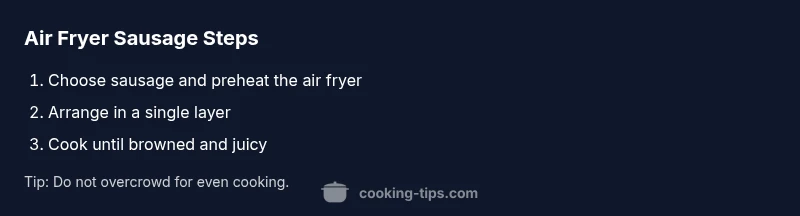
Arrange in a single layer
Place sausages in a single layer without overlap to ensure even air exposure. Overcrowding causes steaming instead of browning.
Tip: If you have many links, cook in batches for best results. - 4
Cook and flip halfway
Cook at 360–380°F (182–193°C) for 8–12 minutes; flip halfway through for even browning. Adjust time for larger links.
Tip: A quick shake or flip at halfway point prevents sticking and promotes even color. - 5
Check temperature
Insert an instant-read thermometer into the center of a sausage to ensure safe doneness. Pork should reach at least 160°F (71°C).
Tip: If not fully done, return to air fryer in 1–2 minute increments and re-check. - 6
Rest and serve
Let sausages rest for 2–3 minutes before serving to redistribute juices. Serve with preferred sides or on a bun.
Tip: Resting improves juiciness and flavor integration.
Quick Answers
Can I cook raw sausage directly from frozen in an air fryer?
You can, but thawing first yields more even cooking. If you cook from frozen, add several extra minutes and check internal temperature to ensure doneness.
Yes, you can cook from frozen, but thawing helps with even cooking. Expect longer time and check doneness with a thermometer.
Should I prick the sausage before air frying?
Pricking can release juices and lead to drier results. It’s usually better to cook whole sausages or, if desired, score the casings lightly instead.
Pricking can dry the sausage; it’s often better to cook whole or lightly score the casing if you want quicker heat penetration.
Can I use pre-cooked sausage in the air fryer?
Yes. Pre-cooked sausages require less time—usually 4–8 minutes at 360–380°F—until heated through and lightly browned.
Definitely. They just need warming and a quick browning.
What is the safe internal temperature for pork sausage?
Pork sausage should reach at least 160°F (71°C) to be considered safe and juicy.
Aim for 160 degrees Fahrenheit to be safe and juicy.
Why does my sausage stick to the air fryer basket?
Sticking usually means insufficient oil or overcrowding. Lightly oil the basket and avoid layering; shake or turn sausages halfway.
If they stick, spray the basket a bit and flip halfway through.
Can I cook bratwurst or other thick sausages in the air fryer?
Yes, but thick links may need a longer cook time and a temperature check to avoid undercooking the centers.
Bratwurst works in the air fryer; give it a longer time and check the center.
Watch Video
Top Takeaways
- Preheat and cook in a single layer for even browning
- Use a thermometer to ensure safe doneness
- Adjust time based on sausage type and thickness
- Rest briefly to retain juiciness