How to Deal with Cooking Smoke in an Apartment
Learn practical, step-by-step methods to handle cooking smoke in small spaces. From immediate containment to long-term prevention, Cooking Tips provides safe, actionable guidance for improving air quality in apartment kitchens.


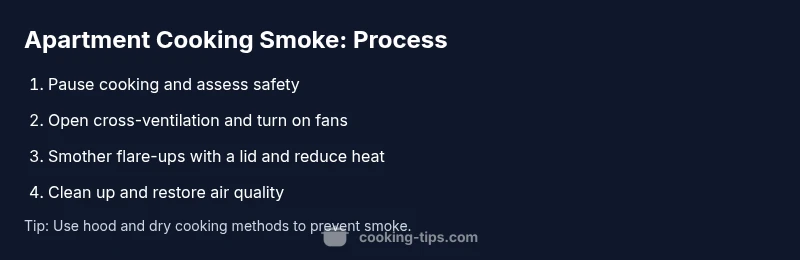
Dealing with cooking smoke in an apartment starts with quick containment: open windows, turn on ventilation, and use a fan to pull smoke outside. Then assess the source, switch off the burner if needed, and cover the pan to smother flare-ups. This guide by Cooking Tips walks you through practical steps, safety checks, and simple tools to restore air quality fast.
Immediate actions when smoke appears
According to Cooking Tips, when you notice cooking smoke, stop adding heat immediately and move people away from the kitchen. If there's a real flame, evacuate and call emergency services. Then, switch off the burner, place a lid on the pan to smother flare-ups, and open a window to start cross-ventilation. Quick action reduces smoke buildup and lowers the risk of flames spreading. Keep a cloth handy to wipe up splatter and prevent oil from continuing to burn. The Cooking Tips team emphasizes calm, controlled responses rather than panic. This approach buys you time to assess the source and deploy a safe ventilation plan.
Creating cross-ventilation quickly
Open windows on opposite sides of the apartment if possible to establish cross-ventilation. If you have a balcony door or a secondary exterior opening, use it too. Turn on the kitchen range hood if it is clean and functional; if not, point a standing fan toward the open window to pull air outside. Place another fan near the doorway to create an airflow path that carries smoke out and prevents it from accumulating in living spaces. The goal is to replace indoor air with outdoor air within a couple of minutes. Cooking Tips notes that well-ventilated spaces recover air quality faster and reduce lingering odors.
Control heat and oil to minimize smoke
Lower the heat and use a lid to trap and control splatter. Oil smokes at high temperatures; use oil with a higher smoke point when appropriate, or switch to gentler cooking moments like steaming. Preheat pans slowly and avoid overheating fats. Keep ingredients prepped and dry; moisture in food increases steam and can carry fat particles into the air. If you notice smoke from steam and splatter, remove the pan from heat and let it cool briefly before resuming on a lower flame. Small adjustments in technique can dramatically cut smoke production.
Ventilation devices and air cleaning tools
A hood or exhaust fan helps remove smoke at the source, while portable fans can aid airflow if installed systems are weak or blocked. An air purifier with a true HEPA filter can capture fine particles, and activated carbon can help with odors. Place purifiers near the cooking area for best effect, and avoid placing them directly over the stove where heat may reduce efficiency. Remember to maintain filters according to the manufacturer’s guidance to keep performance high. These tools work together with your ventilation to speed air recovery.
Cleaning and air recovery steps
Once the smoke starts to clear, turn off all fans, but keep windows open for a bit longer to flush out residual fumes. Wipe down kitchen surfaces, wipe the hood filter with warm, soapy water, and re-seat any removed filters after drying. Vacuum or wipe up ash or soot from surrounding areas gently to prevent re-suspension in the air. This phase reduces lingering odors and helps restore a sense of normalcy in your apartment. If odor persists, repeat ventilation and cleaning steps, then consider running an air purifier for several hours.
Safety and landlord/fire safety considerations
If the smoke triggers your apartment’s smoke detector, follow your building’s safety plan: evacuate if the alarm continues, or silence the detector only after you have confirmed there is no active fire. Never disable a smoke detector. If you suspect a fire or cannot control the smoke, contact emergency services and notify building management. Always keep a fire extinguisher accessible in the kitchen and review its expiration date occasionally. Cooking Tips emphasizes safety first, especially in multi-unit buildings where smoke can affect neighbors.
Quick fixes and safety checklists
Keep a simple checklist handy: stop heat, smother with a lid, open a window, turn on exhaust, turn on a fan, and check the smoke detector. After cooking, clean the hood filter and wipe surfaces to prevent mixed odors. A quick post-cook routine can prevent stubborn smoke buildup in future sessions. If you are cooking frequently in a small space, consider scheduling shorter, lower-heat cooking blocks to minimize repeated smoke events.
Long-term prevention strategies for apartment cooking
Plan for safer cooking by choosing techniques that minimize smoke, such as steaming, poaching, or simmering instead of deep-frying. Maintain a clean hood and ducts, keep a dry towel on hand, and use dry ingredients to reduce moisture-driven steam. Consider investing in a compact, energy-efficient exhaust fan or a modular air-purification setup that complements your apartment layout. By updating habits and improving ventilation, you can significantly reduce the likelihood of smoky kitchens over time.
Dealing with lingering odors and particles
If odors linger after the air seems clear, run an air purifier on a low setting for several hours and keep windows slightly open if humidity allows. Wipe fabrics and curtains that may have absorbed smoke particles, and launder textiles in hot water when possible. Avoid reintroducing odors by cooking with strong-smelling ingredients in the same space for several hours after a smoke event. Consistent cleaning and ventilation create a calmer air environment in your apartment.
Tools & Materials
- Fans (box fan and standing fan)(Use to direct air out of the kitchen toward exterior openings)
- Extractor hood or range hood(Ensure filter is clean; use it if available)
- Fire extinguisher or fire blanket(Keep accessible in kitchen; know how to use)
- HEPA air purifier with activated carbon(Helps remove fine particles and odors; place near cooking area)
- Dish soap and warm water(For cleaning hood filters and surfaces)
- Lid for skillet or pot(Smothers flare-ups and reduces splatter)
- Dry cloths or towels(For quick cleanup and blotting moisture)
Steps
Estimated time: 20-35 minutes
- 1
Pause cooking and assess
Stop adding heat and quickly check for flames. If there is an active fire, evacuate and call emergency services. If not, proceed with containment steps to prevent further smoke buildup.
Tip: Keep a clear path to exits and have a lid ready to smother any flare-ups. - 2
Open windows and create airflow
Open windows on opposite sides of the kitchen to establish cross-ventilation. If you have a balcony door, use it to create a longer path for air to exit. Avoid sealing the space; air should move freely.
Tip: Position fans to direct air toward exterior openings rather than recirculating inside. - 3
Turn on exhaust and secondary fans
Switch on the range hood if it’s functional and clean. If no hood, use a box fan pointed toward an open window. Use a second fan to pull air from the living area toward the exit path.
Tip: Ensure cords are out of the way to prevent accidents. - 4
Smother flare-ups with a lid
If a flare-up occurs, carefully place a metal lid on the pan to smother flames. Do not move the pan if a flame is present; turn off heat and wait for it to subside.
Tip: Avoid adding water to hot oil; it can cause dangerous splatter. - 5
Lower heat and manage oil temperature
Reduce the flame and use lower oil temperatures. Consider finishing cooking with simmering or steaming rather than high-heat frying. Dry ingredients help limit steam that can carry oil particles.
Tip: Monitor oil temperature with a kitchen thermometer if possible. - 6
Address the smoke detector safely
If the detector sounds, evacuate if advised by building policy. Do not disable the alarm. Once the area is safe, ventilate further and reset per manufacturer guidelines.
Tip: Know your building's safety protocol to avoid penalties. - 7
Clean up to restore air quality
Wipe surfaces, wash hood filters, and vacuum dust particles after the space dries. Odors can linger; using an air purifier can help.
Tip: Clean hood filters promptly to prevent grease buildup. - 8
Assess air quality and re-enter
Test the room air by checking for visible smoke or strong odors. If still present, repeat ventilation steps and use purification devices for several hours.
Tip: Patience pays off; air quality may take time to fully normalize. - 9
Prevent future smoke episodes
Adopt safer cooking practices: lower heat, dry ingredients, lid use, and shorter cooking bursts. Regular hood maintenance and routine cleaning reduce recurring smoke events.
Tip: Preheat pans gradually and choose cooking methods with lower smoke potential.
Quick Answers
What should I do first when I notice smoke in the kitchen?
Stop cooking, smother with a lid if safe, and open a window. If flames are present, evacuate and call emergency services. Then assess the source and start ventilating.
First, stop cooking and smother any flames with a lid if safe. Open a window and call for help if there’s a fire. Then assess the source and start ventilating.
Is it safe to use a fan to vent smoke in an apartment?
Yes, a fan can help move air toward an exterior opening and speed up smoke clearance. Use it in conjunction with the range hood or exhaust and keep doors open for better airflow.
Yes, fans help push smoke toward outside openings when used with your hood. Keep doors open to improve airflow.
Will turning on the range hood always clear smoke?
A hood helps, especially when clean and functional, but it may not clear heavy smoke quickly if the space is tight or the vent is blocked. Combine it with cross-ventilation and fans for best results.
Hood helps a lot, but it may not clear heavy smoke alone. Use cross-ventilation and extra fans for faster relief.
How can I prevent smoke when frying in an apartment?
Use lower heat, choose oils with higher smoke points, dry food thoroughly, and keep lids handy. Preheat gently and avoid overfilling the pan to reduce splatter and smoke.
Cook with lower heat, dry food, and use lids. Preheat gently and avoid overcrowding the pan to cut down on smoke.
When should I call emergency services due to smoke?
Call emergency services if there is an active fire, flames you cannot control, or if you feel unsafe. Evacuate and alert neighbors and building management as required by your building’s safety plan.
Call emergency services if there’s a fire or you feel unsafe. Evacuate and notify neighbors and management as required.
Can air purifiers help with cooking smoke in an apartment?
Air purifiers with true HEPA filters help capture smoke particles, and models with activated carbon can help with odors. Use them as a supplementary tool, not a replacement for ventilation.
Air purifiers can help capture smoke particles andodor but should be used alongside ventilation, not as a sole solution.
Watch Video
Top Takeaways
- Ventilate early and often to restore air quality quickly.
- Use lids and controlled heat to minimize smoke production.
- Clean and maintain ventilation devices to sustain effectiveness.
- Follow fire safety rules and building guidelines to stay safe.