How to Cook an Egg in the Microwave: A Practical Guide
Master a quick, safe way to cook eggs in the microwave with simple steps, timing tips, and flavor ideas. Learn soft- and hard-cooked results in minutes.


According to Cooking Tips, you can cook eggs in the microwave quickly and safely. By using a microwave-safe container, adding a splash of water or butter, and controlling time, you can achieve soft- or hard-cooked results in under 2 minutes. Start with a peeled or cracked egg in a covered mug or bowl, then rest briefly before serving to finish cooking evenly.
Why microwave eggs work
Eggs contain mostly water and protein that respond quickly to microwave heat. When you nudge them with a quick burst of energy in a microwave-safe container, steam forms inside the yolk and white, cooking from the outside in. A covered mug traps steam, which helps set the egg without drying it out. This method is especially convenient for busy mornings when you want a quick protein boost without turning on the stove. The key is to start with a safe container, add a small amount of liquid to create steam, and heat in short intervals, checking frequently to avoid overcooking.
Safety basics when microwaving eggs
Never microwave eggs in shells; they can explode. Always use a microwave-safe mug or small bowl with a vented lid or plate. Add a tablespoon of water or a knob of butter to generate steam and keep the surface moist. Heat in short bursts and pause to check doneness. Let the egg rest after microwaving to finish cooking evenly. Avoid metal or foil; ensure the container is stable and microwave-safe.
Choosing the right method: soft-cooked, hard-cooked, and poached-inspired
microwaving offers several textures. For a soft-cooked texture, aim for shorter bursts and a light rest, allowing the center to stay slightly runny. For a firmer, hard-cooked result, increase the total time in small increments until the white is fully set and the yolk firms up. If you prefer a poached-like result, use a bit more liquid, keep the lid vented, and heat in shorter bursts to mimic gentle poaching without simmering on the stove. Remember: microwaves vary, so think of timing as a starting point rather than a fixed rule.
Step-by-step quick method
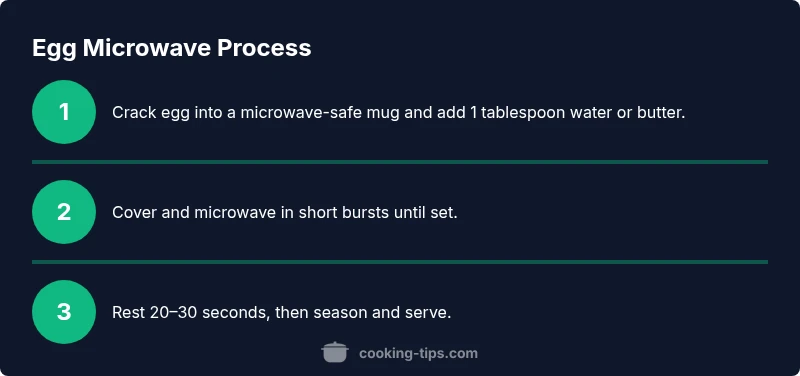
This section provides a concise, action-focused approach you can follow in minutes. Crack an egg into a microwave-safe mug, add a tablespoon of water or butter, cover with a vented lid or plate, and microwave in short bursts (about 20-40 seconds). Check for doneness, then rest for 20-30 seconds before serving. Season to taste and enjoy immediately for best texture.
Troubleshooting common issues
If the egg is undercooked, continue microwaving in 10- to 20-second bursts, checking after each interval. If the texture is rubbery, reduce the total time or use a little more liquid to create steam. Eggs can sometimes spit or splatter if not covered well; ensure a proper vented lid is in place. Exploding eggs are rare but can occur if shells are present or the container is not vented—always crack into the dish, not the shell, and vent the cover.
Flavor variations and serving ideas
Boost flavor by adding a pinch of salt, pepper, or your favorite herbs after cooking. Stir in a tablespoon of shredded cheese, chopped chives, or a small amount of salsa for extra zing. Toast a slice of bread and serve the egg mug as a quick breakfast sandwich. For a savory twist, fold in a little grated cheese and a dash of hot sauce before microwaving in the next batch.
Quick cleanup and storing leftovers
Rinse the mug and lid with warm soapy water right after use to prevent dried-on yolk. If you have leftovers, transfer to a sealed container and refrigerate for up to 1 day. Reheat gently in 10- to 15-second bursts, checking frequently to avoid overcooking. Do not store in the mug with the hot plate still attached; use a separate dish for storage.
Safety recap and best practices
Always use microwave-safe, vented containers. Never microwave eggs in shells. Use short heating bursts and allow a brief rest to finish cooking with residual heat. Adjust times for your microwave’s power and the egg size. With practice, you’ll land on a reliable, repeatable method that fits into busy mornings.
Tools & Materials
- microwave-safe mug or small bowl(At least 8 oz (240 ml) capacity; opaque containers heat more evenly.)
- microwave-safe lid or plate(Vent to allow steam to escape and prevent pressure build-up.)
- water or butter(About 1 tablespoon water or a small knob of butter per egg to create steam.)
- fork or spoon(To crack the egg into the mug and stir if needed.)
- salt, pepper, optional toppings(Add after cooking for best texture and flavor.)
Steps
Estimated time: Total time: 3-5 minutes
- 1
Gather essentials
Place a microwave-safe mug, water or butter, lid, and 1 egg on the counter so everything is within reach. This prevents interruptions during cooking and helps you stay focused on timing.
Tip: Having everything ready speeds up the process and reduces mistakes. - 2
Crack into the mug
Carefully crack the egg into the mug. If you worry about shells, crack into a separate bowl first and then transfer. This reduces shell fragments ending up in your egg.
Tip: Check for shell pieces before adding liquid. - 3
Add liquid
Pour in 1 tablespoon water or add a small knob of butter to the mug. The liquid creates steam and helps prevent the egg from drying out during cooking.
Tip: Too little liquid can cause uneven texture; a small amount makes a big difference. - 4
Cover and vent
Cover the mug with a vented lid or plate to trap steam while allowing a small vent for pressure release. This keeps the top moist and prevents splatter.
Tip: Vent is essential to avoid a messy microwave and uneven cooking. - 5
Microwave in short bursts
Microwave on high for 20-40 seconds, then pause and check doneness. If needed, continue in 10-20 second bursts until the white is set and the yolk reaches your preferred consistency.
Tip: Check often to prevent overcooking; microwaves vary by model. - 6
Rest briefly
Let the egg rest for 20-30 seconds after microwaving to finish cooking with residual heat. This helps achieve a uniform texture without overcooking the outside.
Tip: Resting is as important as the heating step for even texture. - 7
Season and serve
Season to taste with salt and pepper, then serve immediately. Consider adding cheese, herbs, or hot sauce for extra flavor.
Tip: Season after cooking for the best control over saltiness.
Quick Answers
Is it safe to cook eggs in the microwave?
Yes, it is safe when you use a microwave-safe container, vented lid, and short heating intervals. Never microwave eggs in shells.
Yes—it's safe if you vent the container and avoid microwaving eggs in shells.
How long should I microwave an egg for soft-cooked results?
Start with 20-30 seconds on high, then check and continue in 10-15 second bursts until the white is set and the yolk remains soft.
Try 25 seconds, then add 10-15 second bursts as needed.
Can I microwave eggs with the shell on?
No. Microwaving eggs in their shells can cause an explosive rupture. Always crack into a dish first.
Never microwave eggs in their shells.
What if the egg explodes or spits?
This usually means steam built up without proper venting or too-long bursts. Use a vented lid and shorter intervals, then rest and recheck.
Vent the container and heat in short bursts to prevent explosions.
Can I add cheese or veggies after microwaving?
Yes. Add cheese, herbs, or veggies after cooking for best texture. Reheat gently if adding pre-cooked items.
Add toppings after cooking and enjoy.
Is microwaving eggs healthier than boiling?
Both methods preserve protein without added fats. Microwaving is faster; boiling takes longer but can be more forgiving on texture.
Both methods are healthy; microwaving is fastest.
Watch Video
Top Takeaways
- Use a microwave-safe mug with a vented lid.
- Cook in short bursts and rest briefly.
- Add water or butter to prevent drying and explode risk.
- Season after cooking for best flavor.