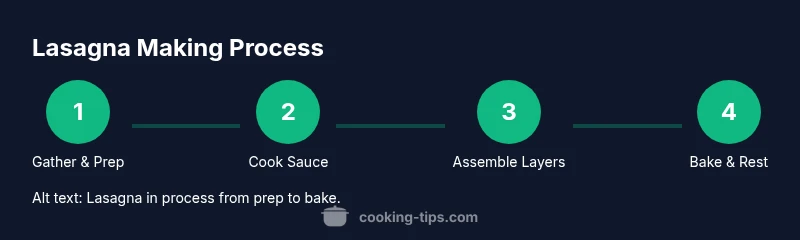
Easy to Cook Lasagna: Simple Weeknight Recipe
A complete, reliable guide to making easy to cook lasagna with simple ingredients, make-ahead options, and dependable bake times. Perfect for weeknights and family dinners from Cooking Tips.


By following these steps, you’ll master easy to cook lasagna that’s rich, comforting, and achievable on a weeknight. This guide covers a simple meat or veggie sauce, a creamy cheese layer, and no-fuss assembly using either regular or no-boil noodles. You’ll learn a dependable bake time, make-ahead options, and smart substitutions to keep flavor high without complicating the process.
Why easy to cook lasagna is a weeknight winner
For busy home cooks, lasagna can feel intimidating, but with smart simplifications it becomes approachable. According to Cooking Tips, the best easy to cook lasagna starts with a flexible plan: choose a sauce you already enjoy, use pantry staples, and skip steps that don’t add flavor. The goal is a comforting dish you can assemble and bake without sacrificing depth or satisfaction.
A core idea is to simplify the components without compromising texture: a straightforward sauce, a creamy cheese layer, and sturdy noodles that hold their shape. The Cooking Tips team emphasizes that you don’t need exotic ingredients to achieve big flavor—quality pantry staples and thoughtful seasoning deliver the most impact. Start by deciding whether you’ll make a meat version, a vegetable-forward version, or a mix of both. Each path works with the same layering technique, so focus on balance between sauce, cheese, and noodles.
As you plan, consider time-saving options like no-boil noodles, oven-ready sheets, or a make-ahead method. These conveniences reduce hands-on time while keeping the lasagna tasting homestyle and comforting. The emphasis is on reliable technique, not perfection, so you can enjoy a meal that tastes like it took longer than it did.
Essential ingredients and flexible substitutions
A winning lasagna starts with simple, flexible ingredients. For the core sauce, you’ll need olive oil, onions, garlic, tomatoes (canned crushed or sauce), ground meat or mushrooms for a vegetarian version, and basic seasonings like salt, pepper, oregano, and basil. If you’re using meat, ground beef or a mix of beef and pork works well. For a vegetarian route, mushrooms, spinach, or zucchini add body without heaviness.
For the cheese layer, options include ricotta, cottage cheese, mozzarella, and parmesan. If you prefer a lighter approach, blend part ricotta with part cottage cheese or use part mozzarella and part cottage cheese. A little cream cheese can add silkiness if you like. You can also mix in eggs to help set the filling. For noodles, choose your preference: standard dry lasagna sheets that you boil, or no-boil sheets for speed. If you’re gluten-free, look for gluten-free lasagna sheets. Finally, ladder in a splash of milk or stock in the sauce to achieve the right creaminess.
Budget-friendly swaps are common: use leftover roasted vegetables, grate parmesan instead of ricotta, or stretch meat with lentils while maintaining texture and flavor.
Building a simple, flavorful sauce
Sauce is the backbone of lasagna. A successful easy lasagna uses a robust tomato base with aromatics and a gentle simmer to develop depth. Start by heating olive oil, sautéing onion until translucent, then adding garlic just until fragrant. Add tomatoes, a pinch of sugar if the tomatoes taste sharp, and seasoning. If you’re using meat, brown it well and drain excess fat before adding it to the sauce.
Simmer for 15-20 minutes to marry flavors, then taste and adjust. If you want heavier body, a small amount of tomato paste can deepen the color and intensity. For a vegetarian sauce, sauté mushrooms and spinach with the aromatics, then combine with the tomato base. A dash of red wine can add complexity if you’re not avoiding alcohol; otherwise skip it. The sauce should taste bright, not flat, and should cling to noodles rather than watery.
Cheese layer and dairy choices
The dairy component lightens or enriches the lasagna, depending on what you prefer. A classic combination is ricotta mixed with an egg, parsley, and a pinch of salt, spread in an even layer. If ricotta feels heavy, blend in cottage cheese or use a looser layer of cream cheese folded into the lighter cheese mix. Mozzarella provides gooey texture; mix shredded mozzarella with a handful of parmesan for sharp, nutty flavor.
For a lighter version, use part ricotta and part cottage cheese, or substitute Greek yogurt (unsweetened) for some of the ricotta. If you want extra creaminess without extra fat, fold in a bit of cottage cheese into the mozzarella layer. A final sprinkle of parmesan on top adds color and a crisp edge during baking.
Noodles: no-boil vs boiled and no-fuss prep
No-boil noodles save time and reduce dishwashing, but you’ll want to ensure they’re well hydrated. If you choose traditional boiled sheets, cook them until just al dente (about 6-8 minutes), then lay them flat to prevent sticking. Dry pasta can crack if overcooked, so keep boiling time short and rinse with cold water to stop cooking. For gluten-free options, choose no-boil gluten-free sheets and avoid overfilling to keep shapes intact.
Layering works best when noodles are flexible and not brittle. If your sauce is very thin, give the noodles a quick dip in the sauce before layering; this helps them soften without adding extraneous moisture. Use enough sauce to cover each layer lightly but thoroughly to prevent dry edges.
Layering technique: order, amounts, and airflow
To build a cohesive lasagna, follow a consistent layering order: sauce on the bottom, noodles, cheese mixture, more sauce, and a final cheese layer. Repeat until you reach the pan’s top. Aim for even distribution rather than piling heavy sections that sit in the middle. Avoid super thick last layers, which can prevent proper browning on top.
Even layering helps ensure even baking. Use about 1 cup of sauce per layer, and spread cheese evenly but not so thick that the layers won’t seal. If you’re using a glass baking dish, place a thin layer of sauce on the bottom to help prevent sticking and to showcase the colors as the dish bakes. Resting the assembled lasagna for 15-20 minutes before baking helps the layers set.
Baking times, temperatures, and doneness checks
Preheat the oven to 375°F (190°C). Cover the pan with foil for the first 25-30 minutes to trap moisture and prevent the top from burning. Remove the foil for the final 10-15 minutes to achieve a lightly crisp top. Bake until the center registers about 165°F (74°C) on an instant-read thermometer, indicating safety and proper set.
Let the lasagna rest for 10-15 minutes after removing from the oven; this makes slicing cleaner and helps the sauce reabsorb into the noodles. If you want extra browning on top, you can broil for 1-2 minutes, but watch closely to avoid scorching. For a vegetarian version, check that the noodle sheets are fully softened and the center reaches the target temperature.
Make-ahead, freezing, and reheating leftovers
Lasagna benefits from make-ahead planning. Assemble the pan up to the final cheese layer, cover tightly, and refrigerate for up to 24 hours before baking. You can also freeze unbaked lasagna in a parchment-lined dish; wrap tightly and freeze for up to 2-3 months. Bake from frozen by adding 30-45 minutes and ensuring the center reaches 165°F.
To reheat leftovers, cut portions and microwave on medium power in 1-2 minute intervals, or reheat slices in a covered pan with a splash of water or broth to prevent drying. A gentle heat maintains moisture and flavor.
Troubleshooting common issues and quick fixes
If your lasagna comes out watery, it’s usually due to too much sauce or insufficient draining of meat. Tilt the pan and spoon off excess moisture, or let the sauce sit briefly to thicken before assembling. If the top is under-browned, remove foil for the last minutes and increase oven heat slightly, watching carefully to prevent scorching.
Torn noodles, uneven layers, or a dry center can be addressed by adjusting the amount of sauce in each layer and ensuring even distribution of noodles. If dairy separates or becomes grainy, reduce heat and stir gently to recombine. Finally, if you want to save time in future batches, prepare the components in advance and assemble when you’re ready to bake.
Authoritative food-safety notes
- For guidance on safe cooking temperatures and handling, see https://www.fsis.usda.gov
- For general food safety guidelines, see https://www.foodsafety.gov
- For educational cooking tips and home-kitchen guidance, see https://extension.illinois.edu
Tools & Materials
- 9x13 baking dish(Deep enough for multiple layers)
- Large skillet(For browning meat and sautéing aromatics)
- Medium pot(Sauce simmering or noodle boiling)
- Mixing bowls (2)(Mix cheese filling and sauces)
- Whisk(Smooth ricotta filling)
- Sharp knife(Chop onions, garlic, and vegetables)
- Cutting board(Prep surface for vegetables)
- Aluminum foil(Cover during initial bake)
- Oven mitts(Handle hot pans safely)
- Measuring cups/spoons(Accurate ingredients)
- No-boil lasagna noodles (optional)(Speeds up assembly)
- Ricotta cheese(Cheese layer base)
- Mozzarella cheese(Melty topping and layers)
- Parmesan cheese(Flavor and browning on top)
- Ground beef (optional)(For meat sauce)
- Onion(Aromatics base)
- Garlic cloves(Flavor base for sauce)
- Olive oil(Cooking fat for sauce)
- Canned crushed tomatoes(Tomato base for sauce)
- Salt and pepper(Seasoning)
- Dried oregano and basil(Herb flavor)
- Fresh parsley (optional)(Garnish and brightness)
- Eggs(Bind ricotta filling)
- Milk or cream (optional)(Adjust sauce creaminess)
Steps
Estimated time: 90-120 minutes
- 1
Gather ingredients and preheat oven
Collect all ingredients and equipment before you start. This reduces last-minute scrambling and keeps the workflow smooth. Preheat the oven to 375°F (190°C) so you’re ready to bake once layering is complete.
Tip: Set out ingredients in the order you’ll use them to minimize back-and-forth. - 2
Prepare the sauce base
Heat olive oil in a skillet, then sauté onion until translucent and fragrant. Add garlic for about 30 seconds more, then stir in crushed tomatoes, salt, pepper, oregano, and basil. If using meat, brown it separately and drain fat before adding to the sauce.
Tip: Cooking aromatics first boosts flavor depth without needing long simmering. - 3
Create the cheese filling
In a bowl, mix ricotta with an egg (optional) and chopped parsley. If using cottage cheese, whip it briefly to smooth texture. Season lightly with salt.
Tip: Adding egg helps the filling set while baking. - 4
Cook or soak noodles
If using traditional sheets, boil until just al dente, then drain and rinse with cold water. No-boil noodles should be ready to absorb some moisture from the sauce.
Tip: Avoid overcooking noodles to prevent a mushy final product. - 5
Assemble the first layer
Spoon a light layer of sauce on the bottom of the baking dish. Lay down noodles, then spread a portion of the cheese filling and a layer of sauce.
Tip: Keep each layer even to ensure uniform bake. - 6
Add subsequent layers
Repeat noodles, cheese filling, and sauce until you near the top. Finish with a final layer of sauce and a generous sprinkle of mozzarella and parmesan.
Tip: Do not overfill; every layer should be visible at the edges when sliced. - 7
Bake covered, then uncover to brown
Cover tightly with foil and bake for 25-30 minutes. Remove foil and bake an additional 10-15 minutes until top is bubbly and lightly browned.
Tip: Covering initially traps moisture and prevents a dry center. - 8
Rest and slice
Let the lasagna rest 10-15 minutes after baking so the layers set and slice cleanly. Serve with a simple greens salad for balance.
Tip: Resting reduces gooey slices and improves presentation. - 9
Make-ahead and storage
Prepare components in advance or assemble and refrigerate up to 24 hours before baking. Freeze unbaked portions for longer storage, then bake from frozen with extra time.
Tip: Label refrigerated or frozen portions to keep track of time.
Quick Answers
Can I freeze lasagna before baking, and how long does it keep?
Yes. You can assemble and freeze unbaked lasagna or bake it first and freeze leftovers. When freezing unbaked, cover tightly and bake 30-45 minutes longer when frozen. For baked leftovers, reheat gently to avoid drying.
Yes, you can freeze lasagna either before baking or after cooking. Bake from frozen with extra time, and reheat leftovers slowly to preserve moisture.
Do I need to pre-cook noodles for this recipe?
It depends on your noodles. No-boil sheets work well with a generous sauce; traditional sheets should be boiled to al dente before layering. In both cases, avoid overfilling and ensure they soften evenly.
You can use no-boil noodles for speed, or boil traditional sheets until al dente for best texture.
What can I substitute for ricotta if I’m dairy-free?
Cottage cheese or a blended tofu mixture can be used as a dairy-free substitute. Greek yogurt (unsweetened) can also be mixed with a plant-based cheese for creaminess.
Try cottage cheese or a dairy-free ricotta substitute like blended tofu for a similar texture and flavor.
How long should I bake lasagna and at what temperature?
Bake at 375°F (190°C) for 25-30 minutes covered, then 10-15 minutes uncovered until the top is golden and bubbly. The center should reach about 165°F (74°C).
Bake at 375°F, covered first then uncover to brown; ensure center hits 165°F.
Can I make this recipe gluten-free?
Yes. Use gluten-free lasagna sheets and check all added ingredients (no-knob sauces, cheeses) are gluten-free. No adaptation to the sauce is required beyond the noodles.
Yes, gluten-free noodles let you enjoy lasagna without wheat.
Watch Video
Top Takeaways
- Prepare a simple, flexible lasagna plan
- Choose no-boil or boiled noodles based on time
- Layer evenly for a uniform bake
- Make-ahead options save time on busy days
- Rest the dish before slicing for cleaner portions