No-Cook Lasagna Noodles: A Complete How-To
Master no-cook noodles for lasagna with this step-by-step guide. Learn when to use no-boil noodles, layering, moisture tips, and avoiding common mistakes for reliable, delicious results.


Using no cook noodles for lasagna lets you skip pre-boiling and save prep time. For best results, ensure your sauce is moist, layer noodles evenly, and cover the dish tightly so the noodles soften during baking. This approach works well with no cook noodles for lasagna.
What are no-cook noodles for lasagna?
No-cook noodles for lasagna, commonly called no-boil lasagna noodles, are designed to bake in sauce without a pre-cook. They use a durum wheat flour and parboiled process that allows the noodles to soften as they absorb moisture from the sauce. When used properly, they deliver tender layers with less prep work. In this guide, we explain how to use them effectively and safely in home kitchens. These noodles come in flat sheets with slightly ridged edges that help trap sauce. They are convenient for weeknight dinners, family meals, and when you want to avoid a boiling pot on a busy afternoon. The key is to balance moisture, bake time, and layering so the noodles finish soft without becoming mushy. By understanding their behavior, you can confidently bake lasagna with no-cook noodles and still achieve that classic, creamy texture everyone loves.
When to use no-boil noodles
Using no-cook noodles can be a great time saver when you’re aiming for a streamlined dinner. They shine in recipes that include a robust sauce and plenty of moisture, such as meat ragù or vegetable-forward sauces. According to Cooking Tips, many home cooks find that no-boil noodles reduce prep time without compromising the final texture, especially when they’re careful to layer sauce evenly and avoid overly dry components. They’re also ideal for meal-prep, letting you assemble a dish the night before and bake it later. However, they are not a universal replacement; in very dry sauces or shallow pans, they may need a little extra moisture or time to reach tenderness. The core idea is to ensure that every noodle has enough liquid to absorb as it bakes so the layers stay cohesive.
Sourcing and prepping no-boil noodles
No-boil noodles are widely available in most mainstream grocery stores. Look for broad, flat sheets labeled no-boil or no-cook lasagna noodles, typically made from durum wheat semolina. Store-bought varieties vary in thickness, so you may choose thicker sheets for heartier textures or thinner sheets for a lighter bite. Before assembling, inspect the noodles for any cracked edges and break them to fit your baking pan if needed. Rinsing is generally unnecessary, but a quick rinse with hot tap water can help prevent sticking if the noodles look slightly dry. Keep the noodles flat and separate to prevent them from sticking together as you layer.
Moisture and sauce balance
The most critical factor with no-cook noodles is moisture. Since the noodles won’t be boiled beforehand, you need sauce that is generously moist but not soup-like. A well-moistened ragù or a sauce with a touch of added liquid (water, broth, or milk) helps the noodles hydrate evenly. In practice, aim for a sauce that is nappe-like—cohesive and able to coat the back of a spoon without dripping. If your sauce seems thick, add a small amount of liquid gradually, testing the texture as you go. Conversely, avoid sauces that are too thin, as excess liquid can lead to soggy edges or a runny pan.
Layering strategy for texture and even cooking
Layering is where no-cook noodles shine when done thoughtfully. Start with a thin, even layer of sauce on the bottom of the dish to keep noodles from sticking. Lay a single layer of noodles, followed by a portion of cheese filling and some sauce, then repeat. End with a final cheese layer and a dusting of Parmesan for color and flavor. Space noodles so they don’t overlap excessively, which can trap air and cause uneven cooking. For variety, alternate shapes or sizes to create a mosaic of textures in each bite. The goal is even distribution so every slice yields consistent tenderness.
Sauce choices that work well with no-boil noodles
Ragu-style meat sauces and vegetable-forward sauces both work well with no-boil noodles. A robust tomato sauce or a béchamel-based white sauce can also pair nicely, depending on your preference. The key is to ensure the sauce contains enough flavor and moisture to hydrate the noodles during bake. If you’re using meat, render fat and season well so the flavor carries through the entire dish. Some cooks like to mix ricotta, mozzarella, and Parmesan for the cheese layers to create creamy, well-rounded layers that balance the noodles' texture.
Baking guidance and rest time
No-boil lasagna typically bakes covered first to trap steam, then uncovered to brown the top. A common approach is to bake until the edges are bubbling and the center is set, then let it rest for at least 10-15 minutes before slicing. Resting helps the layers set so slices hold together better. If your noodles seem very firm mid-bake, a brief additional bake with the dish re-sealed under foil can help. Conversely, if the edges become dry or overcooked, cover sooner and adjust bake time accordingly. Oven accuracy and pan depth will influence timing, so use visual cues along with a timer.
Common mistakes and troubleshooting
Common missteps include using noodles that’re too thick, not providing enough moisture, and over-baking to the point of mushiness. To avoid this, ensure the sauce is thoroughly seasoned and adequately hydrated, verify your pan isn’t too shallow, and keep a gentle simmer on the sauce to promote layered tenderness. If the noodles come out undercooked, add a splash more liquid to the baking dish and cover again for 10-15 minutes. If they’re too soft or falling apart, reduce bake time slightly next time or reduce overall liquid content. Finally, letting the lasagna rest is essential for clean slicing and intact layers.
Make-ahead, freezing, and variations
Assemble lasagna with no-cook noodles up to a day ahead and refrigerate covered. The dish should rest at room temperature briefly before baking to promote even cooking. Freezing before baking is possible; wrap tightly to prevent ice crystals. When ready to bake from frozen, increase bake time by 15-30 minutes and ensure the internal temperature reaches a safe level. For variety, try adding sautéed mushrooms, spinach, or roasted peppers to the filling. These add moisture and flavor without complicating the layering.
Verdict
No-cook noodles for lasagna are a practical choice for busy kitchens when you balance moisture and bake time. With careful layering and a saucy base, you can achieve tender noodles and creamier layers without pre-boiling. The approach works well for weeknights and meal-prep, delivering reliable results when you respect moisture and resting time. The Cooking Tips team recommends trying no-boil noodles in a tested recipe to learn how your oven behaves and to refine your layering strategy for consistent results.
Tools & Materials
- No-boil lasagna noodles (no-cook)(Look for flat, wide sheets; choose a thickness you like and plan to fit into a 9x13 inch baking dish)
- Tomato ragù or sauce (moist, flavorful)(Aim for nappe-like consistency; add water/broth gradually if needed)
- Ricotta cheese(Whisk with egg and salt if using as filling)
- Shredded mozzarella(Use whole-milk for creaminess)
- Parmesan cheese (grated)(For topping and extra flavor)
- Ground meat or vegetables (optional filling)(Beef, turkey, or sautéed mushrooms/spinach work well)
- Baking dish (9x13 inch recommended)(Deep enough to hold layers without overflowing)
- Aluminum foil(Tightly cover to trap steam during the initial bake)
- Timer and oven mitts(To monitor bake progress and handle hot pan)
- Optional: milk or broth (0-1 cup)(Add if your sauce seems too thick mid-assembly)
Steps
Estimated time: 60-75 minutes
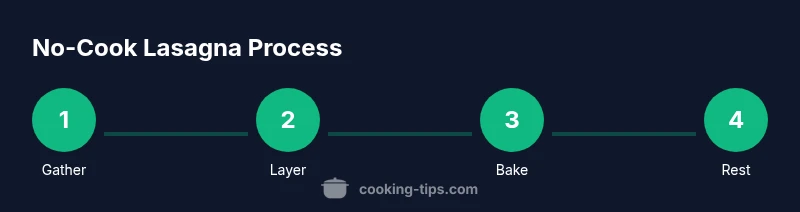
- 1
Gather ingredients and preheat oven
Collect all components: no-cook lasagna noodles, sauce, cheeses, and any fillings. Preheat the oven to the standard baking temperature. This ensures a smooth assembly and even cooking.
Tip: Have all ingredients at roughly room temperature to prevent cold spots during baking. - 2
Prepare cheese filling
Mix ricotta with a pinch of salt and, if desired, an egg for cohesion. This creates a creamy layer that complements the noodles and sauce.
Tip: Whisk until smooth to avoid grainy texture in the final dish. - 3
Spread a thin sauce base
Spread a light coat of sauce on the bottom of the baking dish to prevent sticking and to start moisture distribution evenly.
Tip: A thin layer prevents dry edges and helps noodles hydrate from the bottom up. - 4
Layer noodles, meat/veg, cheese, and sauce
Arrange noodles in a single layer, add meat or vegetables if using, dollop cheese filling, and finish with sauce. Repeat until you reach the top, ending with cheese.
Tip: Avoid overlapping noodles; space them to promote even hydration. - 5
Seal and bake covered
Tightly cover with foil to trap steam. Bake until edges are bubbling and the center starts to set. Remove foil for a final melt and slight browning.
Tip: If the top browns too quickly, tent with foil rather than removing coverage entirely. - 6
Rest, slice, and serve
Let the lasagna rest 10-15 minutes after baking to set the layers for clean slices. Then slice and serve with extra Parmesan if desired.
Tip: Resting prevents messy servings and helps maintain structure.
Quick Answers
Can I use no-cook noodles for lasagna with meat sauce?
Yes, you can use no-cook noodles with meat sauce. Make sure the sauce is flavorful and moist enough to hydrate the noodles during bake, and layer evenly to avoid dry edges.
Yes. Use a moist meat sauce and even layers so the noodles hydrate during baking.
Do no-boil noodles cook in the oven without boiling water?
Yes. No-boil noodles are designed to hydrate and soften during baking when paired with a moist sauce and proper covering.
Yes. They hydrate as they bake when covered and paired with sauce.
Can I substitute regular lasagna noodles for no-boil noodles?
You can substitute, but adjust bake time and moisture. Regular noodles usually require pre-boiling or richer sauce to hydrate properly in the oven.
You can, but expect different timing and moisture needs.
Are no-boil lasagna noodles safe to freeze?
Yes, assemble the dish and freeze before baking. Bake from frozen, adding extra time as needed and ensuring the center reaches a safe temperature.
Yes. You can freeze assembled lasagna and bake later, adding time as needed.
Why are my noodles undercooked when using no-boil noodles?
Undercooked noodles usually indicate insufficient moisture or too little bake time. Increase sauce moisture, cover well, and extend bake time slightly while checking for tenderness.
Usually moisture or time. Hydrate more or bake longer with coverage.
What’s the best way to slice lasagna with no-cook noodles?
Let it rest 10-15 minutes after baking, then slice with a sharp knife or bench scraper for clean edges and neat portions.
Rest, then slice with a sharp knife.
Watch Video
Top Takeaways
- Aim for a moist, nappe-like sauce to hydrate no-cook noodles.
- Layer evenly; avoid noodle overlaps to ensure uniform cooking.
- Cover during the initial bake to trap steam and soften sheets.
- Rest before slicing for clean, well-defined portions.