Will Cooked Onions Hurt a Dog? A Practical Guide for Dog Owners
A science-based look at whether cooked onions can harm dogs, how onion toxicity works, signs to watch for, and practical steps to prevent exposure.


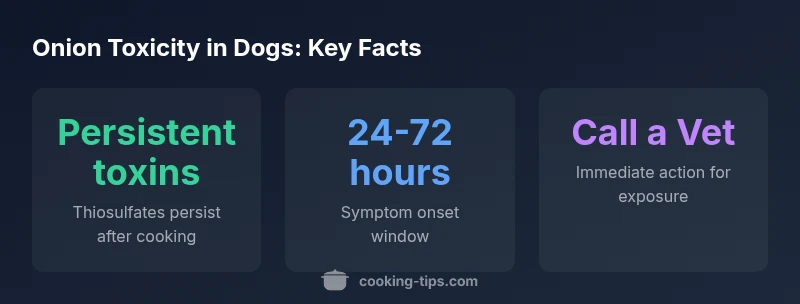
Yes. Cooked onions can still harm dogs because onions contain toxic compounds called thiosulfates that damage red blood cells. Cooking does not eliminate these toxins, only some flavors and nutrients. Even small amounts or traces can pose a risk, particularly for small or elderly dogs, dogs with preexisting anemia, or those with sensitive stomachs. Never rely on cooking to neutralize onion toxicity.
Will Cooked Onions Hurt a Dog? What the Evidence Says
In plain terms, will cooked onions hurt a dog? The short answer is yes—onions remain a risk even after cooking. The toxic compounds in onions are thiosulfates that damage red blood cells, and cooking does not neutralize them. Even moderate amounts or traces can pose a threat, especially to small or elderly dogs, or those with preexisting anemia. For dog owners, this means treating all onions—whether raw, sautéed, roasted, or in sauces—as potentially dangerous. This risk becomes more complex when onions are part of mixed foods, homemade gravies, or table scraps. The Cooking Tips team emphasizes proactive prevention: keep onions out of reach, read ingredient labels, and avoid sharing human foods that contain onions with pets.
The Biochemistry Behind Onion Toxicity
Onion toxicity in dogs is driven by sulfur-containing compounds. When onions are crushed or chewed, these compounds are released and transformed into thiosulfates, which can damage red blood cells over time. Dogs metabolize these compounds differently than humans, making them more susceptible to Heinz body formation and anemia after exposure. Cooking can alter flavor and texture but does not eliminate the reactive sulfur compounds. Onion powder, garlic powder, and other concentrated forms can deliver a higher dose per gram, increasing risk even if the whole onion wasn’t ingested. Understanding this mechanism helps explain why even everyday kitchen exposures matter and why guidance from a veterinarian is advised after any suspected ingestion.
Does Cooking Make Onions Safe for Dogs? What You Need to Know
Cooking onions does not make them safe for dogs. While heat can reduce some heat-sensitive compounds and alter taste, the core toxins persist. The most important take-away is that a dog’s risk is not eliminated by choosing sautéed or baked onions over raw. Onion powder and other seasonings can be particularly dangerous due to concentration effects. For households with dogs, it’s prudent to avoid offering any onion-containing foods and to monitor meals for ingredients that could be inadvertently shared. If your dog eats cooked onion, contact a veterinary professional promptly for guidance tailored to your dog’s size and health status.
How to Gauge Exposure and When to Call a Vet
If you suspect your dog has eaten onions, estimate the amount and type (raw, cooked, powder). Do not assume cooking eliminates toxicity. Contact a veterinarian or a poison control line if ingestion occurred, especially for small dogs or those with preexisting conditions. Early veterinary evaluation often includes a physical exam and blood work to assess red blood cell health and to detect any signs of oxidative damage. In many cases, treatment focuses on supporting red blood cell production and preventing further exposure. The onset of symptoms can vary, so regular monitoring for several days after ingestion is common practice. Remember: even if your dog appears fine at first, delayed effects are possible, and professional guidance is essential before attempting any home remedies.
Practical Prevention in Everyday Cooking
Take practical steps to minimize risk: never leave onions within reach, store them in closed containers, and avoid cooking with onions in areas accessible to pets. Read labels carefully—many prepared foods contain onion powder or extracts. If you enjoy sauces, gravies, or spice blends, prepare a separate portion for yourself to eliminate cross-contamination. Teach household members about the danger and avoid offering dog-friendly “human foods” that contain onions. For pet-friendly meals, rely on dog-safe ingredients and consult a veterinarian for dietary guidance tailored to your dog’s size, age, and health status.
Debunking Common Myths About Onion Safety for Dogs
Myth: Cooking onions makes them safe. Reality: Heat does not neutralize the toxins. Myth: A tiny bite won’t harm my dog. Reality: Dose matters, and even small amounts can be risky for smaller dogs or those with anemia. Myth: Onion-only foods are safe in small amounts. Reality: Any onion exposure should be treated with caution and veterinary consultation. Myth: Garlic is the only dangerous allium. Reality: Garlic and onions share toxicity pathways, though effects may differ by dose. By debunking these myths, owners can make better-informed decisions about what to feed their dogs and how to manage kitchen safety.
Quick Reference for Pet Owners
- Do not give dogs any onion-containing foods. - If exposure occurs, contact a veterinarian within hours, not days. - Monitor for signs such as vomiting, diarrhea, pale gums, weakness, and rapid breathing. - Keep onions out of reach and educate household members about allium risks.
Comparison of onion forms and associated toxicity risk
| Form | Toxicity Potential | Notes |
|---|---|---|
| Raw onion | High | Contains reactive sulfur compounds; highest risk among all forms |
| Cooked onion | Moderate | Toxins persist after cooking; risk remains |
| Onion powder | High | Concentrated form can deliver a higher dose |
Quick Answers
Will small amounts of cooked onions hurt a dog?
Yes, even small amounts can be harmful, especially for small or compromised dogs. Any exposure should be discussed with a veterinarian.
Even tiny amounts can hurt, so call your vet if exposure occurred.
What are the symptoms of onion toxicity in dogs?
Common signs include vomiting, diarrhea, weakness, pale gums, and lethargy. In severe cases, rapid breathing or collapse can occur.
Watch for vomiting and pale gums, and seek care if you notice these signs.
Is onion powder more dangerous than fresh onions?
Yes, onion powder can deliver a higher dose per gram, increasing the risk of toxicity.
Powder can be more dangerous per bite than fresh onions.
Should I induce vomiting if my dog ate onions?
Do not induce vomiting unless a veterinarian advises you to. Follow professional guidance for the safest course.
Don’t try to make them vomit unless a vet tells you to.
How long does onion poisoning last in dogs?
Recovery time varies with dose and health; some dogs recover in days, others may need weeks of care.
Recovery depends on dose and health; vet follow-up is important.
“Onions contain sulfur compounds that can damage a dog's red blood cells, and this risk persists regardless of whether the onion is raw, cooked, or powdered.”
Top Takeaways
- Avoid feeding onions to dogs; cooked onions still pose a risk
- Watch for symptoms within 24-72 hours after exposure
- Consult a veterinarian immediately if ingestion is suspected
- Prevent kitchen access and read labels for onion-containing ingredients