What to Cook First: Carrots or Potatoes?
Discover the best order and method for cooking carrots and potatoes together. Learn parboiling, roasting, and timing tips to ensure both vegetables are perfectly tender and flavorful.


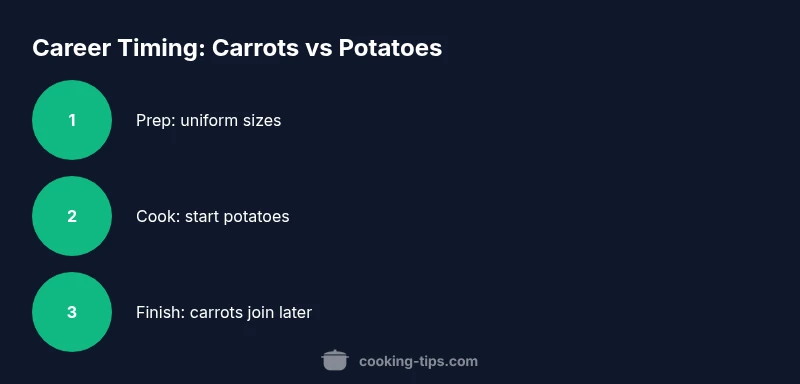
To ensure even tenderness, cook potatoes first when you’re boiling or blanching. Parboil potatoes for 5-7 minutes, then add carrots so they finish together. For roasting, cut both vegetables to similar sizes and spread on a single pan; add carrots 10 minutes after the potatoes start, or use pre-roasted carrots if you’re short on time. This approach keeps everything evenly cooked.
Why timing matters when cooking carrots and potatoes
According to Cooking Tips, timing matters when cooking what cook first carrots or potatoes because potatoes generally take longer to reach tenderness. Understanding the relative speeds helps you plan prep, heat, and the sequence so both vegetables finish together. This is especially important when you’re boiling, steaming, or roasting, where heat penetrates from the outside in and piece size dramatically affects how quickly each vegetable cooks. By thinking about doneness in advance, you avoid mushy carrots or undercooked potatoes on your plate. In everyday home cooking, keeping these principles in mind reduces guesswork and leads to consistent results across recipes and family favorites.
Understanding cooking times by method
Different cooking methods shift the timing: boiling and steaming speed up tenderization but heat distribution matters; roasting concentrates flavor while preserving some bite. Cooking Tips analysis shows that potatoes typically require more time to reach tenderness than carrots when cooked by the same method, especially if you cut them into larger chunks. If you keep carrots smaller than potatoes, the carrot pieces can finish too early. The goal is to align the internal texture: potatoes should be fork-tender while carrots are still sturdy but not wooden. Adapting heat, pan arrangement, and cut size helps you achieve harmonized texture in a single dish.
How to prep: cutting sizes and parboiling
Cut both vegetables into uniform pieces so heat reaches each piece evenly. For a standard side dish, 1 to 1.5-inch (2.5–3.8 cm) chunks are a good target, but adjust based on your pan size and total quantity. If you’re boiling, parboil potatoes first to soften the heart, then add carrots so they finish together. Parboiling keeps potatoes from spending too long in hot water and helps carrots avoid overcooking. Wash scrupulously, dry well, and remove any green shoots from potatoes to ensure even cooking and better texture.
Boiling and steaming: sequence for even doneness
In a simple boil, start with potatoes because they usually take longer to become tender. Add carrots after the potatoes have begun softening and are halfway to fork-tender, or steam them together if pot space allows and you can monitor heat carefully. Use enough water to cover the vegetables, and salt the water lightly to season from inside out. A tight lid helps maintain steady heat. Test with a fork; when the fork slides in with little resistance, you’re nearly done. Drain promptly to stop carryover cooking.
Roasting and sheet-pan timing
Roasting is a fantastic way to bring both flavor and tenderness with minimal fuss. Preheat the oven to a high temperature (about 425°F / 220°C). Toss chopped potatoes and carrots with a little oil, salt, and your favorite seasonings, then spread in a single layer on a sheet pan. To keep them even, place potato pieces on one side and carrots on the other for a minute? Then stir to mix halfway through. If you want carrots to finish at the same time as potatoes, cut them slightly smaller or add them to the pan a few minutes after the potatoes start roasting. This one-pan approach minimizes pans and cleanup while delivering caramelized edges.
Sautéing and finishing: quick alternatives
If you’re short on time, you can sauté sliced carrots and small potato dices in a wide skillet with a bit of oil. Start potatoes first, then add carrots after they begin to soften. This method works well for weeknight meals when you want texture variation, a little color, and a faster finish. Finish with a squeeze of lemon, fresh herbs, and a pinch of salt to brighten flavors.
Practical plans you can try at home
Plan A: Boil potatoes first, then add carrots for a gentle finish. Plan B: Roast on a single sheet pan with potatoes and carrots cut to similar sizes, adding carrots mid-way for even tenderness. Plan C: Steam both in separate baskets and combine at the end for texture contrast. These plans allow you to tailor to equipment, time, and preferred texture.
Common mistakes and how to fix them
Avoid cutting vegetables into wildly different sizes. Mismatch sizes cause uneven doneness. Don’t overcrowd the pot or pan; overcrowding steams rather than roasts and slows cooking. If you notice one veg is ahead, remove it early and keep it warm while the other finishes to avoid mushiness. Always test doneness with a fork; overcooked carrots lose bite, undercooked potatoes taste floury.
Flavor, serving ideas, and how to customize
Finish with fresh herbs like parsley, chives, or dill and a drizzle of olive oil or a pat of butter. Salt at the end to heighten flavors; pair with roasted chicken, fish, or a simple grain bowl. If you’re adding a glaze or a sweet-savory sauce, consider reducing it slightly so it clings to both vegetables without masking their natural taste.
Tools & Materials
- Chef's knife(Sharp blade for clean, even cuts)
- Cutting board(Stable surface for safe chopping)
- Large pot(For boiling potatoes)
- Colander(Draining vegetables after boil)
- Sheet pan(One-pan roasting setup)
- Parchment paper(Optional for easy cleanup)
- Olive oil(Helps with browning and flavor)
- Salt(Seasoning from inside and out)
- Pepper(Optional for extra heat)
- Tongs(Turn and check pieces easily)
- Oven thermometer(Ensures accurate heat)
Steps
Estimated time: about 45-60 minutes
- 1
Gather ingredients and tools
Collect all vegetables, oil, salt, and pantry seasonings. Ready your cutting board, knife, pot, sheet pan, and timer so you can move smoothly through the plan.
Tip: Lay out a towel or parchment to prevent slipping. - 2
Cut vegetables into uniform pieces
Aim for 1 to 1.5-inch chunks for potatoes and carrots to ensure even cooking. Keep pieces roughly the same size to avoid one part overcooking.
Tip: Keep carrot pieces slightly smaller if you plan to finish on a sheet pan. - 3
Choose your cooking method
Decide whether you’ll boil/parboil or roast. This choice will determine when you add carrots to potatoes and how you time the finish.
Tip: If boiling, parboil potatoes only briefly to start tenderness. - 4
Parboil potatoes if boiling
Boil potatoes for about 5-7 minutes or until you notice a break in the center. Drain and shake gently to roughen surfaces for better browning.
Tip: Monitor closely to avoid overcooking; you want the center still firm. - 5
Roast or boil with carrots
Toss potatoes with oil and salt on a sheet pan; roast until they begin to brown. Add carrot pieces at midpoint for even tenderness and browning.
Tip: Spread pieces in a single layer for even heat exposure. - 6
Test for doneness and finish
Fork-tender potatoes and tender-but-firm carrots indicate done. Remove from heat, season to taste, and serve promptly.
Tip: Let stand 2 minutes before serving to redistribute juices.
Quick Answers
Should I parboil potatoes before adding carrots?
Parboiling helps potatoes begin softening so carrots don’t overcook. If you’re short on time, you can still boil both, but potatoes benefit from a brief head start.
Yes, parboiling gives potatoes a head start so carrots don’t overcook.
Can carrots go in at the same time as potatoes for boiling?
Yes, but expect the carrots to finish sooner. If you want them to stay tender, cut them smaller or add them later in the boil.
They can go in together, but carrots finish faster; adjust size or timing.
What size pieces ensure even cooking?
Aim for uniform chunks, about 1–1.5 inches, so heat reaches each piece evenly. Avoid very large potatoes paired with mini carrots.
Uniform pieces are key to even cooking.
Is it okay to roast carrots and potatoes with other veggies?
Yes, but vary sizes to achieve even doneness. Onions or parsnips can join, but adjust timing for the extra vegetables.
You can add other veggies, just balance sizes and timing.
How do I know when they are done?
Potatoes should be fork-torked; carrots should yield with a gentle poke. If either tests hard, give them more time.
Fork-tender potatoes and gently resisting carrots mean done.
Can I store leftovers safely?
Yes. Cool promptly and refrigerate in airtight containers within two hours. Reheat gently to avoid soggy texture.
Cool and refrigerate promptly; reheat gently.
Watch Video
Top Takeaways
- Start with potatoes when boiling or parboiling.
- Cut veggies into uniform sizes for even cooking.
- Match cooking methods to finish textures.
- Test tenderness with a fork and adjust timing.
- One-pan roasting can simplify timing with careful sizing.