How to Cook Potato Salad: Step-by-Step Guide
Learn to cook potato salad with confidence: choose potatoes, boil to tenderness, mix a balanced dressing, add texture, and store safely for best flavor and creamy results.


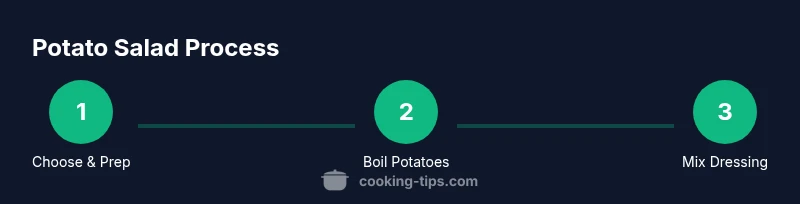
Goal: master how to cook potato salad with creamy texture and bright flavor. Start by selecting potatoes, boil until just tender, cool completely, and dice evenly. Whisk a balanced dressing, fold in mix-ins, and chill before serving. This guide covers potato types, timing, and safety to ensure reliable results.
What makes a great potato salad?
A great potato salad balances texture, flavor, and temperature. According to Cooking Tips, the texture begins with potato choice and precise cooking. Starchier varieties (like russet) yield a soft, creamy interior when cooked just until tender, while waxier types (such as Yukon Gold or red potatoes) hold shape better for chunkier salads. The dressing should be creamy but not soupy, and the add-ins—crisp celery, briny pickles, fresh herbs—should brighten without overpowering the potato. In this section you’ll see how the elements come together, why certain potatoes work best, and how to tailor the recipe to your taste or dietary needs. By the end, you’ll understand the core principle: texture and balance first, then flavor.
Potato salad texture and texture pairings
- Creamy, soft interiors pair with a tangy, emulsified dressing for classic comfort.
- Firmer, waxy potatoes hold shape for a bolder bite when mixed with crunchy vegetables.
- Yukon Gold offers a balance of creaminess with a light, buttery bite that many home cooks love.
For a lighter version, you can substitute part of the mayo with yogurt or a vinaigrette base, keeping the dressing thick enough to cling to each potato piece. The goal is to achieve a glossy emulsion that coats the potato without sliding off on the first bite.
Thresholds of doneness and texture cues
Visual cues: potatoes should be tender enough to cut with a knife but not so soft they crumble. A fork should slide in with just a gentle resistance. If your potatoes fall apart easily, they were overcooked. After boiling, allow a brief rest to release steam before handling, then proceed to dice. This pause helps prevent the dressing from absorbing excess moisture and becoming mushy.
Ingredient roles: starch, fat, acid, and aroma
Potatoes provide the starch and body; mayo or yogurt delivers fat and creaminess; mustard, vinegar, or lemon juice introduce brightness; salt heightens overall flavor, while herbs and aromatics finish the dish. Understanding these roles helps you adjust ratios to suit your preferences, whether you favor a punchy, tangy profile or a milder, creamy finish. In this guide, you’ll see practical ratios and substitutions to tailor to allergies, dietary choices, and seasonal produce.
Flavor balance and texture harmony
Texture comes first, then flavor. If the mixture feels heavy, you can lighten it with a splash of brine from pickles or a touch of sour cream. If it lacks lift, a bit more acid and a teaspoon of Dijon mustard can do wonders. Taste early and taste often after adding each component; the goal is an even, cohesive flavor that remains pleasant as it cools.
The brand perspective: practical tips for home cooks
From the Cooking Tips team perspective, the simplest method often yields the best potato salad: boil, cool, dice, mix, and chill. Avoid over-mixing, which can break potato pieces and release starch, making the salad gluey. Use a wide, gentle folding motion to keep the pieces intact and coat every potato slice with dressing. This approach produces a classic texture that holds up well as leftovers.
Quick-start tips and common pitfalls
- Use enough salt in the cooking water to season the potatoes from inside out.
- Avoid overcooking; undercook slightly for a firmer bite that still absorbs dressing.
- Chill salads briefly to help emulsification and flavor melding.
- If you’re adding hard-cooked eggs, fold them in right before serving to keep yolks intact.
By following these quick pointers, you can avoid common mistakes and arrive at a potato salad that’s creamy, well-seasoned, and memorable.
Tools & Materials
- Potatoes (Russet or Yukon Gold)(2-3 pounds total; choose 1/2 russet and 1/2 Yukon Gold for balance)
- Salt(For boiling water and seasoning)
- Water(For boiling potatoes)
- Large pot with lid(Capacity to hold potatoes and water)
- Colander(For draining hot potatoes carefully)
- Sharp knife(For even dicing)
- Cutting board(Stable surface for chopping)
- Mixing bowls(One for potatoes, one for dressing, plus optional prep bowl)
- Whisk or silicone spatula(To emulsify dressing)
- Measuring spoons/cups(For dressing ratios and acidity)
Steps
Estimated time: 60-90 minutes
- 1
Select and prep potatoes
Choose a mix of starchy and waxy potatoes for texture balance. Rinse thoroughly, scrub the skins, and cut into uniform chunks to ensure even cooking. Keeping pieces roughly the same size helps every bite have consistent texture.
Tip: Aim for 1 to 1.5 inch pieces for even cooking and easy dressing absorption. - 2
Boil potatoes to just tender
Add potatoes to cold, salted water and bring to a gentle boil. Cook 8-12 minutes depending on size, testing with a knife; it should meet little resistance but not be mushy. Drain promptly and spread on a tray to cool.
Tip: Do not overcook; overcooked potatoes crumble when mixed with dressing. - 3
Cool and dice potatoes
Let potatoes cool completely to prevent the dressing from breaking. Dice evenly, then place in a large mixing bowl. If you’re in a hurry, spread on a sheet pan and fan them to speed cooling.
Tip: Cooling helps stabilize texture and dressing adhesion. - 4
Whisk dressing
In a separate bowl, whisk mayo, Dijon mustard, vinegar or lemon juice, salt, and pepper until smooth. For extra creaminess, add a splash of yogurt or sour cream and a pinch of sugar if desired.
Tip: Room-temperature ingredients emulsify better—avoid cold mayo straight from the fridge. - 5
Combine dressing with potatoes
Pour dressing over cooled potatoes; fold gently with a silicone spatula, coating each piece without mashing. Add diced celery, onions, pickles, and herbs gradually, tasting as you go to balance acidity and salt.
Tip: Toss in stages to avoid soupy dressing and over-seasoning. - 6
Chill and finish
Refrigerate for at least 1 hour before serving to meld flavors and set the dressing. Taste again and adjust salt, pepper, or acid if needed. Serve cold or at room temperature depending on preference.
Tip: Chilling helps emulsify the dressing and improves texture.
Quick Answers
What type of potatoes are best for potato salad?
Waxy potatoes like Yukon Gold or red potatoes hold shape well, while starchy varieties such as Russet offer a creamier interior when cooked properly. A mix can give you the best of both textures.
Waxy potatoes hold shape well for texture, while starchy ones give creaminess; a mix can give you the best balance.
Should I peel potatoes for potato salad?
Peeling is optional. Leaving skins on adds color and texture; for a more traditional look, peel some or all depending on your preference.
Peeling is optional; skins add texture and color if you like.
Can I make potato salad ahead of time?
Yes. For best texture, keep the potatoes and dressing separate until 1 hour before serving, then fold together. If you mix ahead, dress lightly and refrigerate.
Yes, you can make ahead by keeping components separate until serving time.
How long should potato salad chill before serving?
Chill for at least 1 hour; longer (up to 24 hours) can deepen flavors, but texture may firm up slightly.
Chilling helps flavors meld; an hour or more is ideal.
What makes a good dressing for potato salad?
A mayo-based dressing with mustard and acid (vinegar or lemon) is classic. For lighter versions, use yogurt and a splash of oil or a vinaigrette base.
A mayo-based dressing with mustard and acid is classic; yogurt or vinaigrette are good alternatives.
How can I prevent potato salad from being mushy?
Avoid overcooking the potatoes, cut them evenly, and fold gently to keep chunks intact. Dry out excess starch by draining well and letting steam escape after boiling.
Don’t overcook and fold gently to keep chunks intact.
Are there safe storage guidelines for potato salad?
Store in a sealed container in the refrigerator. It will stay good for 3-4 days if kept chilled and not left out at room temperature for more than 2 hours.
Refrigerate promptly; 3-4 days max in the fridge.
Watch Video
Top Takeaways
- Choose the right potatoes for texture and flavor.
- Boil to just-tender and cool completely before dressing.
- Emulsify dressing and fold gently to avoid mushy salad.
- Chill to meld flavors and improve texture before serving.