How Long to Cook Sweet Potatoes in the Oven: The Complete Guide
Learn exact oven times for whole, halved, and cubed sweet potatoes, plus doneness tests, tips, and variations to achieve tender flesh and caramelized skins every time.


You will learn exact oven times for whole, halved, and cubed sweet potatoes, how to test doneness, and practical tips for tender interiors and caramelized edges. Start by preheating to 425°F (220°C). Size and cut affect timing, with larger potatoes needing longer than smaller ones, and cubed pieces cooking fastest.
Why Oven Time Matters for Sweet Potatoes
Oven baking brings out the natural sweetness and develops a welcome contrast between a creamy interior and a lightly crisped skin. The time an oven spends on sweet potatoes hinges on size, cut, and the exact temperature. Getting this right prevents undercooked centers or overly dry exteriors. According to Cooking Tips, precise oven time yields consistently tender flesh and a caramelized skin, especially when temperatures are stable and the potatoes are evenly sized. This is why choosing the right potato and preparing it uniformly matters as much as the bake time itself.
When you bake at a moderate-to-hot oven (around 425°F or 220°C), the heat penetrates quickly, converting starches to sweet flavors and creating that pleasant roasted aroma. If you’re pressed for time, you can start with smaller tubers or cut pieces that are uniformly sized. However, if you’re baking whole tubers, plan for longer cook times and avoid overcrowding the sheet to ensure even heat circulation. The result should be tender, fluffy interiors with a pleasing, slightly crisp skin.
Selecting the Right Sweet Potatoes
Not all sweet potatoes are created equal for oven-baking. Look for medium to large tubers that are fairly uniform in shape and without deep wrinkles or soft bruises. A heft to them indicates moisture and a better texture after roasting. Orange-fleshed varieties are the most common and tend to sweeten nicely when roasted, but purple or white-fleshed types can arc into interesting flavor profiles too. For the most consistent bake, choose tubers that are similar in size; this minimizes the risk that some will finish before others. Cooking Tips analysis shows that uniform sizing leads to more predictable results across a batch.
Store sweet potatoes in a cool, dry, well-ventilated place, away from direct sunlight. If you buy in bunches, check for firmness—soft spots can indicate overripeness. When you get home, wash them thoroughly under cold running water to remove any dirt, then dry completely before roasting. Any moisture on the surface can steam the skin, reducing crispness.
Prepping and Preheating: The Foundation
Start by preheating your oven to 425°F (220°C) and placing a rack in the middle position. A hot, stable oven is essential for even browning. Line a baking sheet with parchment paper or a silicone mat to prevent sticking and for easier cleanup. Rinse the potatoes, scrub away any dirt, and pat them completely dry. Poke each potato several times with a fork to vent steam during roasting. Tossing the potatoes lightly in a small amount of oil and a pinch of salt helps flavor and skin texture. Preheating ensures that the moment you slide the potatoes in, they begin to roast rather than steam.
If you’re roasting many tubers, avoid crowding the sheet. Adequate space around each potato allows hot air to circulate and produces a more even finish. A rimmed sheet is ideal to catch any drippings and prevent a greasy oven.
Whole Potatoes, Halves, or Cubes: Time Differences
The size and cut of your potatoes dramatically affect roasting time. Whole medium sweet potatoes typically take about 45-60 minutes at 425°F, depending on thickness. Halved tubers cook a bit faster because the cut faces have direct heat exposure, usually 25-40 minutes. Cubed or baton-cut pieces roast even more quickly, roughly 20-30 minutes, making them ideal for weeknight meals when you want fast, evenly cooked starch with a crisp edge. If your potatoes are very large, expect longer times, while small ones finish sooner. To ensure uniform doneness, pick one method per batch and keep sizes consistent.
A practical approach is to pre-plan based on the time you have: if you need a quick side, cube the potatoes; for a cozy, hearty dish, roast whole tubers and slice after resting. Regardless of cut, the key is uniform sizing and even spacing on the sheet.
Testing Doneness and Finishing Touches
Doneness is best tested with a fork or skewer that should slide easily into the potato’s center. For whole tubers, aim for a tender core with a slight resistance that disappears when fully cooked. Rest the potatoes for 5-10 minutes after removing them from the oven; this allows residual heat to finish the job and makes them easier to handle. If you want crispier skins, brush with a touch more oil and bake for an additional 5-8 minutes, keeping a watchful eye to avoid scorching. Finish with a light sprinkle of flaky salt or your favorite herbs for flavor contrast. Butter, cinnamon, or a drizzle of honey also pair beautifully with roasted sweet potatoes and highlight their natural sweetness.
Troubleshooting Common Issues
Burned edges or uneven doneness are common pain points. If the outside browns too quickly, reduce surface temperature by moving the sheet to a higher rack or lowering the oven slightly for the last 10-15 minutes. When the centers are still firm after the clock runs out, rotate the sheet and give the potatoes more time. Overcrowded sheets trap steam, leading to mushy skins; always leave space between pieces. If you’re using a convection setting, monitor closely—the circulating air speeds browning, so you may need to reduce the time slightly. Finally, salt at the end rather than the start if you’re trying to preserve a crisper skin.
Flavor Variations and Serving Ideas
Sweet potatoes are incredibly versatile. For a savory angle, roast with garlic, paprika, and olive oil, then finish with a squeeze of lemon or a dollop of yogurt. For a sweeter profile, brush with maple syrup or honey during the last 10 minutes of roasting and toss with chopped fresh herbs. Crispy skins emerge when you roast without wrapping and keep the skin exposed to direct heat. Served alongside roasted chicken, a green salad, or a hearty grain like quinoa, these potatoes adapt to many meals and flavor profiles. You can also cut them into wedges for oven fries and serve with a tangy dipping sauce.
Safety, Storage, and Reheating
Let roasted sweet potatoes cool completely before storing. Refrigerate in an airtight container for up to 4-5 days. To reheat, place in a 350°F (175°C) oven or toaster oven until warmed through. Reheating times will vary by size, but plan for 10-15 minutes for whole potatoes and less for cut pieces. Frozen roasted sweet potatoes are best used within 2-3 months; defrost fully in the fridge before reheating for best texture. Always discard any tubers that show signs of mold or an off smell.
Tools & Materials
- Oven(Preheated to 425°F (220°C). A stable, convection option helps for even browning.)
- Baking sheet(Prefer a rimmed sheet to catch drips.)
- Parchment paper or silicone mat(For easy cleanup and nonstick surfacing.)
- Knife and cutting board(For trimming and cutting tubers if desired.)
- Fork or skewer(To vent steam for whole tubers.)
- Olive oil or neutral oil(Light coating helps skin crisp and flavor.)
- Salt (regular or flaky)(Enhances sweetness and skin texture.)
- Tongs or spatula(Helpful for turning pieces halfway through.)
- Optional toppings(Butter, cinnamon, honey, herbs, or spices.)
Steps
Estimated time: 45-75 minutes
- 1
Preheat the oven and prepare the sheet
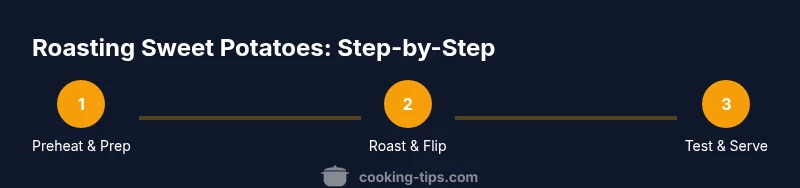
Preheat your oven to 425°F (220°C) and place a rack in the middle. Line a baking sheet with parchment paper or a silicone mat to prevent sticking and ease cleanup.
Tip: Starting with a hot oven ensures the potatoes roast rather than steam from the start. - 2
Wash, dry, and pierce the potatoes
Thoroughly wash the potatoes, then dry completely. Use a fork to pierce each potato several times to vent steam during roasting.
Tip: Piercing reduces the chance of steam buildup and bursting in the oven. - 3
Choose your cut and coat
Decide whether you’ll roast whole, halve, or cube the potatoes, then toss with a light coating of oil and a pinch of salt for flavor.
Tip: Uniform sizing ensures even cooking and browning across pieces. - 4
Roast and rotate for even browning
Spread the pieces on the sheet in a single layer. Roast in the 425°F oven, turning halfway through to promote even browning.
Tip: Rotating the sheet or flipping pieces prevents uneven texture. - 5
Test doneness and rest
Check with a fork for tenderness; whole potatoes should feel soft in the center. Let rest 5-10 minutes after removing from the oven.
Tip: Resting allows starches to retrograde and skins to set. - 6
Serve with toppings or sides
Slice if desired and finish with butter, cinnamon, or herbs. Pair with proteins or grains for a complete meal.
Tip: A final toss with herbs brightens the flavor before serving.
Quick Answers
How long to bake a sweet potato at 425°F?
For whole potatoes, plan 45-60 minutes at 425°F, depending on thickness. Halved tubers finish in 25-40 minutes, while cubes or batons cook in roughly 20-30 minutes. Always test with a fork for tenderness.
Bake whole sweet potatoes for about 45 to 60 minutes at 425°F, depending on size; smaller pieces finish faster. Use a fork to check tenderness.
Can I bake sweet potatoes without oil?
Omitting oil is okay, but oil helps skin crisp and flavors develop. If you skip it, you may get softer skins but the inside will still be tender when fully cooked.
You can bake without oil, but it won’t brown the skin as well; the inside will still be tender with proper time.
What’s the best way to test doneness?
Insert a fork into the thickest part of the potato; it should slide in easily. For extra assurance, internal temperature around 205–210°F indicates a fully cooked interior.
Push a fork into the potato—the fork should glide in easily. If you have a thermometer, aim for about 205 to 210 degrees Fahrenheit.
How should I store baked sweet potatoes?
Cool completely, then refrigerate in an airtight container for up to 4-5 days. Reheat in a 350°F oven until warmed through. Freeze for longer storage, up to about 2-3 months.
Cool fully and store in the fridge for 4-5 days; reheat in a hot oven.
Are sweet potatoes safe to eat with skin on?
Yes. The skin is edible and contains nutrients. Wash thoroughly and roast until the flesh is tender and skins are crisp if desired.
Yes, the skin is edible; just wash well and roast until tender with crisp edges if you like.
Can I make oven fries from sweet potatoes?
Yes. Cut into even sticks, toss with oil and salt, and bake on a single layer at 425°F for about 20-25 minutes, flipping halfway for crisp edges.
Cut into sticks, oil, season, and bake until crisp in about 20 to 25 minutes.
Watch Video
Top Takeaways
- Bake at 425°F for 45-60 minutes when whole potatoes are similar size.
- Cube or halve potatoes cook faster; monitor and test doneness with a fork.
- Uniform sizing and space on the sheet ensure even browning.
- Rest 5-10 minutes before serving to finish interior texture.
- Add toppings or herbs to tailor flavor for any meal.