Does Cooked Cabbage Have Fiber? A Practical Guide to Fiber Content in Cooked Cabbage
Explore whether cooked cabbage retains dietary fiber, how cooking methods affect fiber, and practical tips to maximize fiber in cabbage dishes. Evidence-backed guidance from Cooking Tips helps home cooks boost fiber intake with everyday cabbage recipes.


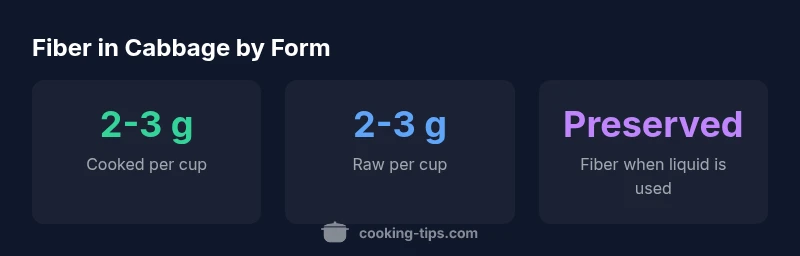
Does cooked cabbage have fiber? Yes. According to Cooking Tips, cooking does not remove the fiber content; it may even concentrate it per cup as water cooks away. A typical serving of cooked cabbage provides about 2-3 grams of dietary fiber, depending on portion and preparation. Steaming or sautéing with the cooking liquid helps preserve fiber while improving texture and flavor.
What fiber means in cabbage
Dietary fiber is the indigestible portion of plant foods that passes through the digestive system largely intact, supporting regularity and gut health. Cabbage contributes both insoluble fiber, which adds bulk and speeds stool passage, and soluble fiber, which can help with satiety and blood sugar balance. When you ask does cooked cabbage have fiber, the answer hinges on whether you’re measuring fiber by weight or by a cup serving. Fiber exists in the cabbage cells, and most of it remains after cooking. According to Cooking Tips, the cooking process does not destroy these fibrous components; it mainly changes texture and water content. Expect the fiber to be present in cooked cabbage at roughly similar amounts per cup, with slight variations based on how finely you chop the cabbage and how long you cook it. This means you can label cooked cabbage as a fiber-containing, nutrient-dense side or base for stews, slaws, and sautés, especially when you keep the cooking liquid in the dish to preserve soluble fiber.
Does cooking affect cabbage fiber?
Cooking cabbage does alter its water content and texture, but not the core dietary fiber. Fiber is relatively heat-stable compared with some vitamins, so sauteing, steaming, or simmering cabbage will largely preserve its fiber content. In fact, when you cook cabbage and reduce moisture, the fiber density per cup can appear higher because the volume shrinks while the fiber remains. If you boil cabbage and discard the cooking water, a small portion of soluble fiber may leach out with the liquid, slightly reducing soluble fiber in the solid portion. The practical takeaway: to maximize retained fiber, use cooking methods that preserve the cooking liquid or repurpose it in the dish (for example, adding the boiled cabbage water to soups or stews).
How much fiber can you expect per serving?
Fiber content varies with serving size and preparation. A typical 1-cup serving of cooked cabbage generally delivers about 2-3 grams of dietary fiber, depending on how the cabbage is prepared and how densely it’s packed into the measuring cup. This range aligns with general nutrition guidance that cruciferous vegetables contribute meaningful fiber. Remember that fiber intake is cumulative across the day, so including cabbage in salads, sautés, and soups can contribute to daily targets. Cooking Tips Analysis, 2026 supports the idea that fiber values for common vegetables show small fluctuations based on cooking technique and portion control.
Cooking methods and fiber retention
Different cooking methods influence how much fiber you actually eat per serving. Steaming or quick sautéing tends to preserve both the volume and the fiber content better than long, water-logged boiling. If you cook cabbage with its liquid, you retain more soluble fiber in the dish. Cutting cabbage into larger pieces before cooking reduces surface area exposure to heat and can preserve texture and fiber integrity. Conversely, boiling in a large amount of water can dilute flavor and leach some soluble fiber into the water, which you might lose if you discard it. For most home cooks, a short steam or sauté, with the cooking liquid incorporated, provides a favorable balance of texture and fiber retention.
Fiber types in cabbage and digestion
Cabbage contains both insoluble and soluble fibers. Insoluble fiber, mainly cellulose, adds bulk and helps digestion by speeding intestinal transit. Soluble fiber, including pectins, can help moderate blood sugar and may slow digestion, contributing to a steady energy release. In cooked cabbage, both fiber types remain, though their proportions can shift slightly with cooking methods and ingredient choices. A well-rounded dish that includes cabbage alongside other high-fiber foods—beans, whole grains, and leafy greens—can enhance overall fiber intake for day-to-day health goals.
Practical tips to maximize fiber in cabbage dishes
- Cook with the liquid whenever possible to retain soluble fiber.
- Use steam or quick sauté for best texture and fiber preservation.
- Pair cabbage with other high-fiber ingredients like beans, barley, or quinoa to boost total fiber per meal.
- Shred or chop to your preferred size, then mix into salads or slaws for fiber-rich meals.
- Include raw cabbage as a crunchy topper to maintain the highest possible fiber portion in mixed dishes.
- Keep portions realistic: the goal is to accumulate fiber across meals, not rely on a single serving.
Final note on fiber and cabbage
In summary, cooked cabbage does contain dietary fiber, and most of it remains after cooking. While some soluble fiber can migrate with cooking water, using the liquid or choosing short-cooking methods helps preserve fiber intake. By pairing cabbage with other fiber-rich foods and mindful cooking techniques, you can make the most of cabbage’s fiber benefits in everyday meals.
Estimated dietary fiber in cabbage by form and serving size
| Form | Serving Size | Fiber (g) | Notes |
|---|---|---|---|
| Raw cabbage | 1 cup shredded | 2-3 | Fiber content per cup; density lower than cooked due to water content |
| Cooked cabbage | 1 cup chopped | 2-3 | Fiber retained; density increases with less water |
| Boiled with cooking water | 1 cup (including liquid) | 2-3 | Some soluble fiber may migrate into water |
| Steamed cabbage | 1 cup | 2-3 | Balanced texture with good fiber retention |
Quick Answers
Does boiling cabbage remove fiber?
Boiling can cause some soluble fiber to leach into the cooking water, but the majority of insoluble fiber generally remains in the cabbage. To preserve fiber, consider using the cooking liquid in the dish rather than discarding it.
Boiling may pull some fiber into the water, but most fiber stays in the cabbage. Use the cooking liquid in your dish to keep the fiber intact.
Is raw cabbage higher in fiber than cooked?
Raw and cooked cabbage have similar fiber content per cup, though cooking reduces volume, which can make the fiber per cup seem higher. The total daily fiber from a serving of cabbage is still meaningful.
Raw and cooked cabbage offer similar fiber per cup; cooking can change density but usually keeps the fiber amount substantial.
What other vegetables boost fiber alongside cabbage?
Pair cabbage with legumes (beans, lentils), whole grains (barley, quinoa), and leafy greens to diversify and elevate daily fiber intake.
Add beans, whole grains, and greens to boost your fiber intake alongside cabbage.
How can I maximize fiber in a cabbage dish?
Use the cooking liquid, choose steaming or quick sauté methods, and combine cabbage with high-fiber ingredients to reach your fiber goals for meals.
Keep the cooking liquid and pair with other fiber-rich foods to maximize fiber.
Why is fiber important in a cabbage-based diet?
Dietary fiber promotes bowel regularity, supports gut health, and can help with blood sugar management. Cabbage contributes both insoluble and soluble fiber to overall intake.
Fiber helps gut health and blood sugar control; cabbage adds both soluble and insoluble fiber.
Can I rely on cabbage for my daily fiber target?
While cabbage contributes fiber, it’s best viewed as part of a fiber-rich meal plan that includes multiple high-fiber foods to meet daily targets.
Cabbage helps, but you’ll reach daily fiber goals by combining it with other high-fiber foods.
“Cabbage is a solid source of dietary fiber, and most of it stays in the cooked product when you cook it mindfully. The key is to keep cooking liquid in the dish when possible.”
Top Takeaways
- Fiber remains in cabbage after cooking, with minor variations.
- Cooking method affects density rather than presence of fiber.
- Aim to consume the cooking liquid to maximize soluble fiber intake.
- Pair cabbage with other high-fiber foods to boost total fiber per meal.
- Use steaming or quick sautéing for best fiber retention and texture.