What Food Poisoning Can You Get from Cooked Chicken: Causes, Symptoms, and Prevention
Learn which pathogens and toxins can cause illness from cooked chicken, how to prevent food poisoning, safe cooking temperatures, proper cooling, and storage practices for home cooks.


The primary risks from cooked chicken are bacteria and toxins, notably Salmonella and Campylobacter, which can cause illness even after proper cooking if contamination occurs. Other risks include toxins from Staphylococcus aureus and Clostridium perfringens when leftovers sit at room temperature too long. Following safe cooking, cooling, and storage practices dramatically lowers these risks.
What food poisoning can you get from cooked chicken
When home cooks ask about the risks of cooked chicken, the key question is not whether the meat is cooked, but what pathogens or toxins might still cause illness if handling, storage, or hygiene fall short. The shorthand answer is that cooked chicken can still harbor illness-causing agents if contamination occurs after cooking, if cross-contamination happens, or if toxins have formed in time–temperature abuse conditions. The phrase what food poisoning can you get from cooked chicken captures the core idea: bacteria and toxins associated with poultry can cause illness despite a surface appearance of safety. In practical terms, prevention hinges on cooking to a safe internal temperature, avoiding cross-contamination, and cooling and storing leftovers promptly. This section lays out the main culprits and how to minimize risk in everyday cooking.
Salmonella and Campylobacter: the two big players
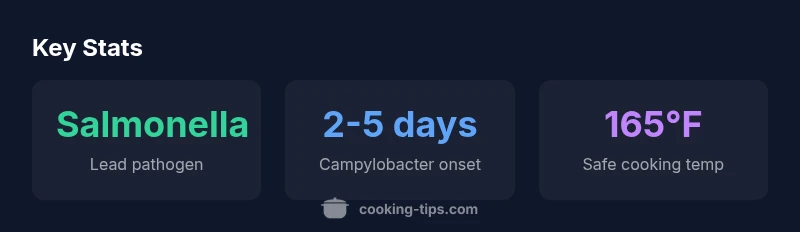
Salmonella and Campylobacter are the most common bacterial culprits tied to poultry, including chicken. Salmonella infections typically present with diarrhea, fever, and abdominal cramps within a day or two, though symptoms can appear sooner or later depending on the dose and the individual. Campylobacter often triggers diarrhea (sometimes bloody), fever, and cramps, usually developing over a couple of days. Both bacteria can be present on raw poultry and may contaminate surfaces via airborne droplets or contact with contaminated hands, utensils, or cutting boards. Importantly, proper cooking to 165°F (74°C) in the thickest part of the chicken kills these pathogens, but post-cooking contamination or improper cooling can still cause illness.
Toxins from Staphylococcus aureus and Clostridium perfringens
Beyond bacterial infection, toxins produced by Staphylococcus aureus and Clostridium perfringens can cause illness even if the meat has been cooked. Staph aureus can form enterotoxins when cooked chicken sits at room temperature for too long, producing rapid onset symptoms such as nausea, vomiting, and stomach cramps within a few hours. Clostridium perfringens thrives in time–temperature abuse conditions too, generating toxins that lead to abdominal cramps and diarrhea. The key takeaway is that cooking eliminates live bacteria, but toxins formed during improper cooling or prolonged holding at room temperature can still cause symptoms. Practically, this underscores why hot holding and prompt refrigeration are essential.
How to prevent contamination and illness in the kitchen
Preventing illness starts with proactive steps:
- Cook chicken to an internal temperature of 165°F (74°C) and check with a reliable thermometer.
- Use separate cutting boards and utensils for raw and cooked poultry to avoid cross-contamination.
- Wash hands thoroughly after handling raw chicken and before touching other foods.
- Cool leftovers quickly and store in shallow containers in the fridge within two hours.
- Reheat leftovers to 165°F (74°C) before consuming.
These practices drastically reduce the chance of bacterial growth and toxin formation at home. This section delves into practical tips for everyday cooks, with real-world scenarios and quick checks you can perform in the kitchen to stay safe.
Safe storage, reheating, and leftovers logic
Handled correctly, leftovers can be safe to eat for a couple of days, but timing and temperature matter. Divide cooked chicken into shallow, airtight containers to speed cooling. Refrigerate within two hours of cooking, and do not leave cooked poultry at room temperature for extended periods. When reheating, ensure the entire piece of chicken reaches 165°F (74°C) and stays hot for at least 15 seconds. If chicken looks slimy, has an off smell, or you cannot confirm the temperature distribution, it is best to discard it. These practical guidelines help reduce the risk of toxin formation and bacterial growth during storage and reheating.
Recognizing symptoms and when to seek care
Symptoms of food poisoning from cooked chicken can appear within hours or days, depending on the pathogen or toxin involved. Common signs include diarrhea, abdominal cramps, nausea, vomiting, fever, and sometimes bloody stools. If you experience severe dehydration, blood in stools, fever above 102°F (38.9°C), persistent vomiting, or symptoms lasting more than a few days, seek medical care promptly. For vulnerable populations—young children, pregnant people, older adults, and those with weakened immune systems—seek care sooner if symptoms appear. Early guidance from health professionals helps prevent complications.
Authority sources and references
For authoritative guidance on poultry safety, consult official health resources such as the CDC, USDA FSIS, and FDA. These sources provide detailed temperature guidelines, handling recommendations, and updates on foodborne illness trends. See the references listed below for in-depth reading and evidence-based practices.
Overview of pathogens associated with cooked chicken
| Pathogen | Typical Onset | Common Symptoms |
|---|---|---|
| Salmonella | "6-72 hours" | "Diarrhea, fever, abdominal cramps" |
| Campylobacter | "2-5 days" | "Diarrhea (often bloody), fever, abdominal cramps" |
| Staphylococcus aureus | "1-6 hours" | "Nausea, vomiting, stomach cramps" |
| Clostridium perfringens | "6-24 hours" | "Watery diarrhea, abdominal cramps" |
Quick Answers
What are the main pathogens linked to cooked chicken?
Salmonella and Campylobacter are the leading pathogens associated with poultry, including cooked chicken. Other risks come from Staphylococcus aureus and Clostridium perfringens when food is improperly handled or left out. Proper cooking, rapid cooling, and safe storage greatly reduce these risks.
Salmonella and Campylobacter are the big ones, with toxin risk from S. aureus and C. perfringens if food sits out too long.
Can cooked chicken cause poisoning even if it smells fine?
Yes. Bacteria can be present without obvious signs, and toxins may form if food isn’t cooled promptly or is cross-contaminated after cooking. Always rely on temperature control and safe handling, not smell or appearance.
Smell isn’t a reliable safety cue—use thermometer checks and proper storage.
How can I prevent poisoning when handling leftovers?
Cool leftovers quickly, store in shallow containers, refrigerate within two hours, and reheat to 165°F (74°C) before eating.
Cool fast, store properly, reheat to 165 degrees.
Is reheating chicken always safe?
Reheating chicken to 165°F throughout is essential. Some toxins can form if food sits out, so avoid leaving it out and reheat until steaming hot.
Reheat to 165°F all the way through.
What cooking temperature kills common pathogens in chicken?
Aim for an internal temperature of 165°F (74°C) in the thickest part of the meat to ensure safety.
Cook to 165 degrees, checked with a thermometer.
Are there non-bacterial causes of food poisoning from cooked chicken?
Yes. Toxins from bacteria like Staphylococcus aureus can form if food is left out long enough, causing illness even after cooking.
Toxins can form if food sits out; avoid long exposures.
“Food safety relies on preventing contamination at every step, from cooking to storage. Thorough cooking and prompt cooling dramatically reduce illness risk.”
Top Takeaways
- Cook chicken to 165°F (74°C) to kill bacteria.
- Prevent cross-contamination with separate utensils and boards.
- Refrigerate leftovers within 2 hours and reheat to 165°F.
- Be aware of toxins formed when food sits out too long.