How to Cook Already Smoked Turkey Wings
A comprehensive, step-by-step guide to safely reheating already smoked turkey wings using oven, air fryer, or skillet. Learn temps, timings, and tips to keep meat juicy, flavorful, and safe to eat.


You can safely reheat already smoked turkey wings using oven, air fryer, or skillet. Let the wings sit at room temperature for 15 minutes, then reheat until they reach an internal temperature of 165F for safety and best texture. Choose the method that matches your timeline and texture goal. Preheat your appliance accordingly and monitor closely to avoid drying out.
How to cook already smoked turkey wings: safety and texture
Reheating already smoked turkey wings is about safety, moisture, and flavor balance. Since the wings are pre-cooked, your goal is to bring them to a safe internal temperature while preserving juiciness and a pleasant texture. This block introduces the core principles, including target temperature, heat control, and the impact of different reheating methods on skin and meat. According to Cooking Tips, safe reheating preserves moisture and texture when reheating already smoked proteins like wings. The Cooking Tips team found that resting the wings briefly at room temperature before heating promotes even heat distribution and reduces cold spots. Before you start, ensure proper storage: refrigerate promptly, and avoid leaving leftovers at room temperature for extended periods. Always reheat to an internal temperature of 165F (74C) to kill any lingering bacteria and ensure the meat stays juicy. If you plan to sauce or glaze, apply it after reheating to prevent burning and uneven sugar caramelization.
Choosing the reheating method: oven, air fryer, or skillet
The method you choose shapes texture and time. An oven delivers even heating and is forgiving for larger batches. An air fryer heats rapidly and delivers crisper edges, ideal for a roasted finish. A skillet on the stove offers speed and moisture retention, especially when you want to add a quick glaze or sauce at the end. For best results, separate wings into a single layer rather than piling them up, regardless of the method. This reduces steaming and helps the outside re-crisp. Cooking Tips analysis shows that method choice significantly affects texture retention: ovens are reliable for uniform warming, air fryers excel at surface crispiness, and skillets provide rapid heat with better control over moisture. Regardless of technique, check the internal temperature with a thermometer and avoid overheating, which dries meat and toughens the skin. If you’re starting with glazed wings, consider reheating without glaze and adding glaze in the final minutes to prevent burning.
Oven reheating: even heating with controlled moisture
Oven reheating is reliable for evenly warming wings in larger batches. Preheat to a moderate temperature (typically 325-375F). Place wings on a wire rack over a baking sheet to promote air circulation and prevent soggy bottoms. Cover loosely with foil to trap moisture during the initial heating phase, then uncover for the last 5-10 minutes to re-crisp the exterior. If you don’t have a rack, place the wings on a parchment-lined sheet with a light coat of oil to prevent sticking. A thermometer is essential here: insert into the thickest part of a wing to verify the 165F target before serving. The exact time will vary with wing size and quantity, but plan for 15-25 minutes for a standard tray. For extra moisture, you can brush a small amount of stock or broth on top halfway through heating.
Air fryer reheating: rapid, crispy finish
Air fryers excel at reviving texture without sogginess. Preheat to 350-375F and arrange wings in a single layer with space between pieces. Reheat for about 6-10 minutes, shaking the basket or flipping halfway to ensure even heat. Check the internal temperature at the 8-minute mark and continue in small increments if needed. If you want extra crispness, increase heat for the final 1-2 minutes, but watch closely to avoid burning sugars on any glaze. A thermometer is especially helpful here since air fryers can heat unevenly depending on model and batch size.
Stovetop reheating: quick heat and glaze finish
A skillet on medium heat can rewarm wings quickly while preserving juiciness. Add a splash of broth or water to create gentle steam, then cover the pan to trap moisture. Stir occasionally to prevent sticking and ensure even heating. For wings that need a glaze, apply it toward the end and allow a brief caramelization, 1-2 minutes per side. A lid helps maintain humidity, but lift it occasionally to prevent steaming from turning the skin soft. Use a thermometer to confirm 165F in the center of a wing.
Flavor enhancers and safety tips: glaze, moisture, and heat control
Flavor boosters like a light glaze, herb butter, or a splash of stock can enhance reheated wings without masking the meat’s natural smokiness. Apply glaze after reheating rather than before to prevent sugars from burning. If wings seem dry, toss them with a teaspoon of broth or a touch of olive oil before reheating and consider lowering heat to promote gentle warming rather than rapid drying.
Troubleshooting common issues: dryness, uneven heating, and texture
If wings come out dry, reduce heat and extend cooking time with a bit of moisture added. If the skin isn’t crisp, finish under a broiler for 1-2 minutes or give a quick toss in a hot air fryer for a final minute. Uneven heating is usually caused by overcrowding; always reheat in batches or on multiple trays with space between pieces. Always verify the final internal temperature reaches 165F.
Storing leftovers and planning next meals: safety and reuse
Refrigerate leftovers within two hours of reheating if you have any. Store in airtight containers and label with date. Reheated wings are best consumed within 3-4 days, and you should reheat only once for optimal quality. If you plan to repurpose the wings into a new dish, consider shredding or slicing for sauces, soups, or salads to stretch the leftovers while keeping flavor intact.
Tools & Materials
- Oven(Preheat to 325-375F for even heating)
- Air fryer(Preheat to 350-375F; avoid overcrowding)
- Stovetop skillet(Use a wide, heavy skillet with a lid)
- Wire rack or baking sheet(Rack promotes air circulation for crisper skin)
- Aluminum foil(Loosely cover to trap moisture early on)
- Meat thermometer / instant-read thermometer(Confirm 165F in the thickest part)
- Parchment paper(Optional for easy cleanup)
- Tongs(Turn wings without breaking the skin)
- Cooking spray or a light oil(Prevents sticking on racks)
Steps
Estimated time: 25-40 minutes
- 1
Choose your reheating method
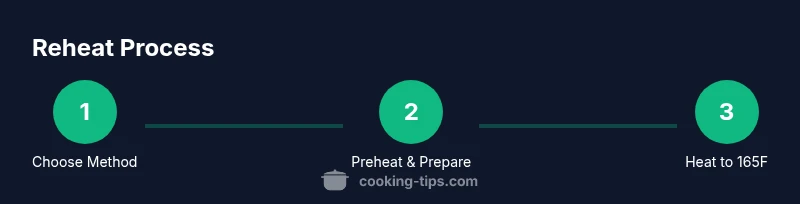
Decide whether you want oven, air fryer, or skillet reheating based on texture preference and time. Oven offers even heating for larger batches, air fryer delivers quick crispiness, and skillet gives fast warming with moisture retention. This initial choice sets up the heat profile for the rest of the process.
Tip: For best texture, plan to reheat in batches if you have many wings. - 2
Set up and preheat the appliance
Preheat the oven to 325-375F, the air fryer to 350-375F, or heat the skillet over medium flame. Preheating ensures a stable temperature for even heating and helps prevent soggy skin or cold spots in the meat.
Tip: Let the appliance reach the target temperature before loading wings. - 3
Arrange wings in a single layer
Spread wings on a wire rack over a baking sheet, or in a single layer in the air fryer basket. Avoid overlapping to ensure even heating and avoid steaming that makes skin soft.
Tip: If using a rack, lightly oil or mist to prevent sticking. - 4
Heat until internal temperature reaches 165F
Reheat until the thickest part of a wing registers 165F with a thermometer. Check periodically and rotate or flip pieces for uniform warming. This step ensures food safety and preserves juiciness.
Tip: Check multiple wings to confirm consistency across the batch. - 5
Fine-tune texture and moisture
If wings look dry, brush with a small amount of stock or water, then give them a couple more minutes. For extra crispness, finish under a broiler or in the air fryer for a minute or two.
Tip: Avoid over-heating to prevent dry meat and burnt sugars on glaze. - 6
Rest briefly after heating
Let wings rest 2-3 minutes off heat to allow juices to redistribute. This helps preserve moisture and makes serving easier.
Tip: Rest time prevents hot spots from burning your tongue. - 7
Apply glaze or sauce if desired
Glaze or sauce can be added after heating to avoid burning; brush lightly and give a minute for the glaze to set.
Tip: Apply sauce at the end to maintain crispness and control sweetness. - 8
Serve and store leftovers safely
Serve immediately or refrigerate leftovers in airtight containers within two hours. When storing, label with date and use within 3-4 days. Reheat only once for best quality.
Tip: Plan ahead for next-day meals by portioning into meal-size batches.
Quick Answers
Is it safe to reheat smoked turkey wings in the oven or air fryer?
Yes. Reheating in the oven or air fryer is safe when you bring the wings to 165F and avoid overcrowding. This preserves moisture and texture better than quick microwave reheats.
Yes, reheat in oven or air fryer until 165F for safety, avoiding overcrowding for even heating.
Can I reheat smoked turkey wings in the microwave?
You can, but microwave reheating can heat unevenly and may dry out the meat. If you use it, cover loosely and stop to stir or rotate for even heating.
Yes you can, but it may heat unevenly. Use cover and rotate halfway for even heating.
How can I tell if the wings are heated through?
Use a meat thermometer to check the thickest part; the internal temperature should reach 165F. If any wing is under that temperature, continue heating in short increments.
Check with a thermometer until 165F in the thickest part.
How long does reheating take?
Times vary by method and batch size. Plan around 6-15 minutes in an air fryer, 15-25 minutes in a conventional oven, or slightly less on a hot stovetop skillet.
Typically 6-15 minutes in an air fryer or 15-25 minutes in the oven.
Should I reheat wings more than once?
Best practice is to reheat only once. If you must cool and reheat again, ensure the temperature is maintained and reduce the time to avoid overcooking.
Reheat only once for safety and quality.
Can I reheat with sauce on?
Sauces with sugar or honey can burn on high heat. Reheat without sauce, then glaze after heating for best texture and taste.
Heat without glaze, then add sauce at the end.
Watch Video
Top Takeaways
- Reheat to 165F internal temperature for safety.
- Choose oven for even warming, air fryer for crispiness, or skillet for speed.
- Avoid overcrowding; space matters for texture.
- Add glaze after reheating to prevent burning sugars.
- Store leftovers promptly and reheat only once for best quality.