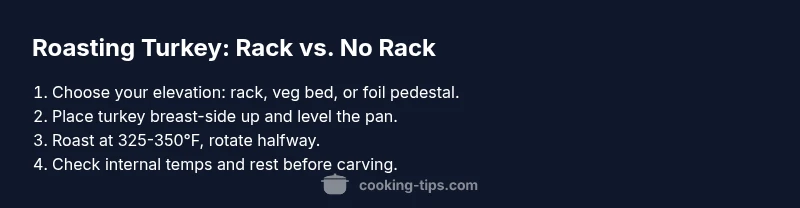
Do You Need a Rack to Cook Turkey? A Practical Guide
Learn whether a rack is essential for roasting turkey, plus practical rack alternatives, setup tips, safe temperatures, and techniques to achieve crispy skin and juicy meat every time.


Do you need a rack to cook turkey? Not strictly. A rack helps airflow and evenly browns the skin, but you can roast a turkey on a bed of vegetables or crumpled foil if you don’t have one. Elevating the bird improves air circulation and hot spots, lowering the risk of soggy areas.
Why a rack can help when roasting turkey
According to Cooking Tips, using a rack elevates the turkey so heat circulates around the entire bird, promoting even browning and a crisp skin. Without a rack, the bottom sits in its own juices, which can soften the skin and create soggy patches. A rack creates space for air to move underneath, reducing hot spots and helping the thighs cook more evenly. For beginners, a rack is a simple, reliable tool, but it's not strictly required. The key ideas are elevation, drainage, and consistent heat exposure. If you don’t have a rack, don’t worry—there are effective improvisations that work in most home kitchens. The goal is to keep the bird above the pan bottom so hot air can reach all sides and any accumulating juices can drain away. With a little planning, you can achieve a roast with juicy breast meat and crispy skin, rack or no rack.
Alternatives to a rack
If you don’t own a roasting rack, several practical substitutes exist. A bed of chopped vegetables (carrots, onions, celery) spread in a single, even layer lifts the turkey and adds flavor to the pan juices. Crumpled heavy-duty aluminum foil formed into a stable pedestal can also work as a temporary stand, as long as it won’t collapse under the weight. An inverted shallow pan or a cast-iron skillet can serve as a makeshift platform, provided the setup is level. Whatever you choose, ensure the turkey remains stable and level so heat circulates evenly. Avoid tall, unstable piles that could tip; you want a flat, solid base that won’t shift during roasting. Remember to consider drainage: if your base holds juices underneath, you’ll steam rather than roast, compromising crisp skin. Finally, if you borrow a rack from a friend, clean it thoroughly before use to prevent flavor transfer.
How to set up your roasting setup without a rack
Start with a preheated oven to around 325-350°F (165-175°C). Place your chosen base in the pan and verify it's flat and stable. If using vegetables, spread them in a thin, even layer; if using foil, shape a small pedestal with enough surface area to support the turkey. Position the turkey breast-side up and secure any tight skin with kitchen twine if you like. Ensure the pan has enough space for air to circulate around the bird—don’t crowd the oven or trap steam. If your base is tall, reduce the pan height by trimming or reshaping. Finally, place the pan on the middle rack to balance heat from top and bottom elements. The setup should keep the turkey elevated a few inches above the pan to promote browning on all sides.
Rack types and materials: which to choose
Not all racks are created equal. Stainless steel racks with a solid frame provide stable support and clean up easily. Wire racks with labeled grid spacing work well for most home roasts, as they allow ample air contact. If you don’t have a rack, a heavy-duty metal sheet pan with a grid insert or a silicone-coated rack can also do the job. For frequent roasters, consider an adjustable rack that fits your pan and can be lowered or raised as needed. Also think about clean-up: some racks are dishwasher-safe, others require hand washing. Whichever you choose, ensure the rack is sturdy, oven-safe, and has a smooth, non-reactive surface to avoid flavor transfer. A good rack not only improves browning but also makes carving easier by keeping the pan juices accessible.
Temperature, doneness, and airflow: getting even browning
Airflow is king when you roast turkey. Elevating the bird allows hot air to reach the entire surface, including under the thighs where juices collect. The target oven temperature is typically in the 325-350°F range (165-175°C). Use an instant-read thermometer to monitor the internal temperature; insert into the thickest part of the thigh without touching bone. The USDA recommends an internal temperature of 165°F (74°C) for safe consumption, but many cooks aim for slightly higher in the breast to maintain juiciness. If you’re not using a rack, rotate the pan halfway to minimize uneven browning caused by hot spots. Let the turkey rest after removal to redistribute juices, which helps maintain moisture when you slice.
Common mistakes when roasting without a rack
One common mistake is leaving the turkey over the pan juices, which can steam the skin rather than crisp it. Another is choosing a base that’s not flat or stable, causing the bird to tilt during roasting. Overcrowding the pan reduces air flow and leads to uneven browning. Opening the oven door too often drops the temperature and prolongs cooking. Finally, neglecting to verify doneness with a thermometer can result in undercooked poultry or dry breast meat. Avoid these by planning a stable base, checking temps, and keeping the oven closed as much as possible.
Steps for a perfect rest and carve
Once the turkey reaches the target internal temperature, remove it from the oven and rest for 20-30 minutes before carving. Resting keeps the juices distributed and makes slicing easier. During resting, lightly tent with foil to retain heat without steaming the skin. When carving, cut along the breastbone to separate slices, then separate the legs and thighs. Serve with pan juices or gravy for extra flavor. If you’re hosting a crowd, plan a simple carving station with a warm platter to keep slices ready for serving.
Quick-start checklist for home cooks
- Create a stable base: decide rack, bed of vegetables, or foil pedestal; ensure flat, stable support for the turkey.
- Preheat the oven to 325-350°F (165-175°C) and set the rack to the middle position if you’re using one.
- Prepare aromatics and pat the turkey dry; tie legs if desired to promote even cooking.
- Place the turkey on the base, breast side up, and verify level.
- Roast and monitor internal temperature with an instant-read thermometer; target 165°F (74°C) in the thickest part of the thigh.
- Rotate the pan halfway through to balance heat; avoid opening the oven too often.
- Rest 20-30 minutes before carving; slice against the grain and serve with pan juices.
Tools & Materials
- roasting pan(Sturdy with 1-2 inch sides to catch drippings)
- oven-safe rack(Optional; if unavailable, use a veggie bed or foil pedestal)
- bed of vegetables or crumpled foil(Lifts turkey; adds flavor; stable base)
- meat thermometer(Instant-read preferred for quick checks)
- tongs(For repositioning turkey safely)
- basting brush(Optional for glaze or aromatics)
- oven mitts(Heat protection when handling hot pan)
- kitchen shears(Carving prep if desired)
Steps
Estimated time: Total time: 2-3 hours
- 1
Prepare the turkey and oven setup
Pat the turkey dry, remove giblets, and bring to room temperature for 30-60 minutes. Preheat the oven to 325-350°F (165-175°C). If using a rack, arrange it in the pan so the turkey will sit elevated and dry heat can circulate. This step sets up even browning and juicy meat.
Tip: Dry skin thoroughly; moisture is the enemy of crisp skin. - 2
Choose your roasting setup
Decide on a rack, vegetable bed, or foil pedestal. Spread a flat, even base in the pan so the turkey sits level. An uneven base can tilt the bird, causing uneven cooking and browning.
Tip: Aim for a stable, level base with no high points that could tilt. - 3
Position the turkey securely
If you’re using a rack, place the turkey breast-side up and secure if desired. For substitutes, center the turkey so it doesn’t wobble on the base. Ensure there’s enough space around the pan for air to circulate.
Tip: Give the turkey a moment to settle after placement before sliding into the oven. - 4
Roast with proper temperature
Roast at 325-350°F (165-175°C). Rotate the pan halfway through to balance heat. Avoid excessive opening of the oven as it cools the cavity and slows browning.
Tip: Use the thermometer to track progress rather than relying on time alone. - 5
Check doneness and rest
When the thigh reaches 165°F (74°C), remove from oven and rest 20-30 minutes. Resting redistributes juices and improves slicing. Keep the turkey warm but not steaming hot during this period.
Tip: Tent loosely with foil to preserve heat without steaming the skin. - 6
Carve and serve
Slice breast meat first, then separate legs and thighs. Serve with pan juices or gravy for color and moisture. Keep slices warm with a light covering until ready to plate.
Tip: Carve against the grain for tender slices. - 7
Cleanup and storage
Carefully remove the base and allow the pan to cool. Wash the rack or base thoroughly. Refrigerate leftovers within two hours and store in shallow containers for quick cooling.
Tip: Label leftovers with date to ensure safe reuse. - 8
Tips for leftovers and flavors
Use turkey leftovers in soups, sandwiches, or casseroles. Add herbs such as thyme and sage to the roasting juices for depth of flavor.
Tip: Plan ahead to simplify future meals using turkey leftovers.
Quick Answers
Do I need a rack to cook turkey?
No. A rack is optional, but it helps elevate the bird for better airflow and browning. Alternatives like a bed of vegetables or crumpled foil can work well.
No, roasting without a rack is possible, but elevation aids browning and even cooking.
What’s a good substitute for a rack?
A bed of chopped vegetables, crumpled aluminum foil, or an inverted pan can lift the turkey and promote airflow.
Veggies or foil can replace a rack effectively.
Will rack usage change cooking time?
Raising the turkey can affect heat exposure, but the primary guide remains the internal temperature. Use a thermometer to confirm doneness.
Cook until the internal temperature 165°F is reached, regardless of rack.
How do I know the turkey is done?
Check for 165°F (74°C) at the thickest part of the thigh without touching bone. The breast should be hot and juices clear.
Check the thigh temperature to 165°F for doneness.
Should I baste the turkey?
Basting isn’t necessary if you use a rack and proper heat. If you like, baste for flavor, but avoid opening the oven too often.
Basting isn’t required if you maintain steady heat.
Is it safe to roast from frozen?
Roasting from frozen is not recommended because it leads to uneven cooking. Plan ahead to thaw the turkey safely.
Thaw the turkey for even cooking.
Watch Video
Top Takeaways
- Rack improves airflow for browning
- Vegetable beds and foil pedestals are viable substitutes
- Always check doneness with a thermometer
- Resting is essential for juicy slices
- Plan a simple carving and serving setup