Is It OK to Cook Salmon From Frozen: Safe Methods and Tips
Learn how to cook salmon from frozen safely with oven, stovetop, or pressure cooker methods. Includes doneness targets, timing, safety, and flavor boosters for best results.


Yes—it's safe to cook salmon from frozen. With the right method, you can achieve juicy, evenly cooked fillets without thawing first. This guide covers oven, stovetop, and pressure cooker options, plus timing, doneness targets, and safety tips. You’ll learn how to minimize water loss, preserve flavor, and ensure the center reaches a safe 145°F for every serving.
Why cooking salmon from frozen is practical
According to Cooking Tips, cooking salmon from frozen can be a practical choice when time is tight or when you forgot to thaw in advance. Frozen fillets can still deliver a satisfying texture and flavor if you follow methods that preserve moisture and avoid overcooking the center. The Cooking Tips team found that portioning larger fillets into thinner portions and using heat that penetrates evenly are key to success. This section explores why freezing need not derail dinner, and how to select fillets that cook more predictably from frozen. You’ll also discover how to minimize moisture loss, which helps keep salmon flaky rather than dry. For home cooks, the goal is to reach a safe internal temperature without sacrificing juiciness, while keeping cleanup simple and predictable.
Safety, thawing, and doneness basics
Salmon is a lean, flavorful fish that cooks quickly when thawed, but it can be cooked from frozen with excellent results. The most important safety guideline is to ensure the center of the fillet reaches a safe internal temperature, commonly cited as 145°F (63°C) by many health authorities. When cooking from frozen, the outer edges may hit doneness first while the center remains slightly cooler; use a thermometer to verify. Texture will vary with method and thickness, but the fish should flake easily and remain moist if not overcooked. Avoid leaving salmon at room temperature to thaw, and never cook from frozen if the packaging is damaged or the fish smells off. As a precaution, inspect your fillets for freezer burn or ice crystals that indicate improper storage, which can impact texture.
Choosing the right method for frozen salmon
Not all frozen salmon is created equal. Smaller fillets or portions cook more evenly from frozen, while thick, whole fillets may require more time or finishing in a hot oven. Methods vary in moisture retention: gentle oven heat with a light coating of oil helps keep the surface moist, while searing on the stovetop can give a pleasant crust if finished with a brief bake. Pressure cooking or using an air fryer can be convenient for faster results, though you may trade a slightly different texture for speed. The key is to ensure even heat distribution and to monitor doneness with a thermometer. Using a glaze or light seasoning can add flavor without overpowering the fish.
Oven method: frozen salmon
Preheat your oven to around 425°F (220°C). Line a baking sheet with parchment or a silicone mat. Place the frozen fillets on the sheet, pat them dry if possible, and brush a small amount of oil or butter on top. Season lightly with salt and pepper, or a simple herb blend. Bake until the center reaches 145°F (63°C); expect longer cooking than thawed salmon, with larger fillets taking more time. Check doneness early with a thermometer to avoid overcooking. Oven cooking provides even heat and is forgiving when fillets are of similar thickness. For extra moisture, cover loosely with foil for part of the cooking time, then uncover to finish and crisp the surface.
Stovetop method: pan-searing from frozen
Heat a nonstick skillet over medium heat and add a thin layer of oil. Place the frozen fillets skin-side down if present, and cook until the underside firms and browns slightly. Flip the fillets and cook a few minutes on the other side, then reduce the heat, cover, and let steam for several minutes to reach doneness. Finishing with a brief oven post-sear can help ensure the center hits 145°F. This method yields a nice crust while keeping moisture inside. Always use a thermometer to confirm internal temperature instead of guessing based on time alone.
Pressure cooker/Instant Pot method
If you’re short on time, a pressure cooker can cook frozen salmon quickly. Add liquid (water or broth) to the cooker, place a trivet, and set the frozen fillets on top. Cook on high pressure for a short period (often under 10 minutes depending on thickness), then finish with a quick natural release and a brief rest. Check for 145°F in the center. This method is convenient for meal prep and when you want hands-off cooking, though final texture may differ from oven or stovetop methods.
Flavor, texture, and finishing touches
Whether you use oven, stove, or pressure, finishing with a touch of citrus, herbs, or a light glaze can brighten frozen salmon without overpowering it. A squeeze of lemon, dill, parsley, or a glaze made from honey and soy can add flavor without adding heavy marinades that overwhelm the fish when cooking from frozen. Patience with heat control is essential; modest heat and shorter pauses during cooking help retain moisture. Always rest the fillets briefly after cooking to let juices redistribute, which improves tenderness. Finally, store any leftovers promptly in a sealed container in the fridge or freezer, noting that quality may degrade after freezing and thawing twice.
Authority sources
For safe cooking temperatures and best practices, see authoritative sources from government and public health organizations. These guidelines underpin how we teach home cooks to handle seafood safely and effectively. The following sources offer official temperature targets and handling advice to complement this guide:
- U.S. Food and Drug Administration (FDA): Safe food handling and cooking temperatures. https://www.fda.gov/food-safety
- U.S. Department of Agriculture (USDA) Food Safety and Inspection Service (FSIS): Safe internal temperatures and handling. https://www.fsis.usda.gov/food-safety
- Centers for Disease Control and Prevention (CDC): Food safety basics. https://www.cdc.gov/foodsafety
Tools & Materials
- Baking sheet(Rimmed, lined with parchment or silicone mat)
- Parchment paper or silicone mat(Prevents sticking and makes cleanup easier)
- Aluminum foil(Optional for tenting or moisture retention)
- Oven-safe thermometer / instant-read thermometer(To verify 145°F in the center)
- Silicone brush or small spoon(For applying oil or glaze)
- Oil (olive oil or neutral oil)(Light coating helps with browning)
- Kitchen timer(To track cooking intervals)
- Skillet with lid (for stovetop method)(Use if you plan to finish with steam)
Steps
Estimated time: Total time: 25-40 minutes
- 1
Choose your method
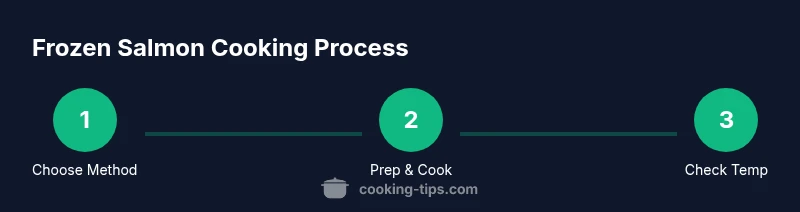
Decide whether to bake, pan-sear, or pressure-cook from frozen. Your choice affects texture and time. Consider fillet thickness and your available cookware.
Tip: Thinner portions cook more evenly from frozen; trim thick ends if needed for uniform heat. - 2
Preheat equipment
Preheat the oven to about 425°F (220°C) or select your stovetop/pressure cooker setup. A hot start helps sear the surface and accelerate cooking.
Tip: Concurrently pat fillets dry to promote browning; moisture on the surface will steam rather than sear. - 3
Prepare the fillets
Place frozen fillets on a lined baking sheet or in your cooking vessel. Brush a light coat of oil and season with salt and pepper or a gentle herb blend. Avoid heavy marinades that can overwhelm the fish when cooking from frozen.
Tip: Even a small amount of oil helps prevent sticking and improves texture. - 4
Cook using your chosen method
Bake for the oven method until the center reaches 145°F, usually longer than thawed fillets. For stovetop, sear then finish with a covered brief steam. For pressure cooking, use a short high-pressure cycle and proper release.
Tip: Use a thermometer early and frequently to avoid overcooking. - 5
Check doneness
Insert the thermometer into the thickest part of the fillet. If it has not reached 145°F, continue cooking in 1–2 minute increments. The fish should be opaque and flake easily.
Tip: If the outside looks done but the center is pale, move to a finish under higher heat for a minute or two. - 6
Rest and serve
Let the salmon rest for 2–3 minutes after cooking to redistribute juices. Serve with a squeeze of lemon or a light herb finish to brighten flavors.
Tip: Pair with simple sides like steamed vegetables or a grain for a complete meal.
Quick Answers
Is it safe to cook salmon from frozen?
Yes. As long as the salmon is stored properly and cooked to an internal temperature of 145°F (63°C) in the center, cooking from frozen is safe. Use a thermometer to verify doneness to avoid undercooking.
Yes, it is safe to cook salmon from frozen when you verify the center reaches 145 degrees Fahrenheit.
What is the best method for frozen salmon?
Oven-baking at a high heat is a reliable method for frozen fillets, followed by a check with a thermometer. Pan-searing plus finishing in the oven also yields a crisp surface with moist interior.
Oven-baking for frozen fillets is a dependable method; you can also sear and finish in the oven for a crisp exterior.
Do I need to thaw thick fillets before cooking?
Thawing thick fillets can reduce total cooking time and help evenness, but you can cook from frozen with adjusted times and heat. If time allows, partial thawing can improve texture.
Thawing thick fillets is optional, but can help even cooking. If you’re pressed for time, frozen is doable with longer cook times.
What internal temperature should salmon reach?
Aim for 145°F (63°C) in the thickest part of the fillet. Use an instant-read thermometer for accuracy and adjust cooking time accordingly.
Cook salmon until it reaches 145 degrees Fahrenheit in the center.
Can I refreeze salmon after cooking?
Yes, cooked salmon can be frozen again if cooled promptly and stored properly. However, refreezing may affect texture and flavor, so plan portions carefully.
You can freeze leftovers after cooking, but expect some texture changes with refreezing.
How can I prevent frozen salmon from sticking?
Dry the surface, brush with a light oil, and use parchment or a nonstick pan. Preheating helps create a crust that resists sticking.
Pat the fish dry, oil lightly, and preheat to help prevent sticking.
Watch Video
Top Takeaways
- Cook from frozen safely with a thermometer.
- Choose oven, stovetop, or pressure-cooker methods for versatility.
- Monitor doneness to keep salmon moist and flaky.
- Finish with bright, simple flavors to brighten frozen fish.
- Store leftovers promptly to maintain safety and quality.