How to Cook Salmon on a Grill: The Ultimate Guide
Master grilling salmon with crisp skin and juicy flesh. This step-by-step guide covers selection, seasoning, heat control, doneness cues, and serving ideas for home cooks.


You will learn a reliable method to grill salmon with crisp skin and moist flesh. This guide covers selecting the right fillet, preheating the grill, building two heat zones, and finishing with a timed, careful flip. Expect practical tips, simple seasonings, and a resting step to keep flavors vibrant.
Choosing the Right Salmon for Grilling
Selecting the right salmon makes the entire experience easier and more forgiving. Look for skin-on fillets when possible; the skin helps protect the delicate flesh and becomes deliciously crispy when grilled properly. Thickness matters: 3/4 to 1 inch is ideal for most home grills, allowing a good sear while the center stays moist. If you buy fillets with bones, request a trim or remove the pin bones yourself before cooking. Wild-caught salmon often has bolder flavor and firmer texture, but responsibly farmed fish can be a reliable option too. According to Cooking Tips, starting with high-quality salmon sets a strong foundation for a tasty result. Pat dry with paper towels to help seasonings adhere and reduce steaming on the grill.
- Choose skin-on fillets when possible for extra protection and texture.
- Check thickness to estimate cooking time and avoid overcooking.
- Pat dry to promote a crisp surface and even browning.
Preparing Your Grill for Success
A clean, well-prepared grill is the secret to successful salmon. Start with a hot, clean grate to promote a good sear and simple release. If you’re using a gas grill, preheat to medium-high and then oil the grates with a high-heat oil to reduce sticking. For charcoal, set up two heat zones: direct heat for searing and indirect heat for finishing the cook. Once the grill is preheated, have a thin layer of oil on hand to brush lightly onto the skin. This reduces moisture loss and improves browning. Cooking Tips emphasizes consistent heat management as a key determinant of doneness and texture.
- Preheat and maintain even heat across the grate.
- Oil the grates and the fish lightly to minimize sticking.
- Have tongs, a thermometer, and a clean plate ready for efficient cooking.
Seasoning, Marinades, and Rubs
Salmon benefits from simple seasoning that complements its natural flavor. A light sprinkle of kosher salt or sea salt, cracked pepper, and a squeeze of citrus is enough for many cooks. If you prefer, a quick herb rub (dill, parsley, or thyme) or a small amount of olive oil enhances aroma without masking the fish’s sweetness. For a touch more depth, marinate briefly in a citrus-herb mixture, but avoid overpowering the fish. The goal is balance, not overpowering complexity. The Cooking Tips approach favors minimal intervention that still yields a bright, clean finish.
- Keep seasonings modest to let the salmon shine.
- Oil the salmon skin lightly to aid browning and release.
- Marinate only briefly to avoid overpowering the fish’s delicate flavor.
Direct Heat vs Indirect Heat: When to Use Each
Grilling salmon well usually involves two heat zones. Start with direct heat to sear the skin and create a browned crust, then move the fish to indirect heat to finish cooking through without burning. If your grill cannot swing between zones, you can achieve a similar effect by cooking most of the time with the lid closed on a medium-low setting. This approach minimizes flare-ups and keeps the flesh moist. The two-zone method is a favorite because it gives control over both searing and gentler finishing.
- Sear over direct heat for crisp skin and color.
- Finish with indirect heat to avoid overcooking the center.
- Use the lid to trap heat when using indirect cooking.
The Skin-On Advantage: Crisp Skin and Easy Handling
Keeping the skin on during grilling provides protection for the delicate flesh and helps prevent sticking. Start skin-side down to render some fat and form a crisp cap. Don’t move the fillet too early; give it time to grip the grates. When the skin is nicely browned and the flesh releases cleanly from the grill, it’s time to flip. If you do flip, use long-handled tongs and a wide spatula to support the fillet and prevent tearing. The result is a juicy interior with a satisfying, lightly crisp skin.
- Start skin-side down and resist the urge to flip too soon.
- Use tongs and a wide spatula to keep the fillet intact.
- A well-seared skin adds texture and flavor.
Doneness Cues and Resting for Optimal Texture
Because fish cooks quickly, rely on visual cues and gentle touch rather than chasing a “perfect” time. The flesh should become opaque at the center and flake easily under light pressure. A brief rest after removing from heat lets juices redistribute, keeping the fillet moist when sliced. If you prefer a slightly firmer texture, pull the salmon just before it’s fully opaque and let the residual heat finish cooking. Cooking Tips notes that resting is a key step for a juicy finish.
- Look for opaque, evenly colored flesh with a gentle flake.
- Rest for a few minutes to reabsorb juices.
- Avoid overcooking by removing from heat slightly early and letting carryover heat finish the job.
Practical Tips for Preventing Sticking, Dryness, and Flare-Ups
Sticking and flare-ups are common but preventable. Keep the grill clean, oil both the grates and the fish lightly, and avoid placing very cold fillets onto a scorching grate. Maintain a steady, moderate heat and avoid piling on heavy sauces that can burn. If you see flames, move the salmon to indirect heat or close the lid to smother flare-ups. Remember to pat the surface dry before seasoning to encourage a good crust rather than a steamy surface. The goal is balanced browning with moist, tender flesh.
- Clean and oil the grill before cooking.
- Use two heat zones when possible.
- Pat the surface dry and avoid heavy sauces during grilling.
Serving Ideas, Leftovers, and Quick Pairings
Grilled salmon is versatile enough for a weeknight dinner or a weekend feast. Serve with bright citrus wedges, a simple herb salsa, or a light yogurt-dill sauce to balance the richness. Pair with grilled vegetables, a green salad, or quinoa for a complete meal. Leftovers can be flaked into salads, tacos, or grain bowls for minimal waste. Cooking Tips suggests keeping portions moderate to preserve flavor and texture, even after reheating.
- Pair with fresh herbs, lemon, or yogurt-based sauces.
- Combine with vegetables or grains for a nourishing meal.
- Reheat gently to maintain moisture and texture.
Common Mistakes to Avoid and How to Fix Them
Even seasoned cooks make missteps when grilling salmon. Avoid starting with frozen fish, which thaws unevenly and steams instead of searing. Don’t over-season or smother with sauces that mask the fish’s natural flavor. If the fillet sticks, give it a minute and a half, then try again; forcing a release can tear the flesh. Finally, don’t neglect resting; it’s essential for a juicy finish. The Cooking Tips team emphasizes learning from small missteps to improve technique over time.
- Don’t grill frozen fish; thaw fully and pat dry.
- Don’t over-season or rely on heavy sauces during grilling.
- Don’t rush the searing; allow the crust to form before turning.
Closing Thoughts: Turning Grilled Salmon into a Weeknight Favorite
With the right fish, a clean grill, and mindful technique, salmon becomes an easy star at the table. The approach outlined here balances crisp skin, juicy flesh, and simple flavors that can scale from quick weeknight dinners to impressive weekend plates. Remember, practice and patience are key, and small adjustments—like heat level or resting time—make a big difference over time. The Cooking Tips team hopes you enjoy exploring different seasonings and accompaniments to tailor this versatile fish to your tastes.
Tools & Materials
- Gas or charcoal grill(Ensure grates are clean; preheat to medium-high if using gas.)
- Instant-read thermometer(Check the thickest part for doneness.)
- Long-handled tongs(Use to flip without breaking the fillet.)
- Oil with high smoke point(Lightly oil grates and the skin of the fish.)
- Paper towels(Pat dry fillets before seasoning to promote sear.)
- Seasoning (salt, pepper, lemon/herbs)(Keep seasonings simple to highlight fish flavor.)
- Grill-safe brush or cloth(Clean grates between batches if needed.)
Steps
Estimated time: 25-35 minutes
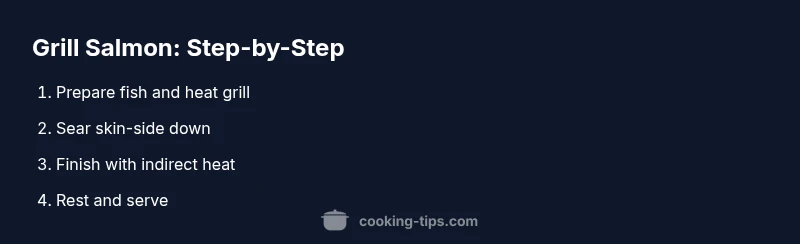
- 1
Prepare the salmon and preheat the grill
Pat the fillets dry with paper towels, then brush a light coat of oil over the skin. Season lightly with salt and pepper. Preheat the grill to medium-high and oil the grates just before placing the fish down to reduce sticking.
Tip: Keeping the fish dry and the grill oiled helps prevent sticking and promotes crisp skin. - 2
Set up two heat zones
If your grill offers direct and indirect heat, position coals or burners to create a hot zone for searing and a cooler zone for finishing. If you’re using a gas grill, turn some burners to high and leave others on lower heat. Lid closed, this arrangement stabilizes cooking surface.
Tip: Two heat zones give you control over browning and doneness without burning the exterior. - 3
Cook skin-side down and monitor
Place the salmon skin-side down on the hot zone and allow the skin to crisp. Resist the urge to move it right away; the skin needs time to release from the grate. When the flesh starts to look opaque near the edges, it may be time to flip.
Tip: If sticking occurs, wait another 30 seconds and retry gently with tongs; forcing a flip can tear the flesh. - 4
Finish, rest, and serve
Move the fillet to indirect heat to finish cooking through without drying. Remove from the grill while the center is just set and let it rest for 3-5 minutes before slicing.
Tip: Resting allows juices to redistribute, delivering juicier portions when plated.
Quick Answers
What is the best thickness for salmon fillets on a grill?
Fillets about 3/4 inch to 1 inch thick cook evenly and stay moist on the grill. If thicker, finish with indirect heat to avoid overcooking the exterior.
Choose fillets between three quarters of an inch and one inch thick for even cooking on the grill.
Should I grill with the skin on or off?
Grilling with the skin on helps hold the fillet together and adds a delicious crisp edge. You can remove it after cooking if you prefer.
Keep the skin on during grilling to help protection and texture, then remove if you don’t want it.
How can I prevent sticking to the grill?
Pat the fillets dry, oil both the grates and the skin lightly, and avoid moving the fish until the skin grips the grate. A clean, well-oiled grill reduces sticking dramatically.
Dry the fish, oil the grate, and wait for the skin to release before turning.
How do I tell when salmon is done without overcooking?
Look for opaque flesh and a gentle flake with a fork. Resting for a few minutes helps the juices reabsorb; removing slightly early prevents dry meat.
Cook until the center is just opaque and flakes easily, then rest a few minutes.
Can I marinate salmon before grilling?
A light citrus-herb marinade works well, but keep it brief to avoid overpowering the fish. Too much acid can begin to cook the surface before grilling.
Yes, but use a light marinade and don’t soak too long.
Watch Video
Top Takeaways
- Choose skin-on salmon fillets for best texture.
- Preheat and oil the grill to prevent sticking.
- Use two heat zones for searing and finishing.
- Rest the fish before serving to lock in moisture.