Vermicelli Noodles: How to Cook Perfectly
Master vermicelli noodles with clear methods for boiling, soaking, and stir-frying. Learn differences between rice and glass vermicelli, timing, texture cues, and serving ideas for everyday meals.


Vermicelli noodles can be cooked using boiling, soaking, or a quick stir-fry, depending on the dish and noodle type. This guide covers how to choose the right method, time guidelines, and texture cues to achieve tender, separate strands every time.
What vermicelli noodles are
Vermicelli is a family of very thin noodles used across many cuisines. There are two common varieties you’ll encounter in home kitchens: rice vermicelli (thin rice noodles) and glass vermicelli, often made from mung bean starch. The terms can be confusing, but the cooking approach usually clarifies the choice. According to Cooking Tips, mastering vermicelli noodles how to cook involves recognizing the base ingredient and selecting a method that preserves texture without clumping. In this section you’ll learn how to identify the type you have, what texture to aim for, and how to avoid the common pitfall of mushy noodles when sauces are added. Whether you’re building a quick stir-fry, a delicate soup, or a cold noodle salad, the goal is tender strands that hold sauce and bite.
In this paragraph we introduce vermicelli and the purpose of proper cooking. As you’ll see, the two main families—rice and glass—behave differently and require different handling. By keeping the base ingredient in mind, you’ll know whether to soak, boil, or quickly sauté. The Cooking Tips team emphasizes that careful prep pays off in every dish.
Tools & Materials
- Large pot (3-4 quarts minimum)(Enough water for noodles to move freely)
- Colander or sieve(Drain hot and cold rinses safely)
- Measuring cups and timer(Track soaking or boiling times)
- Fork or tongs(Gently separate strands while cooking)
- Bowl of cold water or ice bath(Stops cooking for some methods)
- Sauce pan or wok(Finish with a quick stir-fry if needed)
- Salt (optional)(Enhances water flavor for boiling)
Steps
Estimated time: 20-30 minutes
- 1
Measure and prepare vermicelli
Measure the noodles according to your recipe and separate any tangled strands. If you’re using rice vermicelli, check the package for whether it’s pre-soaked or needs soaking first. This step helps you avoid overcooking by giving you a precise start.
Tip: Roughly break longer bundles if your pot is small to ensure even cooking. - 2
Choose your cooking method
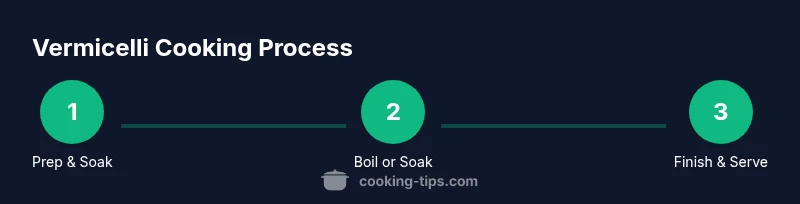
Decide between boiling, soaking, or a quick stir-fry based on the final dish. Boiling works well for hot soups, soaking is ideal for cold salads, and stir-frying keeps noodles firm while saucing.
Tip: For a flexible workflow, have all methods in mind before you start. - 3
Boil method preparation
Fill a large pot with water and bring it to a rolling boil. If desired, add a pinch of salt. Ready your colander for quick draining once noodles reach the target texture.
Tip: Use a high heat to keep the water at a steady boil to prevent sticking. - 4
Cook using the boil method
Add vermicelli in small batches to avoid clumping. Stir gently and monitor the texture closely; most rice vermicelli take 2–5 minutes, while glass vermicelli may only need 3–6 minutes. Drain immediately.
Tip: Taste-test a strand toward the end of the cooking time for best texture. - 5
Soak for a different texture
If you’re preparing a salad or a lighter dish, soak the noodles in hot water until pliable, then drain. Soaking times vary by type—rice vermicelli often require 5–10 minutes, glass vermicelli can be 5–8 minutes.
Tip: Do not oversoak; soft mashed strands are difficult to separate in salads. - 6
Finish with a quick stir-fry
Heat a pan, add a tablespoon of oil, and briefly stir-fry the noodles with your sauce for 1–3 minutes. This method helps coat the noodles evenly and keeps them from clumping.
Tip: Toss with your sauce off the heat to prevent breakage and overcooking. - 7
Test for doneness
Noodles should be tender with a slight bite, not mushy. Depending on the method, texture should be pliable but not stiff.
Tip: If texture is off, adjust by a quick re-warm with a splash of sauce or water. - 8
Drain and rinse if needed
Some preparations benefit from a light rinse under cold water to stop cooking and remove surface starch. Others, like hot soups, stay un-rinsed to keep heat and steam.
Tip: Rinsing is optional and depends on the dish and texture you want.
Quick Answers
What is the best way to cook vermicelli noodles to prevent clumping?
Cook in small batches, use ample boiling water, and stir gently. Depending on the type, choose boiling, soaking, or a quick stir-fry at the end to keep strands separate.
For best results, cook in small batches with plenty of water and stir gently. Pick boiling, soaking, or a quick stir-fry to keep the strands separate.
Can I substitute vermicelli noodles in recipes that call for spaghetti?
Vermicelli is much thinner than spaghetti and behaves differently in sauces. Use it in lighter sauces or soups, and expect quicker cooking times.
Vermicelli is thinner than spaghetti and works best with light sauces or in soups. Cooking times are shorter.
Are vermicelli noodles gluten-free?
Rice vermicelli is typically gluten-free, but always check the package since some blends may include other ingredients.
Rice vermicelli usually contains no gluten, but check the label to be sure.
How long can cooked vermicelli be stored in the fridge?
Cooked vermicelli can be stored in the fridge for 3–4 days in an airtight container. Reheat gently with a splash of sauce or broth.
Cooked vermicelli lasts about 3 to 4 days in the fridge. Reheat with a little liquid to restore texture.
Can I freeze vermicelli noodles?
Most vermicelli freezes well when cooked and cooled, but texture may soften slightly upon thawing. Reheat with sauce to restore moisture.
Yes, you can freeze cooked vermicelli, but expect slight texture changes. Reheat with sauce to refresh.
Do vermicelli noodles need to be rinsed after cooking?
Rinsing is optional and depends on the dish. Rinse for salads or cold dishes to stop cooking and remove surface starch; skip for hot dishes to keep heat and flavor.
Rinse after cooking if you’re serving cold, otherwise you can skip rinsing for hot dishes.
Watch Video
Top Takeaways
- Different vermicelli types require different prep and cook times.
- Choose boiling, soaking, or stir-fry based on your dish for optimal texture.
- Avoid overcooking to prevent mushy noodles.
- Rinse or not based on dish requirements to control texture.