How to Reheat Already Cooked Ham: Safe, Juicy Results
Learn proven methods to reheat cooked ham without drying it out. This educational guide covers oven, microwave, and glaze options to keep leftovers juicy and flavorful.


To heat already cooked ham safely, aim for 140°F (60°C) internal temperature. Reheat in the oven or microwave: wrap slices or a small roast in foil, add a splash of broth or apple juice to keep moisture, and heat gently until steaming-hot. For whole hams, cover tightly and conclude with a 10-minute rest; verify with a thermometer.
Understanding the basics of reheating already cooked ham
Already cooked ham is fully prepared and safe to eat cold, but reheating it correctly enhances flavor and texture. The goal is to heat evenly without drying out every portion. A meat thermometer is your best friend here: it helps you hit a safe internal temperature (commonly 140°F / 60°C for reheated ham) while preserving juiciness. According to Cooking Tips, reheating with gentle heat and moisture retention is key to avoiding rubbery texture and bland flavor. The right approach depends on whether you have thin-sliced leftovers or a larger precooked roast. By understanding the fundamentals—temperature, moisture, and timing—you set up every reheating method for success.
Choosing the right reheating method
Your choice of reheating method depends on time, ham size, and whether you want glaze or extra flavor. Oven reheating at a low temperature promotes even warming and moisture retention, making it ideal for whole pieces or thicker slices. The microwave saves time for small portions but can heat unevenly if you don’t rearrange slices or cover them. Stovetop reheating in a dish with a little liquid can work well for chunks or shredded ham when you want quick, moist results. Regardless of method, start with a thermometer inserted into the thickest part to monitor progress and stop once you reach the target temperature.
Moisture management: keeping ham juicy
Moisture is the secret to juicy reheated ham. Always add a small amount of liquid—broth, water, or apple juice—to the pan or dish to create steam and prevent drying. Cover tightly with foil or a lid to trap moisture, especially for larger cuts. If you’re using a glaze, consider applying it toward the end of the reheating process to avoid burning sugars. For slices, keep them in a shallow layer so heat spreads evenly and reduces the risk of overcooking the edges.
Glazes, seasonings, and flavor ideas
A glaze can elevate reheated ham, but sugar-rich glazes burn quickly during reheating. If you plan to glaze, apply in the final 10 minutes of cooking, or brush lightly before serving. Classic options include a mix of honey or brown sugar with mustard, or a maple-ginger glaze for a sweet-and-savory profile. You can also season with fresh herbs, pepper, or a splash of orange juice to balance saltiness. Glazing should be brief and hot enough to set, not scorch, the surface.
Safety and temperature guidelines you should follow
Reheated ham should reach an internal temperature of 140°F (60°C) for safety and quality. Use a reliable meat thermometer to verify. Do not reheat more than once; leftovers should be refrigerated promptly (within two hours) and consumed within 3–4 days. If ham was stored in large pieces, cut it into thinner slices or chunks to ensure even heating. Always reheat to steaming-hot throughout and rest briefly before slicing.
Special cases: leftover ham, pre-sliced vs roast ham, and thawed frozen ham
Pre-sliced ham heats faster but may dry more quickly if overcooked. A larger roast cut needs patience and moisture. If you’re thawing frozen precooked ham, thaw in the refrigerator first, then reheat using gentle heat and moisture. Leftover ham stored in airtight containers benefits from rehydration in the pan with a splash of stock to retain tenderness. Regardless of form, adjust heat gradually and monitor the thermometer for best texture.
Common mistakes and quick fixes
Common errors include overheating, which dries the meat; using too little moisture; and uncovering the dish, which lets steam escape. Fixes: add liquid, cover tightly, and recheck temperature frequently. If edges look dry, cover with foil and give them a quick steam bath in the oven. For uneven heating, rearrange slices or chunks halfway through heating.
Practical serving tips and batch reheating plans
Plan reheating in batches to ensure even cooking, especially for large gatherings. Reheat in small portions for uniform warmth, then combine for serving. Slice ham after reheating to ensure every piece is nicely warmed. If you’re serving hot with sides, time the reheating to finish with the sides so everything stays warm together. Use the leftovers in sandwiches or soups to minimize waste and maximize flavor.
Tools & Materials
- Oven(Preheat to 275-300°F (135-150°C) for even, gentle reheating)
- Aluminum foil(Wrap ham or cover dish to trap moisture)
- Shallow baking dish or pan(Large enough for the ham or slices in a single layer)
- Meat thermometer (instant-read)(Probe should reach center without touching bone)
- Liquid for moisture (broth, apple juice, or water)(Add 1/4–1/2 cup as needed to generate steam)
- Microwave(If using, ensure a microwave-safe cover to trap steam)
Steps
Estimated time: 60-90 minutes
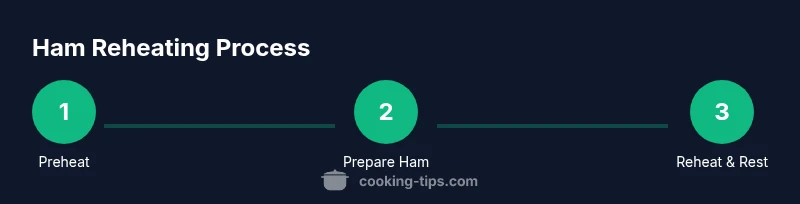
- 1
Preheat the oven
Set your oven to a gentle temperature (275–300°F / 135–150°C). This slow start helps heat distribute evenly without drying the meat. Aim to have the oven ready when you’re ready to place the ham inside.
Tip: A lower temperature reduces risk of overcooking the outer edges first. - 2
Prepare the ham and pan
Place the ham in a shallow baking dish in a single layer if possible. If reheating slices, arrange them flat so heat reaches all pieces evenly.
Tip: Slicing before reheating speeds up even heating and moisture retention. - 3
Add moisture and cover
Pour a small amount of broth or apple juice into the dish and cover tightly with foil or a lid. Trapping steam is essential to keep the ham juicy.
Tip: For glazed ham, wait to apply glaze until the final minutes to prevent burning. - 4
Reheat to safe temperature
Heat until the internal temperature reaches 140°F (60°C) for safety and best texture. Check several spots in the ham for even heating.
Tip: If heating slices, flip or rearrange them halfway through for uniform warmth. - 5
Rest before serving
Remove from heat and let the ham rest for 5–10 minutes. This allows juices to redistribute, resulting in juicier slices.
Tip: Resting makes slicing cleaner and reduces the chance of hot juice splashing. - 6
Glaze if desired
If you’re using a glaze, apply it in the last 10 minutes of heating and return to heat briefly to set the glaze without burning.
Tip: Keep a close eye on the glaze; sugar can brown quickly at high heat.
Quick Answers
What is the safest temperature to reheat ham?
Reheat ham to 140°F (60°C) internally. Use a thermometer for accuracy and ensure the center reaches the target temperature.
Reheat the ham until it reaches one hundred forty degrees Fahrenheit in the center, then rest before serving.
Can I reheat ham more than once?
It’s best to reheat ham only once. Reheating multiple times can degrade texture and increase food safety risk.
Try to reheat only once and refrigerate leftovers promptly.
Should I remove glaze before reheating?
If glaze is sugary, remove it or apply at the end to prevent scorching. Glaze can burn quickly under heat.
Glaze near the end or brush lightly before serving to avoid burning.
Is oven reheating better than microwave for ham?
Oven reheating generally yields more even heating and moisture retention, while the microwave is faster for small portions.
The oven tends to be juicier; use the microwave for quick, smaller portions if pressed for time.
How should I store reheated ham leftovers?
Cool leftovers within two hours and store in airtight containers in the fridge for 3–4 days; freeze if longer storage is needed.
Cool quickly, refrigerate, and use within a few days; freeze for longer storage.
Can I reuse ham bone for stock after reheating?
Yes, if the bone is still present and edible, you can simmer it with vegetables to make stock, but do not reuse meat that has already been heavily reheated.
You can use the bone for stock if it’s still intact and safe, but won’t reuse the reheated meat itself.
Top Takeaways
- Heat ham slowly to 140°F for safety and juiciness
- Moisture retention is essential; cover and add liquid
- Glazes should be applied toward the end to avoid burning
- Use a thermometer for accuracy and rest before serving