Which Cooking Oil to Use for High Heat: A Practical Guide
Learn which cooking oil works best for high-heat cooking, with guidance on smoke points, stability, flavor, and safety for home cooks. Practical tips for searing, frying, and wok cooking in everyday meals.


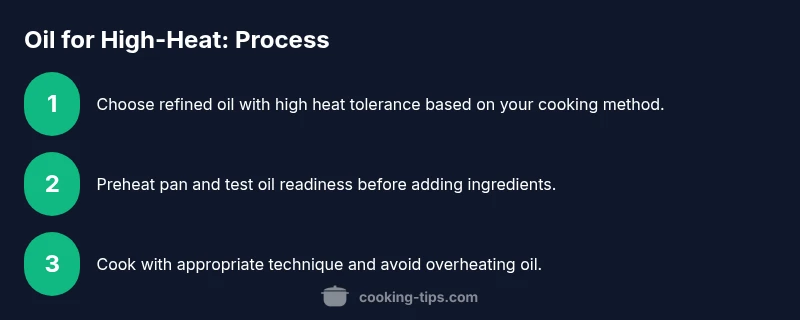
To successfully cook at high temperatures, pick an oil with a high smoke point, stable composition, and minimal flavor interference. For most high-heat needs, use refined peanut, avocado, grapeseed, or refined olive oil, while avoiding extra-virgin varieties that smoke early. Consider flavor and cost too in advance.
Why high-heat cooking matters
When you cook at high temperatures—whether you’re searing a steak, stir-frying vegetables, or finishing a crust in a hot oven—the oil you choose must withstand heat without breaking down. The key factors are the oil’s smoke point, its chemical stability under heat, and how its flavor interacts with your dish. According to Cooking Tips, understanding these elements helps home cooks achieve browning, texture, and a clean taste rather than acrid smoke and off-flavors. This guide will help you select oils that perform reliably in common high-heat scenarios while keeping tips grounded in everyday kitchen practice.
How smoke points influence performance
Smoke point is the temperature at which an oil begins to break down, produce visible smoke, and potentially impart burnt flavors. Oils with higher smoke points tolerate sizzling temperatures without degrading. However, a high smoke point alone isn’t enough; oil stability—how its structure holds up to repeated heating and cooling—also matters. Reusing oil that has started to break down can lead to off flavors and unhealthy compounds. For home cooks, prioritizing oils with both high smoke points and good thermal stability translates to crisper searing, more consistent color, and less smoking during cooking. The Cooking Tips team emphasizes that you don’t need to memorize exact degrees for every oil; instead, choose refined varieties known for durability in high-heat tasks and reserve unrefined oils for gentle cooking.
Oils to consider for high-heat cooking (and why)
For high-heat cooking, refined oils generally outperform their unrefined counterparts because the refining process removes impurities and frees the fat to heat more evenly. Here are common picks you’ll see in home kitchens:
- Refined peanut oil: Very high tolerance for heat and neutral flavor help achieve a crisp exterior without overpowering sauces.
- Refined avocado oil: Rich in monounsaturated fats with a strong high-heat capacity and a buttery mouthfeel in lighter dishes.
- Grapeseed oil: Light and neutral, a practical workhorse for searing and stir-frying with minimal flavor interference.
- Refined olive oil: Has a higher heat tolerance than extra-virgin olive oil, offering a balanced option when you want olive notes without burning them.
When it comes to oils to avoid for high-heat tasks, reserve extra-virgin olive oil and unrefined coconut oil for lower-heat cooking or finishing dishes, as their flavors can overshadow foods and they smoke sooner. The goal is to preserve browning without smoking and to keep flavor clean and predictable.
Refined vs unrefined: making the right choice for your pan
Refined oils are typically filtered and cleaned to remove impurities, yielding higher heat tolerance and a neutral taste. Unrefined oils retain more of their natural flavors but usually smoke sooner and can degrade faster under intense heat. If you’re cooking something where you want a neutral start (e.g., a simple stir-fry with vegetables), refined oils are the safer bet. If you want the oil’s flavor to contribute to the dish (for example, a garlic-tinged finish), plan your technique carefully and avoid prolonged exposure to extreme heat. The distinction between refined and unrefined is a practical rule: refined often means higher heat capacity, unrefined means more character—choose based on your recipe’s needs.
How to test and adjust in your kitchen
A practical approach is to heat your pan gradually and test with a small amount of oil before committing to a full batch. If the oil smokes quickly or smells aggressively burnt, lower the heat or switch to a different oil. If it sizzles lightly and forms a thin, shimmering surface, you’re ready to cook. Practice with a few vegetables or a protein to learn how your pan responds. Remember that every stove and pan conducts heat a little differently, so personal observation matters as much as any general guideline.
Tools & Materials
- Frying pan or skillet (preferably cast iron or stainless steel)(Even heating; preheat before adding oil)
- Thermometer (infrared or probe)(Helpful for judging when to add ingredients)
- Oil bottles for testing (refined peanut, avocado, grapeseed, refined olive)(Have multiple options ready for quick swaps)
- Paper towels or rack(Drain excess oil after cooking)
- Tongs or spatula(Turn foods without splashing hot oil)
- Oven mitts(Protect hands when handling hot pans)
Steps
Estimated time: 30-40 minutes
- 1
Identify your high-heat goal
Define whether you want a crust, browning, or quick sear. Understanding the goal helps you pick the right oil and heating method. The difference between a crisp crust and a soggy finish often comes down to oil choice and temperature control.
Tip: Know your pan: cast iron retains heat well; stainless heats quickly and distributes more evenly. - 2
Select the appropriate oil
Choose a refined oil with a high heat tolerance for searing and frying. Keep unrefined oils for flavor or finishing touches where heat is lower. Have at least two options on hand to compare results in a single cooking session.
Tip: Label bottles with usage notes to remember which oil performed best for which dish. - 3
Preheat the pan properly
Heat your pan on medium-high until hot, then add oil in a thin layer. The goal is a smooth, even shimmer, not a heavy splash. If the oil starts to smoke immediately, reduce the heat before you add food.
Tip: Allow the pan to reach a stable temperature before introducing ingredients. - 4
Test the oil before cooking
Drop a tiny amount of food or a small bead of oil to see if it sizzles and bubbles; this confirms the surface is ready. A rapid, aggressive sizzle signals high heat; a gentle shimmer means you should lower the heat.
Tip: If the oil’s smoke point is too close to your target temperature, switch to a different oil. - 5
Cook with controlled technique
Add ingredients in a single layer and avoid overcrowding, which drops pan temperature. Work in batches if needed. Flip or stir only when you have good browning and color development.
Tip: Use a light hand when turning proteins to preserve crust formation. - 6
Monitor heat and adjust as you go
Watch for wisps of smoke; lower heat if smoke becomes persistent. High heat is useful, but sustained smoking indicates oil breakdown and flavor loss. Adjust heat in small increments to maintain control.
Tip: Keep a clear workspace with a timer for consistent results. - 7
Finish and store oil safely
Cool oil briefly in a safe area and store in a sealed container away from direct sunlight. Do not reuse oil that smells off or shows heavy residues; this prevents off-flavors in future dishes.
Tip: Strain oil if you plan to reuse briefly and refrigerate to slow oxidation.
Quick Answers
What is the smoke point and why is it important for high-heat cooking?
The smoke point is the temperature at which an oil starts to break down and smoke. It matters because reaching or surpassing it can create off-flavors and harmful compounds. For high-heat cooking, use oils with higher smoke points and monitor heat to stay below the threshold.
The smoke point tells you when oil starts to break down, which helps you avoid burnt flavors during high-heat cooking.
Can I mix oils to balance flavor and heat tolerance?
Yes, you can blend oils to achieve a balance of heat tolerance and flavor. For example, a small amount of refined oil can raise the overall heat tolerance of a mix that includes a more flavorful oil. Do not rely on mixing to dramatically change smoke points.
You can blend oils to balance heat tolerance and flavor, but don’t expect big changes in smoke points.
Is grapeseed oil good for high-heat cooking?
Grapeseed oil is a popular choice for high-heat cooking due to its light flavor and decent heat tolerance. It works well for searing and quick stir-fries where a neutral taste is desired.
Yes, grapeseed is a solid high-heat choice with a neutral flavor.
Which oil is best for a wok?
For wok cooking, refined oils with very high heat tolerance help achieve quick, even heat. Peanut oil and grapeseed oil are common choices; in some cases, refined sesame oil is used sparingly for flavor after cooking.
Peanut or grapeseed oil are common wok choices for high-heat cooking.
How can I tell if oil has gone rancid or is unsafe to reuse?
Rancid oil often smells stale, sharp, or off. If it smells sour or metallic, discard it. Reused oil should be clear in color and free of dark residues; otherwise, toss it to avoid off flavors or health risks.
If the oil smells off or looks dark and syrupy, it’s time to discard it.
Are there healthier options for high-heat cooking?
Health considerations depend on fat composition. Oils high in monounsaturated fats, like avocado and peanut oil, offer good stability. Choose the smallest amount needed to achieve browning, and balance with overall diet.
Oil choice should balance heat stability and your health goals; avocado and peanut oils are strong options.
Watch Video
Top Takeaways
- Choose refined oils for high-heat tasks
- Respect flavor needs: reserve unrefined oils for low-heat uses
- Preheat pan to create a proper sear without burning oil
- Monitor heat and avoid continuous smoking for best flavor