What to Cook Lasagna At: Oven Temperature Guide
Master the perfect lasagna bake with expert guidance on oven temps, timing, and technique. Learn how to adapt temperatures for noodle types, sauce thickness, and pan sizes for reliably delicious results.


You can cook lasagna at temperatures ranging from 325°F to 375°F, with most classic recipes baking at 350°F for about 45-60 minutes. Cover during most of the bake to keep moisture, then uncover to brown the cheese. Adjust time for noodle type and pan size for consistent results. Remember to let the lasagna rest 10-15 minutes before serving to let the layers set.
What to cook lasagna at: the big picture
According to Cooking Tips, temperature is the quiet driver behind a successful lasagna. When you start planning a lasagna, the first question is always about heat: what oven setting will yield soft, tender noodles, bubbling sauce, and perfectly melted cheese without drying out the dish? The answer depends on whether you use traditional lasagna noodles or no-boil sheets, the thickness of your sauce, the pan size, and your schedule. In this guide from Cooking Tips, we explore practical temperatures, how to adjust them for no-boil noodles, and the simple logic behind timing. The goal is to give you repeatable results you can rely on, whether you're cooking a classic meat lasagna or a lighter vegetable version. By understanding the temperature spectrum, you’ll pick a target range, then tailor it to your ingredients for delicious, consistent lasagna every time. Engaging with the temperature properly is the difference between a soggy center and a perfectly set, sliceable bake. The Cooking Tips team found that a systematic approach to heat reduces guesswork and improves texture across many oven types.
Temperature ranges and what they mean for lasagna texture
Lasagna responds to heat in stages. Lower temperatures (325°F–340°F) give you more time for flavors to develop and proteins to tenderize, at the cost of a longer bake. Medium temperatures (340°F–360°F) strike a balance between tenderness and speed, which suits most traditional recipes. Higher temps (360°F–375°F) push the center to set faster and can create a browner top, but risk drying the sauce or unevenly cooked noodles if you don’t manage moisture carefully. The key is to pick a range based on your noodle choice and sauce thickness, then monitor center doneness with a gentle nudge of texture and aroma rather than chasing exact times.
No-boil vs traditional noodles: how temp changes the game
No-boil noodles soak up moisture during baking, so you typically need a bit more sauce and a covering stage to keep them soft. Traditional noodles, pre-boiled or pre-cooked, tolerate slightly drier environments better but still need moist sauce to prevent cracking. Temperature decisions should reflect this: no-boil versions often respond better to a lower start temperature with a longer bake, while traditional sheets can handle a standard 350°F bake with a shorter total time. When you adjust the temperature, also consider your sauce thickness and the pan you’re using—metal pans conduct heat differently than glass or ceramic ones, which affects how quickly the edges cook.
Sauce, cheese, and moisture: balancing act at the oven
Sauce consistency matters just as much as temperature. A thicker sauce keeps moisture from pooling, allowing the lasagna to hold its shape as it heats through. Cheese contributes both texture and moisture balance; a very thick cheese layer benefits from a slight higher heat to melt evenly, while a thinner layer may scorch if the bake is too hot. A practical approach is to keep sauce simmering gently while assembling, then bake at a moderate temperature with a foil tent for most of the time, removing it toward the end to finish browning the top. This method helps avoid a soggy center while still giving you a glossy, appealing crust.
Timing and doneness: when to uncover and test
Most lasagnas bake in the 45–60 minute window when covered, with an additional 10–15 minutes uncovered to brown the cheese. Start checking at the 40-minute mark if your pan is shallow or your noodles are already fully cooked. Look for bubbling around the edges, a fragrance of roasted herbs, and a gently browned top. If using no-boil noodles, expect a slightly longer bake and more moisture—covering helps prevent dryness, while uncovering near the end encourages a cohesive, set slice.
A practical, versatile lasagna framework
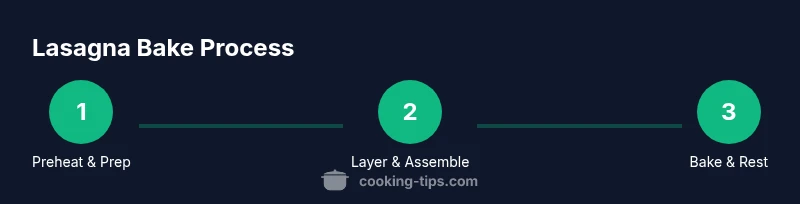
Think of lasagna like a layered casserole with three core elements: a rich sauce, a starchy noodle layer, and a creamy or cheesy filling. The temperature you choose should support these elements: keep sauce loose enough to steam the noodles, but thick enough to stay cohesive; ensure the cheese layer smooths down without splitting; and use a pan size that matches your oven’s heat distribution. A dependable framework is to preheat to 350°F, assemble with even layering, bake covered for 30–40 minutes, then uncover for 10–15 minutes for a golden crust. Adjust times for depth of pan and the noodle type.
Resting, serving, and safety considerations
Resting is essential to set the layers after the hot bake. Let the lasagna stand for 10–15 minutes before cutting; this not only helps slices stay intact but also improves flavor perception as the steam settles. When storing leftovers, refrigerate within two hours of baking and reheat gently to avoid drying. For larger gatherings, consider preparing the lasagna a day ahead and refrigerating overnight; bake time will be extended slightly, but the layered flavors will benefit from resting overnight.
Authority sources and science behind temps
For readers who want to dive deeper, consult authoritative guidelines on cooking temperatures from government and university resources. The Cooking Tips team emphasizes that safe handling and proper cooking temperatures are foundational to good results, especially for meat-based sauces. While the exact bake time can vary by pan and noodle type, the underlying principle remains constant: heat deeply and evenly, layer moisture thoughtfully, and finish with a controlled browning. This approach aligns with widely accepted cooking principles discussed by government and academic sources.
Real-world templates: sample temps and times
If you’re aiming for a reliable baseline, start with a standard meat lasagna baked at 350°F for 45–60 minutes, covered, then 10–15 minutes uncovered. For richer sauces or larger pans, you may lengthen the covered phase by 5–10 minutes and add 5–10 minutes to the uncovered phase. Vegetarian versions or no-boil noodles may require a 15–20 minute longer total bake, always finishing with a 10–15 minute rest. The key is to observe the center: it should feel set and the cheese should be bubbling and golden on top.
Conclusion and practical takeaway
Choosing what to cook lasagna at is a balance between time, moisture, and texture. Start with a central temperature in the 340–360°F range and adjust for your noodle choice and sauce density. Use foil to trap moisture during most of the bake, then reveal the top to finish browning. With practice, you’ll predict outcomes for your favorite fillings and pan sizes, achieving consistently delicious lasagna every time.
Tools & Materials
- Oven(Preheat to desired temperature before assembling)
- 9x13 inch baking dish(Glass or metal works; ensure it fits your oven)
- Aluminum foil(To tent the dish during baking)
- Parchment paper (optional)(Helpful for easy cleanup with multiple pan changes)
- Large pot for sauce(For browning meat and simmering sauce)
- Skillet or sauté pan(For sautéing aromatics and meat)
- Mixing bowls(For cheese mixtures and prep)
- Measuring cups/spoons(Accurate sauce seasoning)
- Spatula and wooden spoon(Spreading layers evenly)
- Knife and cutting board(Chop vegetables and herbs)
- Thermometer (optional)(Check meat temperature if desired)
Steps
Estimated time: Total time: 1h30m–2h
- 1
Preheat and prep
Preheat your oven to 350°F. Gather all ingredients and pre-measure components so assembly goes smoothly. This reduces on-the-fly changes that can disrupt moisture balance.
Tip: Always preheat before you start assembling to avoid cold spots in the bake. - 2
Brown meat and start sauce
In a large skillet, brown ground beef with onions and garlic until deeply colored. Add tomatoes, herbs, and any liquid you’re using; simmer to develop flavor. The sauce should be rich but not overly thick.
Tip: Deglaze the pan with a splash of wine or broth to lift browned bits. - 3
Creamy cheese mix
In a bowl, mix ricotta or cottage cheese with eggs and parmesan; season well. Fold in spinach or herbs if desired for extra depth. This layer adds moisture and richness to the lasagna.
Tip: Avoid overmixing; just combine until smooth to prevent watery pockets. - 4
Assemble layers
Spread a thin layer of sauce on the bottom of the baking dish. Add noodles, then cheese mixture, sauce, and shredded mozzarella. Repeat layers until the dish is full, finishing with mozzarella on top.
Tip: Ensure even layering to prevent dry spots in the center. - 5
Cover and bake
Cover with foil and bake for 30-40 minutes to allow noodles to soften and flavors to meld. If your sauce is very thick, add a splash of water or broth to maintain moisture.
Tip: Seal edges with foil to trap steam and cook evenly. - 6
Uncover and finish browning
Remove foil and bake 10-15 minutes more to brown the cheese and deepen color. Keep an eye on edges to prevent scorching.
Tip: If top browns too quickly, loosely cover with foil again and resume baking. - 7
Rest before serving
Let lasagna rest 10-15 minutes after baking. Resting helps the layers set for clean slices and easier serving.
Tip: Resist the urge to slice immediately; hot layers will run. - 8
Serving and storage
Slice and serve with a fresh salad or bread. Refrigerate leftovers within two hours; reheat gently to avoid drying. Freeze unbaked portions for later.
Tip: Wrap tightly to prevent freezer burn and label with date.
Quick Answers
What oven temperature should I bake lasagna at?
Most lasagnas are baked at 350°F, using a covered phase and an uncover finish. Adjust within 325–375°F based on noodle type and sauce thickness. Always aim for a center that is tender and a top that is lightly browned.
Bake lasagna at around 350 degrees, covered, then uncover to brown. Adjust if you’re using no-boil noodles or a thicker sauce.
Should I cover lasagna while baking?
Covering helps trap moisture and prevent the noodles from drying out. Remove the foil toward the end to brown the cheese and set the top layer. This balance yields a cohesive slice.
Yes, start covered to trap moisture, then uncover to finish browning.
Can I assemble lasagna ahead of time and bake later?
Yes. You can assemble the lasagna a day ahead and refrigerate, then bake after bringing it closer to room temperature. Expect a slightly longer bake for refrigerated assemblies.
Absolutely. Assemble, refrigerate, and bake when ready.
Can I freeze uncooked lasagna?
Yes, you can assemble and freeze lasagna before baking. Freeze in portions, then thaw overnight in the fridge before baking. You may need a few extra minutes to finish cooking.
Yes, you can freeze it raw and bake later.
No-boil noodles: do they cook properly in bake?
No-boil noodles work well when you have enough sauce and a covered bake. They may need a little extra bake time, and you’ll want to ensure ample moisture to prevent dryness.
No-boil noodles can work great with enough sauce and moisture.
How should I reheat lasagna leftovers?
Reheat gently in the oven or a microwave, using a loose cover to retain moisture. A thin layer of sauce on top helps prevent drying and keeps the slices cohesive.
Reheat slowly to keep the edges from drying out.
Watch Video
Top Takeaways
- Know your noodle type and adjust temp accordingly.
- Cover early, uncover to finish for a glossy top.
- Rest is essential for clean slices.
- Moisture balance is the core of cooking lasagna well.
- Plan for moisture in no-boil versions.