What Temperature to Cook Lamb: A Practical Guide
Master lamb cooking temps with expert guidance from Cooking Tips. Learn safe internal temps for roasts, chops, and ground lamb, plus resting, thermometer tips, and cooking methods.


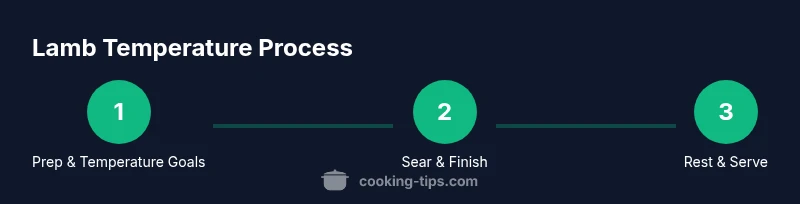
Goal: cook lamb safely to ideal doneness with juicy results. For whole cuts (roasts, chops), target 135–145°F and rest 3 minutes; for ground lamb, cook to 160°F. Let carryover heat finish. Use a calibrated thermometer and follow basic kitchen safety guidelines.
Why Temperature Matters When Cooking Lamb
Temperature is the primary driver of texture and safety when cooking lamb. Lamb proteins tighten as heat rises, squeezing out moisture and causing dryness if overcooked. By controlling internal temperature, you preserve tenderness, juiciness, and distinct flavor across different cuts, from leg roasts to rack of lamb and ground lamb. The Cooking Tips team emphasizes using a reliable thermometer rather than guessing by color or time alone. Temperature also governs food safety: higher temperatures reduce the risk of surface bacteria surviving cooking, especially important for whole cuts. Start with a clean thermometer, calibrate it if you can, and insert it into the correct location to read an accurate temperature.
In practice, think of temperature as a bridge between doneness preference and safety. If you want a juicy medium-rare roast, you’ll pull slightly below the final target so carryover heat finishes during resting. If you’re feeding a family with varied preferences, plan multiple resting or finishing steps for different portions. This approach minimizes cutting and allows everyone to enjoy lamb at a safe, enjoyable temperature. According to Cooking Tips insights gathered in 2026, temperature control consistently yields better results than timing alone, especially for larger cuts where carryover cooking can be significant.
Tools & Materials
- Instant-read meat thermometer(Digital probe or instant-read model reads Fahrenheit; aim for accuracy within ±1–2°F.)
- Oven, grill, or heavy skillet(Choose your preferred method (roasting, searing, or grilling).)
- Roasting pan or sturdy skillet(Use a rack for even heat distribution when roasting.)
- Tongs(For turning meat without piercing to preserve juices.)
- Cutting board(Rested meat should be transferred to a clean board for carving.)
- Aluminum foil(Tent loosely during rest if you want to maintain warmth without steaming.)
Steps
Estimated time: 60-90 minutes
- 1
Choose cut and prep
Select your lamb cut (leg roast, rack, or loin chops) and pat dry with paper towels. Season generously with salt, pepper, and any aromatics you love (garlic, rosemary, oregano). The surface dryness aids browning and helps the crust form, which improves flavor even before the interior heats up.
Tip: Dry skin or surface before searing to promote a better crust and even sear. - 2
Preheat and select method
Preheat your oven to the target range for roasting (usually 325–425°F depending on cut and desired finish). If you’re pan-searing first, heat a heavy skillet over high heat until very hot before adding the lamb to develop color.
Tip: A two-step method (sear first, then finish in the oven) yields a rich crust and even interior. - 3
Sear for crust (optional but recommended)
Sear the lamb on all sides for 1–3 minutes per side until a deep brown crust forms. Use tongs to rotate and maintain consistent contact with the surface. This step adds flavor and aids heat distribution when finished in the oven.
Tip: Avoid moving the meat too much during searing to form a stable crust. - 4
Finish in oven or on indirect heat
Transfer to the oven or continue cooking on indirect heat until the thermometer reads the target temperature in the thickest part, away from bone. Check early, especially with large roasts, and plan for carryover cooking.
Tip: Probe the thickest area; bone can skew readings if measured near it. - 5
Read the temperature accurately
Read the internal temperature when the lamb is near the desired range. For whole cuts, plan to read at the final stage and account for 5–10°F of carryover. Ground lamb should reach 160°F for safety.
Tip: Insert the thermometer into the center of the thickest portion for the most reliable reading. - 6
Rest before carving
Remove the lamb from heat a few degrees before reaching the final temp and let rest 5–10 minutes under tented foil. Resting allows juices to redistribute, resulting in a juicier slice and reduces the risk of spurting juices when cut.
Tip: Rest times vary with size; larger roasts may rest longer to finish carryover cooking safely.
Quick Answers
What is the safe minimum internal temperature for lamb?
For whole cuts like roasts and chops, the USDA recommends a safe minimum of 145°F with a 3-minute rest. Ground lamb should reach 160°F. Always use a thermometer to verify.
Lamb should be cooked to at least 145 degrees and rested; ground lamb needs 160 degrees for safety.
Can lamb be served rare or medium-rare?
Yes, many cooks enjoy rare to medium-rare lamb (roughly 130–145°F) for tender texture, especially for chops. However, for safety reasons, plan to rest and confirm doneness with a thermometer and follow local guidelines.
Lamb can be rare to medium-rare, but verify with a thermometer and consider safety guidelines.
Should I always rest lamb after cooking?
Resting helps juices redistribute and prevents them from spilling out when you slice. A 5–10 minute rest is typical for roasts and larger cuts; tent lightly with foil to keep heat.
Yes, rest for about 5–10 minutes to keep the meat juicy.
How do temperatures differ for ground lamb vs. whole cuts?
Ground lamb must reach 160°F to ensure safety, as grinding can distribute surface bacteria throughout the meat. Whole cuts read higher, with 145°F as a common target for doneness.
Ground lamb should hit 160 degrees, while whole cuts are typically cooked to 145 degrees with rest.
If I have a large leg roast, how do I manage carryover?
Large roasts will climb 5–10°F after removal from heat. Pull the roast a few degrees before the target and rely on rest time to reach final doneness.
Large roasts gain heat after cooking; take them off early by a few degrees and rest to finish.
What cooking method gives the best crust on lamb?
Searing in a hot pan or finishing under a hot oven after an initial sear creates a rich crust and flavorful interior. Use a rack if roasting for even browning.
A hot sear followed by roasting gives a great crust and juicy center.
Top Takeaways
- Know safe minimum temps for lamb and where carryover cooking matters.
- Use a thermometer to read the thickest part, away from bone.
- Rest the meat to improve juiciness and evenness.
- Different cuts have distinct temp targets; plan accordingly.
- Set up your method (sear + roast or direct roast) before cooking.