Stir Fry Recipe Beef: A Complete How-To Guide
Meta description: Learn to master a sizzling beef stir-fry with crisp vegetables, flavorful sauce, and fast technique. Perfect for weeknights, with expert tips from Cooking Tips.


You will learn how to make a sizzling beef stir-fry with crisp vegetables and a glossy sauce in under 30 minutes. This guide covers selecting the right cut, marinating, high-heat cooking, and a balanced sauce. You’ll need a hot wok or large skillet, a cooling area for mise en place, and ready-to-cook ingredients, plus pantry staples for flavor. and pantry staples.
Stir fry recipe beef: The Essentials
According to Cooking Tips, beef stir-frying is a fast, high-heat cooking method that seals in juices and creates a glossy, savory sauce. In this stir fry recipe beef overview, you’ll learn how to balance speed, texture, and flavor to produce restaurant-worthy results at home. The secret is a short, hot sear, thinly sliced meat, and a well-balanced sauce that sticks to the ingredients rather than pooling at the bottom.
The cooking science here hinges on Maillard browning and the way starches in the sauce interact with proteins. When you cook quickly over intense heat, the beef develops a flavorful crust while staying tender. To keep the texture right, start with meat that has been patted dry and sliced against the grain; this minimizes chew and maximizes tenderness. For flavor, plan bold aromatics and a flavorful base sauce that will cling to every piece.
Mise en place matters as well: have a hot pan, ready oil, sliced meat, vegetables, and sauce within reach, so you can maintain the heat and avoid soggy results. A well-prepped station prevents overcooking and keeps the wok hot. With the right plan, you’ll finish a complete meal in under 30 minutes.
Choosing beef for stir-fry
Best results come from tender, thinly sliced cuts. Flank steak, sirloin, skirt, or flat iron all work well in a beef stir-fry when they are sliced across the grain into very thin strips (about 1/8 to 1/4 inch). Look for bright red color and a moderate amount of marbling for flavor. If your budget allows, choose sirloin or flat iron for a balance of tenderness and price. Always pat dry before slicing to improve sear and reduce steam. For speed, you can partially freeze the meat for 20-30 minutes to make uniform slicing easier. According to Cooking Tips analysis, mise en place and proper slicing consistently yield crisper, more flavorful outcomes.
Marinades and flavor layering
A quick marinade can boost tenderness and deepen flavor, but a long marinade is not necessary for thin beef slices. A simple mix of soy sauce, a splash of rice wine or mirin, minced garlic, grated ginger, and a teaspoon of cornstarch will help emulsify and protect the meat from overcooking. You can also use a dry rub of toasted sesame oil, black pepper, and a pinch of sugar for a glossier finish. Avoid overly acidic marinades that can begin to cook the meat; 10-15 minutes is plenty. After marinating, pat the beef dry again to maximize sear and flavor adhesion.
Sauce balance and thickening
Create a balanced sauce that sticks without becoming gloopy. A typical base uses light soy sauce for salt, dark soy for color, a touch of rice vinegar or lime juice for brightness, a small amount of sugar or honey, and a splash of water or stock. To help it cling, add a cornstarch slurry (1 teaspoon cornstarch mixed with 1 tablespoon cold water) just before finishing. Taste and adjust: if it tastes too salty, add a touch of sugar; if too sweet, add more vinegar or lime. When the beef hits the pan, the sauce should coat but not pool uncontrollably.
Vegetables and texture timing
Choose vegetables that cook quickly and pair well with the beef. Bell peppers, broccoli crowns, carrots, snow peas, and red onion are popular. Cut vegetables into uniform sizes so they cook evenly. Start with the hardest vegetables, such as broccoli and carrots, then add peppers and onions so everything finishes together. Keep vegetables crisp-tender by removing them from the pan just as they reach desired texture, then return them with the beef to coat with sauce. This method ensures a vibrant color and satisfying bite.
Cooking technique: wok heat and oil management
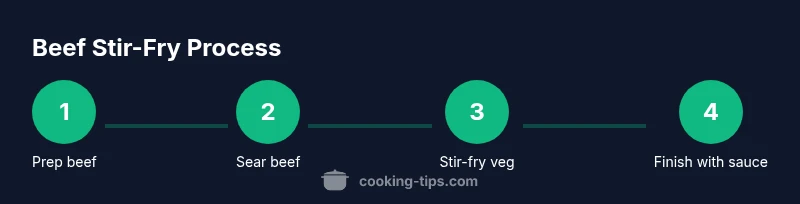
Heat is king in stir-frying. Use a well-seasoned wok or a heavy skillet and preheat it until smoking (or near). Add a high-smoke-point oil such as refined peanut oil or canola oil in a thin layer to coat the surface. Do not crowd the pan; cook in batches if needed to preserve high heat. Sear beef quickly until browned on the edges, then remove and set aside. Return the vegetables to the pan, add the aromatics, pour in the sauce, then return the beef to finish. The timing matters: total beef and veg contact should be around 3-5 minutes, depending on thickness. A loud sizzle is your cue that the pan is hot enough.
Mise en place and shopping list
Before you start, gather:
- Beef flank or sirloin sliced thin
- Soy sauce (low-sodium)
- Cornstarch
- Garlic
- Ginger
- Rice vinegar or lime juice
- Brown sugar or honey
- Sesame oil
- Oil for high heat
- Vegetables: broccoli, bell pepper, carrot, snap peas
- Cooked rice or noodles
- Optional: oyster sauce or hoisin for extra depth
- Salt and pepper
- Wok and sharp knife
Note: pat beef dry, have a bowl for cornstarch slurry, preheat pan. Mise en place ensures you maintain heat and finish on time.
Common mistakes and fixes
Common mistakes can sabotage texture and flavor. Overcrowding the pan leads to steaming instead of searing; fix by cooking in batches. Not drying meat before searing slows browning; fix with a quick pat-dry and a very hot pan. Using a cold sauce or adding slurry too early can dull the finish; fix by mixing sauce separately and adding slurry only at the end. Skipping mise en place causes delays; fix with a brief prep routine before heat. Finally, cooking vegetables too long turns them dull and limp; fix by adding them in stages and testing texture.
Serving ideas and authoritative sources
Beef stir-fry pairs beautifully with steamed rice, jasmine or basmati, or with soft egg noodles for a heartier meal. Garnish with sliced scallions, toasted sesame seeds, and a drizzle of sesame oil for aroma. For a complete dinner, add a light cucumber salad with rice vinegar and a touch of sugar on the side. The following sources support best practices for safe beef handling and healthy nutrition: USDA guidance on safe cooking temperatures and cross-contamination prevention, Harvard Nutrition Source for balanced diets, and general cooking safety tips from USDAFSIS. Authoritative sources include:
- https://www.usda.gov/
- https://www.fsis.usda.gov/
- https://www.hsph.harvard.edu/nutritionsource/
The Cooking Tips team recommends using these techniques regularly to achieve consistent, tasty results.
Tools & Materials
- Beef (flank steak or sirloin) sliced thin(1/8 to 1/4 inch thick; slice across the grain)
- Soy sauce (low-sodium)(For seasoning and flavor depth)
- Cornstarch(For slurry to thicken sauce)
- Garlic(Minced)
- Ginger(Freshly grated)
- Rice vinegar or lime juice(For brightness)
- Brown sugar or honey(Balance acidity and sweetness)
- Sesame oil(Flavor finish)
- Oil for high heat (peanut or canola)(Light, high smoke point)
- Vegetables (broccoli, bell pepper, carrot, snow peas)(Cut into uniform pieces)
- Cooked rice or noodles(Serving base)
- Optional sauces (oyster sauce or hoisin)(Adds depth)
- Wok or large skillet(Prefer carbon steel wok)
- Sharp knife and cutting board(For precise, safe slicing)
Steps
Estimated time: 30-40 minutes
- 1
Prep the beef
Pat beef dry, slice thinly across the grain, and toss with a light coating of cornstarch and a splash of soy sauce to help sear. This step minimizes moisture and promotes browning.
Tip: Freeze for 20–30 minutes to ease slicing and achieve uniform thickness. - 2
Prepare aromatics
Mince garlic and grate ginger; set aside in a small bowl with a drizzle of oil to prevent sticking when you start cooking.
Tip: Fresh aromatics deliver vibrant aroma and flavor; do not skip this step. - 3
Make the sauce
Whisk together soy sauce, rice vinegar, sugar, and a splash of water or broth. Keep the slurry ready for thickening at the end.
Tip: Taste and adjust: more salt, more tang, or more sweetness as needed. - 4
Heat the wok
Preheat the wok until it just begins to smoke; add a thin layer of oil and swirl to coat all surfaces.
Tip: High heat is essential for browning; too cool a pan will steam the meat. - 5
Cook the beef in batches
Sear beef quickly until browned on the edges, then remove to a plate. Do not crowd the pan to maintain heat.
Tip: Crowding causes moisture and prevents proper searing. - 6
Stir-fry the vegetables
Add aromatics, then vegetables in order of hardness; start with broccoli and carrots, then peppers and onions.
Tip: Keep vegetables moving; this preserves color and texture. - 7
Combine and finish
Return beef to the pan, pour in the sauce, and simmer briefly. Add cornstarch slurry to reach desired cling and gloss.
Tip: Watch carefully; over-thickening can make the sauce gloopy. - 8
Plate and serve
Spoon over hot rice or noodles, drizzle with a touch of sesame oil, and garnish with sesame seeds or scallions.
Tip: Serve immediately for best texture.
Quick Answers
What cut of beef is best for stir-fry?
Flank, sirloin, skirt, and flat iron are well-suited for quick cooking when sliced thinly. These cuts have enough marbling to stay tender with high-heat searing. Always slice against the grain for maximum tenderness.
Flank, sirloin, or flat iron work best when sliced thin against the grain.
Can I marinate longer than 15 minutes?
Short marinades (10–15 minutes) work well for thin slices and preserve the beef texture. Longer marinades can begin to alter texture and become mushy, especially with acidic components.
Keep marinades short to preserve texture.
What should I do if the sauce is too salty?
Balance with a touch of sugar or honey and a splash of acid like vinegar or lime juice. Dilute with a little water or broth and adjust seasoning gradually.
Add a bit of sugar and acid to balance saltiness.
Is cornstarch slurry necessary?
A light cornstarch slurry helps the sauce cling to beef and vegetables at the end. Add gradually and simmer briefly to avoid a gloopy finish.
Yes, a small slurry helps the sauce cling.
What makes a stir-fry sauce glossy?
A combination of soy, a touch of sugar, oil, and a cornstarch slurry yields a glossy, cohesive sauce that coats each piece evenly.
Gloss comes from the right balance and a light slurry.
Watch Video
Top Takeaways
- Prep mise en place for speed and accuracy
- Choose thinly sliced cuts for tenderness
- Sear beef in small batches for crust
- Balance sauce with acid, sweetness, and salt
- Cook vegetables to crisp-tender for brightness