Slow Cook Whole Chicken in a Crock-Pot: A Step-by-Step Guide
Master the art of slow cooking a whole chicken in a Crock-Pot for fall-off-the-bone meat with minimal effort. Step-by-step guidance, safety tips, and leftovers ideas for reliable weeknight meals.


Slow cook a whole chicken in a Crock-Pot until the meat is tender and juicy, with minimal hands-on work. You’ll need a whole chicken, basic seasonings, and safe timing. This method delivers reliable flavor, even cooking, and easy cleanup for busy weeknights.
Why slow cooking a whole chicken in a Crock-Pot works
Cooking a slow-cooked chicken in a Crock-Pot leverages steady, low heat to gently break down connective tissue while keeping moisture locked inside the meat. This yields tender, juicy results with less risk of dry overcooking compared to high-heat methods. According to Cooking Tips, slow-cooking a whole chicken in a Crock-Pot promotes even heat distribution and convenient hands-off cooking, making it a reliable option for busy weeknights. You’ll also appreciate minimal kitchen cleanup since most of the work happens in one pot. If you’re new to this technique, remember that the goal is a safe internal temperature with a satisfying texture, not rushing to serve.
This approach works well for a 3.5–5 pound chicken, but you can adjust timing based on size. Keep in mind that flavor deepens when you add aromatics such as onion, garlic, and herbs inside the cavity and around the bird. A little fat drawn from the skin helps baste the meat during the long cook, contributing to moist results. For best results, plan ahead and allow 10–15 minutes of resting after the roast to let the juices redistribute.
Safety and quality: choosing the right bird and avoiding dry meat
Selecting a fresh, plump chicken around 3.5–5 pounds sets the foundation for even cooking and juicy results. If you’re starting with frozen poultry, fully thaw it in the fridge (allow about 24 hours per 5 pounds) before cooking to ensure even heat distribution. Pat the skin dry to encourage browning later, and remove any giblets to prevent off-flavors. Season generously with salt and pepper, and consider a light rub of paprika, garlic powder, and dried herbs for depth. Patience is essential; avoid lifting the lid too often, which can extend cook time and humidity fluctuations inside the pot. Finally, ensure the internal temperature hits 165°F in the thickest part of the thigh for safe consumption.
The Cooking Tips team emphasizes that slow cooking preserves moisture when the chicken is properly thawed, seasoned, and rested after cooking, which is key to tender, flavorful meat.
Prep essentials: trimming, seasoning, aromatics, and moisture
Begin with thorough prep: remove giblets, pat the bird dry, and pat down the skin with a pinch of salt to help crisp during finishing if you plan to broil afterward. Rub the outside with a simple mix of salt, pepper, and optional spices like paprika or dried thyme. Fill the cavity with aromatics such as quartered onion, garlic cloves, lemon slices, and fresh herbs to perfume the meat from the inside. Place the chicken on a trivet or directly on a bed of aromatics so the bottom does not sit in pooled liquids. Consider adding about 1 cup of low-sodium broth to the bottom of the pot to generate steam and prevent sticking. This setup creates a flavorful base without diluting the meat’s natural juices.
Low-and-slow vs high settings: timing and texture outcomes
Low settings typically yield more even tenderness with a greater chance of moist skin, while high settings speed up the process but can risk dryer meat if not carefully monitored. For a 3.5–5 pound chicken, plan 6–8 hours on low or 3–4 hours on high, depending on your model and the exact weight. If you’re unsure, start checking for doneness around the 6-hour mark on low. Use a meat thermometer to verify 165°F in the thickest part of the thigh (and the breast, if applicable). If skin crispness is a priority, switch to broil for 3–5 minutes after removing from the pot.
Putting it all together: a practical method (no-browning) vs quick sear method
If you prefer a simpler approach, you can skip browning entirely and rely on the slow cook to render moisture. For extra flavor and color, sear the chicken in a hot skillet with a little oil for 2–3 minutes per side before transferring to the Crock-Pot. Another option is to brown only the skin-side of the bird in the pot, then continue cooking to finish. For both methods, ensure your aromatics are in place and the chicken rests on a rack or bed of vegetables to promote even heat, moisture, and easy removal when done. The result should be tender meat with a well-developed, savory aroma from the added seasonings.
Finishing touches: sauces, brooding, and finishing crispy skin
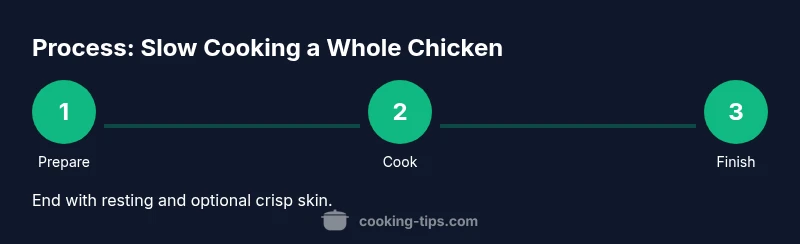
After the chicken finishes cooking, remove it promptly and let it rest for 10–15 minutes. This redistributes juices and makes carving easier. If you want crisper skin, broil the chicken on a sheet pan for 2–5 minutes or place it under a hot air fryer for a quick finish. Collect the cooking juices and skim fat to create a light pan sauce or gravy. You can also whisk in a touch of lemon juice, a splash of white wine, or a knob of butter for richness. Serve with roasted vegetables, mashed potatoes, or a simple green salad to round out the meal.
Meal planning and leftovers: storage, reheating, and meal ideas
Leftovers store well in the fridge for 3–4 days or can be frozen for longer-term storage. Slice or shred the cooled meat and store it in airtight containers with a little juice to keep moisture. Reheat gently in a covered skillet with a splash of broth or in the microwave with a damp paper towel to avoid drying out. Use leftover chicken for soups, tacos, salads, or casseroles to maximize flavor and minimize waste. When handling leftovers, cool promptly and refrigerate within two hours to ensure safety.
Tools & Materials
- Crock-Pot / slow cooker (6-8 quart recommended)(Fits a standard 3.5–5 lb whole chicken with room for aromatics)
- Digital meat thermometer(Probe the thickest part of the thigh and breast for 165°F+)
- Kitchen tongs and a large spoon(For safe placement and handling of the hot bird)
- Optional trivet or heat-safe rack(Keeps chicken elevated above juices for even cooking)
- Aromatics (onion, garlic, lemon, herbs)(Inside cavity or bottom layer to perfume the meat)
- Broth or water (1 cup)(Adds moisture without diluting flavor)
Steps
Estimated time: Total time: 4-6 hours
- 1
Prepare the chicken
Pat the chicken dry, remove giblets, and set on a clean surface. This step prevents extra moisture from steaming the skin and helps the seasonings adhere. A dry surface also improves browning if you choose to finish under a broiler.
Tip: Pat dry thoroughly; moisture on the skin can hinder browning later. - 2
Season the cavity and exterior
Season the cavity with a pinch of salt and pepper, then rub the outside with your chosen spice blend. Even seasoning penetrates better when exposed to the slow, steady heat of the pot.
Tip: Season under the skin if possible for deeper flavor without adding extra salt on the surface. - 3
Add aromatics
Stuff the cavity with onion, garlic, and herbs. Scatter additional aromatics on the bottom of the crock pot to infuse steam with flavor.
Tip: Lemon slices add brightness; avoid overpowering saltiness with too much salt. - 4
Position the chicken
Set the chicken on a rack or directly on aromatics so the bottom doesn't simmer in juices. This helps maintain texture and ensures more even cooking.
Tip: If using a rack, ensure it fits; otherwise, rest the chicken on a bed of chopped vegetables. - 5
Add liquid and cover
Pour about 1 cup of broth or water into the pot. This creates steam and prevents scorching while still letting the chicken baste in its own juices.
Tip: Too much liquid can dilute flavors; keep to about 1 cup or less depending on pot size. - 6
Set time and temperature
Cook on low for 6–8 hours or on high for 3–4 hours, depending on weight and model. Check doneness with a thermometer.
Tip: Avoid lifting the lid during the cook to maintain consistent heat. - 7
Check doneness and rest
Verify the thigh or thickest part reads 165°F. Remove the chicken and let it rest 10–15 minutes before carving to redistribute juices.
Tip: Resting prevents juices from running out when you cut into the meat. - 8
Optional finish for crispy skin
If you want crisper skin, broil for 2–5 minutes after resting, watching closely to prevent burning.
Tip: Keep a close eye; skin can burn quickly under high heat. - 9
Serve and store leftovers
Carve and serve with your favorite sides. Refrigerate leftovers within two hours and store in airtight containers for up to 3–4 days.
Tip: Label containers with dates to keep track of freshness.
Quick Answers
Can I use a bone-in or boneless chicken?
This method targets a whole chicken, bone-in. Boneless cuts cook faster but don’t give you the same roasted-chicken experience. If using bone-in cuts, adjust time accordingly and monitor internal temperature closely.
You should use a whole chicken, but boneless cuts can work with shorter times; watch the temperature closely.
Do I need to brown the chicken first?
Browning adds flavor and color, but it’s optional. For an ultra-simple method, skip browning and rely on aromatics and slow cooking for tenderness.
Browning is optional, but it enhances flavor. If you’re short on time, skip it and cook slowly.
How should I store leftovers?
Cool leftovers within two hours, then refrigerate in airtight containers for 3–4 days or freeze for longer storage.
Cool quickly, refrigerate promptly, and use within a few days or freeze for longer.
Can I add vegetables or potatoes in the pot?
You can add root vegetables, but they’ll cook along with the chicken. Add heartier vegetables later in the cooking cycle to avoid overcooking.
Yes, you can, but plan for their texture and don’t overcrowd the pot.
What internal temperature confirms doneness?
Aim for 165°F in the thickest part of the thigh and breast. Use a calibrated thermometer for accuracy.
165 degrees Fahrenheit is the safe doneness standard; check with a thermometer.
Watch Video
Top Takeaways
- Season generously for best flavor
- Thermometer accuracy is essential
- Rest before carving preserves juiciness
- Crisp skin is optional but achievable with a brief broil
- Leftovers store safely for later meals