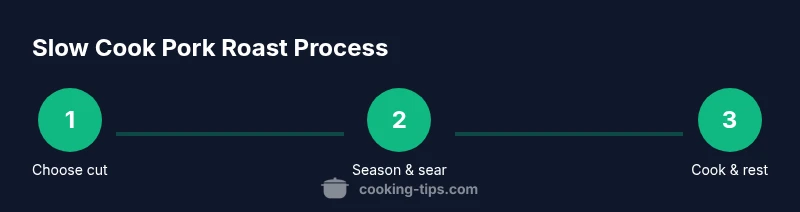
Slow Cook Pork Roast: Tender, Juicy, and Flavorful
Master a reliable, step-by-step method to slow cook pork roast for tender meat, rich flavor, and perfect leftovers. This guide covers cuts, seasonings, temperatures, and practical timings for slow cookers and ovens.


Learn to slow cook a pork roast to tender, juicy perfection. This guide covers choosing the right cut, seasoning, safe temperatures, and both slow-cooker and oven methods. You'll get a clear, step-by-step process, practical timing, and tips to maximize moisture and flavor. By the end, you’ll confidently deliver a restaurant-worthy pork roast at home.
Why slow cook pork roast yields tender, juicy meat
According to Cooking Tips, slow cooking pork roast is a reliable way to maximize tenderness by letting collagen melt slowly under low, steady heat. This gentle approach yields fork-tender texture and keeps moisture locked in, especially when you finish with a brief rest. The result is flavorful meat with a cohesive crust and a juicy interior. For best results, choose a cut with some fat to baste the meat during cooking and to help stay moist, and remember that patience matters more than speed in slow-cook methods. The Cooking Tips Team emphasizes that steady heat and minimal lid lifting are your friends for even doneness and a rich tasting finish.
Choosing the right cut and seasonings
Pork shoulder is forgiving and rich, with enough connective tissue to benefit from slow cooking; pork loin is leaner and can dry out if overcooked, so pair with moisture and careful timing. For seasonings, a simple rub of salt, pepper, garlic powder, and paprika works beautifully, while fresh herbs like rosemary or thyme add aroma. A light browning of the surface before slow cooking helps build flavor. Remember to trim excess fat and pat dry so the rub adheres well. If you prefer, you can marinate briefly, but dry rubs are often enough to yield a flavorful crust.
Prep and marinating options
Dry rubs are convenient and effective, but a brief marinade can add an extra layer of depth—even a 1–2 hour soak can help, especially with a lean loin. Combine salt, pepper, garlic, and a splash of acid (like citrus or vinegar) to help tenderness. For moisture retention, add aromatics such as sliced onions, garlic, and bay leaves beneath the roast in your slow cooker or dutch oven. Prepping ahead saves time: pat the meat dry, apply the rub evenly, and refrigerate if you’re not cooking immediately. Cooking Tips recommends allowing the meat to come closer to room temperature before it hits heat for more uniform cooking.
Slow cooker vs oven methods: pros and cons
Slow cookers are forgiving, energy-efficient, and ideal for hands-off weekends or busy weekdays. Ovens with a dutch oven offer a caramelized crust and faster browning, though they demand more attention to temperature and moisture. In both methods, searing the meat first can lock in flavor and improve texture. If you’re short on time, the oven method can reduce total cooking time, but the slow cooker often yields more consistent moisture over long durations. The choice depends on your schedule, equipment, and desired crust.
Temperature and resting guidance
Safe handling of pork starts with proper temperatures and resting time. Use a meat thermometer to check for an internal temperature around 145°F (63°C) with a 3-minute rest for juiciness and safety. If you’re cooking a fattier shoulder, you may see higher temps or longer times to reach the same tenderness. After cooking, tent the meat loosely with foil and let it rest 10–15 minutes; this allows juices to redistribute and keeps slices moist. Avoid cutting immediately, which can release precious moisture.
A practical cooking schedule you can follow
Plan a total cook time of about 6–8 hours on low in a slow cooker or 2.5–4 hours in a hot oven (with a covered pot). Start with prep of 15–20 minutes, then cook for the bulk of the time. If you need to finish with a crust, uncover during the last 15–30 minutes. To maximize flavor, add aromatics like onion, garlic, rosemary, and a splash of stock or broth. Store leftovers promptly in the fridge for up to four days, or freeze for longer preservation. This plan balances convenience with texture, producing reliable results for home cooks.
Authority sources
- USDA Food Safety and Inspection Service: Pork cooking guidelines and safe handling
- Extension services from universities (edu sources) with practical cooking tips for pork roasts
- National health and safety organizations and major culinary publications for safe practice and high-heat cooking tips
Tools & Materials
- Slow cooker or Dutch oven(Choose a model large enough to fit the roast with some space around it)
- Meat thermometer(Probe should reach the center of the thickest part without touching bone)
- Cutting board and sharp chef knife(For trimming fat and portioning after resting)
- Tongs(To flip and move meat without piercing it)
- Skillet or pan for searing(Optional but recommended for crust development)
- Aluminum foil tent(Used to rest meat after cooking)
- Measuring spoons(For precise rub measurements)
- Stock or broth (optional)(Adds moisture and helps create pan sauce)
- Fresh herbs (rosemary, thyme)(Aromatics to boost flavor)
- Ground salt and black pepper(Base seasoning for rub)
Steps
Estimated time: Total time: 6-8 hours
- 1
Choose and trim the roast
Select a cut with a comfortable fat layer for moisture. Trim excess fat and pat dry to help rub adherence. This helps form a flavorful crust during searing (if you do sear).
Tip: Why: Trimmed meat browns evenly and seals in juices; dry surfaces reduce steam and promote crust. - 2
Apply rub and season
Mix salt, pepper, garlic powder, and paprika. Rub evenly on all surfaces, including any exposed fat. Let marinate briefly if desired, but dry rubs often suffice.
Tip: Pro tip: A light coat of oil before rubbing enhances sticking and browning. - 3
Sear the roast (optional but recommended)
Sear the roast in a hot skillet or under a broiler for 2–3 minutes per side until the surface is deeply caramelized. This builds flavor and improves texture.
Tip: Why: Maillard reaction creates a richer crust and deeper aroma. - 4
Prepare the cooking vessel
If using a slow cooker, place aromatics and a splash of stock at the bottom. If using an oven, preheat to a moderate temperature and arrange the roast on a rack in a roasting pan.
Tip: Tip: Layer onions or sliced carrots underneath to infuse moisture and base flavor. - 5
Cook at low heat
Transfer the roast to the cooking vessel and set to low heat. In a slow cooker, plan for about 6–8 hours; in the oven, expect roughly 2.5–4 hours depending on size.
Tip: Pro tip: Avoid removing the lid during the majority of the cooking time to maintain consistent heat. - 6
Check temperature and finish
Insert the thermometer into the center of the roast. Aim for around 145°F (63°C) with a short rest. If you’re on the verge, finish with a brief 10–15 minute rest to allow juices to redistribute.
Tip: Warning: Rely on a thermometer, not time alone, to avoid over or undercooking. - 7
Rest and slice
Tent the roast with foil and rest 10–15 minutes before slicing. This step prevents juices from running out on the cutting board and helps keep the meat moist.
Tip: Note: Slice against the grain for the most tender bites. - 8
Make a simple pan sauce (optional)
Deglaze the pan with a splash of stock or wine, reduce briefly, and season to taste. Drizzle over sliced pork for added moisture and flavor.
Tip: Pro tip: A little pan sauce goes a long way to a restaurant-like finish.
Quick Answers
Can I use a pork loin for slow cooking, or is pork shoulder better?
Pork shoulder benefits most from slow cooking due to its higher fat and connective tissue, which break down into moisture and tenderness. Loin is leaner and can dry out, so it needs careful timing and moisture-rich preparation.
Pork shoulder is best for slow cooking because it stays moist. Loin can work with extra moisture and shorter cook times.
Is bone-in pork roast better for flavor?
Bone-in roasts typically impart more flavor and can help retain moisture, but they take longer to cook. If using bone-in, plan for slightly longer cooking time and ensure the bone is not blocking heat.
Bone-in pieces often taste richer and stay juicier, but check doneness carefully as cooking time may extend slightly.
How can I prevent pork from drying out?
Choose a cut with some fat, apply a robust rub, optionally sear the surface, cook at a steady low heat, and allow a rest period. Using a small amount of stock or broth helps maintain moisture during cooking.
Use a bit of stock, avoid overcooking, and let it rest before slicing.
Can I cook from frozen, or should I thaw first?
For best results, thaw the pork roast before slow cooking to promote even heat distribution. Cooking from frozen can lead to uneven doneness and longer times.
Thaw the roast first for best results; frozen meat cooks unevenly.
What sides pair well with slow-cooked pork roast?
Classic options include roasted potatoes, sautéed greens, applesauce, or a tangy coleslaw. The pan sauce can tie the sides together.
Roast potatoes, greens, and a fruity sauce go great with this.
How should I store leftovers?
Cool leftovers promptly and refrigerate within two hours. Store for up to four days in airtight containers or freeze for longer preservation.
Cool leftovers quickly and refrigerate; they’ll keep well for several days.
Watch Video
Top Takeaways
- Choose a fattier cut for best moisture.
- Low, slow heat yields tender, flavorful pork.
- Rest before slicing to keep juices in the meat.
- Season generously and balance salt with aromatics.
- Use a thermometer to hit safe, juicy temperatures.