Should Cookie Dough Be Refrigerated or Frozen? A Practical Comparison
Explore whether to refrigerate or freeze cookie dough, how each method affects texture and safety, and practical tips to store and bake cookies at peak quality.


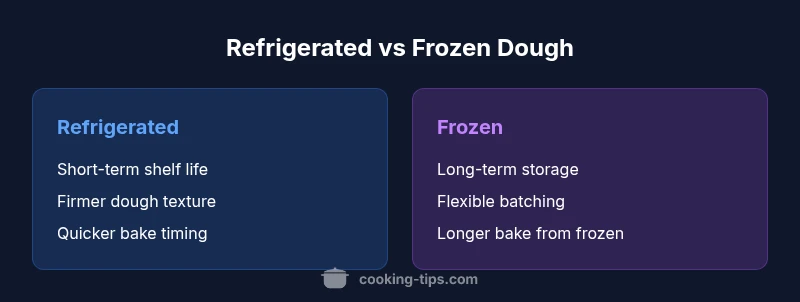
Should cookie dough be refrigerated or frozen? The quick takeaway is that both methods work, but they serve different goals. Refrigeration slows microbial growth and preserves immediate readiness, while freezing pauses all activity to extend storage. For fresh-baked cookies soon, refrigerate dough for up to 3 days; for longer-term storage, freeze dough portions and bake later.
Why should cookie dough be refrigerated or frozen?
According to Cooking Tips, the storage decision for cookie dough isn’t just about keeping it safe from spoilage; it directly influences texture, flavor, and when you can bake. The core question—should cookie dough be refrigerated or frozen—depends on timing, recipe, and how you plan to use the dough. If you’re aiming for fresh-baked cookies within a few days, a controlled chill in the refrigerator gives you predictable results and a convenient, ready-to-bake option. If you want to organize your baking schedule weeks in advance or freeze dough portions for on-demand cookies, freezing becomes the smarter long-term strategy. This guide lays out the practical differences, with clear guidelines so you can tailor storage to your kitchen rhythm and your favorite cookie formulas.
For home cooks who balance busy weeks with weekend baking, choosing the right storage method helps you avoid waste and disappointment. The underlying principle is simple: shorter-term needs usually align with refrigeration, while longer-term planning benefits from freezing. The Cooking Tips team emphasizes safety, especially around raw dough ingredients, handling, and proper sealing to prevent moisture loss and freezer burn.
In short, the decision to refrigerate or freeze should cookie dough be refrigerated or frozen hinges on timing, intended bake date, and dough composition. By understanding the trade-offs, you can align storage with your schedule and maintain dough quality over time.
How refrigeration affects dough texture, moisture, and safety
Refrigeration slows the activity of fats and sugars in dough, which in turn slows microbial growth and helps preserve the dough’s structure for a brief window. Chilling dough allows flavors to meld and fat to firm up, which can reduce spread during baking and produce a chewier or thicker cookie depending on the recipe. However, extended refrigeration can dry out surfaces if dough isn’t wrapped properly, and some doughs may undergo minor texture changes—especially if they contain dairy or eggs. From a safety perspective, keeping dough cold minimizes the growth of spoilage organisms and helps maintain a clean, controllable environment before baking.
Cooking Tips analysis suggests that refrigeration is ideal when you plan to bake within a few days and want predictable results without a long waiting period. To maximize quality, store refrigerated dough in an airtight container or wrap tightly to prevent moisture loss and flavor transfer from other fridge items. Always return dough to a consistent cold temperature after each handling to maintain safety and texture. If you’re using eggs or dairy, ensure the dough remains cold, and avoid leaving it at room temperature for extended periods, which can invite unwanted microbial activity.
Texture-wise, cold dough is firmer and less sticky, which can improve scooping and portioning for certain cookies. The slower chill fosters more uniform cookie shapes and a consistent crumb. If you’re making cut-out cookies, refrigeration helps the dough retain shape during baking and reduces spreading. Overall, refrigeration is a reliable option for short-term storage with modest texture changes and strong safety practices.
How freezing preserves dough quality and convenience
Freezing dough is the go-to method for long-term storage. Freezing halts almost all biochemical activity, preserving flavor, fat quality, and structure for later baking. When dough is frozen correctly, you can bake from frozen or thaw before shaping, depending on the recipe and desired texture. Freezing also offers the advantage of batch preparation: you can portion dough into discs, balls, or logs, seal them airtight, and label with dates to keep track of storage time. The key to success is moisture protection and minimal air exposure to prevent freezer burn and flavor loss.
Cooking Tips analysis notes that frozen dough is particularly convenient for weekend bakers and for holiday batches. For best results, portion dough before freezing, wrap tightly in plastic wrap, and place in a freezer-safe bag or container. If you expect to thaw, consider chilling the dough overnight in the fridge to promote even thawing and uniform baking performance. Some doughs may require slight bake-time adjustments when baked from frozen, so plan to check visuals and texture a bit more closely. Overall, freezing offers flexibility and long-term stability for most standard cookie doughs.
Practical storage guidelines by dough type and timing
Dough composition matters. Rich, fatty doughs with higher butter content hold up well to brief refrigeration and freezing, while doughs with high water content may form ice crystals that alter texture if frozen improperly. For most classic chocolate chip or sugar cookie doughs:
- Refrigerate for up to a few days if you plan to bake soon.
- Freeze portions for longer-term storage, up to several weeks or months, depending on your freezer. Label with date and dough type.
- Use airtight wrapping and freezer-safe containers to minimize moisture loss and prevent freezer burn.
- When freezing, consider dividing dough into portions you’d bake in a single session to minimize repeated thawing.
- Thaw in the refrigerator when you’re ready to bake, or bake directly from frozen with slight adjustments to bake time. If your dough contains dairy or eggs, keep it consistently cold and avoid partial thawing that would create uneven dough temperature across portions. For nutty or chewy doughs, freezing can help preserve texture, whereas ultra-light or delicate doughs may require shorter refrigeration windows to avoid dryness.
Key takeaway: tailor storage to your planned bake date and dough formula, and always prioritize airtight sealing to keep moisture in and odors out.
Freezing steps: portioning, wrapping, labeling
A good freezing routine starts with portioning. Divide dough into portions sized for a single baking session or the recipe’s yield, then shape as you’ll bake them (e.g., balls for drop cookies, discs for rounds). Place portions on a parchment-lined tray and freeze until solid to prevent sticking, then transfer to a freezer-safe bag or container. Label each item with the dough type and the date of freezing for easy rotation.
Wrapping matters: wrap each portion tightly with plastic wrap, followed by a layer of aluminum foil or place in a heavy-duty freezer bag. This multi-layer approach protects against freezer burn and moisture loss. If you’re concerned about flavor transfer in the freezer, use odor-blocking packaging or store dough away from strong-smelling foods.
Storage duration varies by dough and freezer temperature, but for best results aim to use frozen dough within a reasonable window (weeks to a few months). Keeping a simple inventory in a notebook or a notes app can help you track what you have on hand and when it should be baked for peak quality.
Thawing and baking from refrigerated or frozen dough
Thawing strategy depends on timing and the recipe. Refrigerate overnight to allow even thawing for most doughs, then bake as directed. For quicker turnaround, some doughs can be baked from frozen, though you’ll typically need to extend bake time by several minutes and watch for even browning. If thawing in the fridge, keep dough in a covered container to prevent moisture loss. If you’ve frozen dough in portions, thaw only what you plan to bake in a single session to maintain quality.
When dough comes to temperature, give it a gentle rest if the recipe calls for it. Resting after thawing helps relax gluten and can improve flavor. If you notice surface moisture after thawing, pat dry lightly with a paper towel before baking to promote even browning. In all cases, avoid refreezing thawed dough, as repeated freezing and thawing can degrade texture and flavor over time.
From a safety perspective, never leave thawed dough at room temperature for extended periods; plan to bake within a few hours after thawing if you aren’t using the refrigerator, and discard any dough that has been left out beyond safe limits. With careful thawing and careful baking, refrigerated or frozen dough can yield cookies that taste nearly as good as fresh dough.
Authority sources and further reading
For safety and storage guidelines, consult authoritative sources like:
- https://www.fsis.usda.gov/food-safety/safe-food-handling-and-preparation
- https://www.fda.gov/food/buy-store-and-serve-safe-food/how-to-store-and-use-food-safely
- https://www.cdc.gov/foodsafety/
These organizations provide practical, science-based recommendations on handling dough ingredients, preventing cross-contamination, and optimizing storage times. While individual recipes vary, grounding your practice in these guidelines helps ensure both safety and quality when refrigerating or freezing cookie dough.
If you’re seeking deeper learning, these sources also cover broader topics such as temperature control, labeling best practices, and general kitchen safety that apply to dough storage and many other food prep situations.
Quick decision guide: fridge vs freezer by use case
If your baking window is within a few days, refrigeration is the most convenient option. It preserves moisture closely and supports quick, predictable baking with minimal setup. If your plan is to bake later in the season or to stockpile batches, freezing is the smarter route. With proper portioning and packaging, you can retain flavor and texture for longer periods, while having pre-portioned dough ready for the oven at a moment’s notice.
Comparison
| Feature | refrigerated dough | frozen dough |
|---|---|---|
| Shelf life | A few days in the fridge | Several weeks to months in the freezer |
| Texture after bake | Consistent if baked within a short chill window | Can be slightly denser or vary in spread depending on thaw and recipe |
| Best for | Baking within a few days; shortest prep time | Long-term planning; batch storage and on-demand baking |
| Prep time before bake | Little to no defrosting; bake directly after chilling | Defrosting required or longer bake from frozen |
| Storage prep | Air-tight container or wrapped in plastic wrap | Tight wrapping in freezer-safe bags or containers |
Benefits
- Extends shelf life with minimal prep
- Provides flexibility for baking on demand
- Preserves dough flavor and texture when properly wrapped
- Reduces waste by portioning ahead
Cons
- Requires planning and labeling to avoid waste
- Potential texture changes with improper wrapping or long refrigeration
- Thawing adds time and attention to timing
- Freezer burn risk if not properly sealed
Freeze for long-term storage; refrigerate for short-term use, depending on timing
Freezing is best when you won’t bake soon. Refrigeration is ideal for near-term baking. With good packaging and accurate timing, both methods preserve safety and quality.
Quick Answers
How long can refrigerated cookie dough last safely?
Refrigerated dough is best used within a few days for optimal texture and safety. Keep it sealed in an airtight container and return promptly to the fridge after each handling.
Keep refrigerated dough for a few days, in an airtight container, and return it to the fridge after handling.
Can you freeze all cookie dough types?
Most standard cookie doughs can be frozen, but some doughs with high dairy content may separate or change texture slightly after thawing. In general, portion and wrap tightly before freezing.
Most doughs can be frozen, but some dairy-heavy doughs may change texture after thawing.
Should you thaw dough before baking?
For best results, thaw dough in the refrigerator if your recipe calls for it. Some doughs bake well from frozen, but you may need to adjust bake time and watch for even browning.
Thaw in the fridge if the recipe wants it, or bake from frozen with a longer bake time.
Can thawed dough be refrozen?
Refreezing thawed dough is generally not recommended because texture and flavor can degrade with repeated freezing cycles.
Better to portion and freeze fresh dough rather than refreeze thawed portions.
Does freezing affect leavening agents?
Freezing can slightly impact leavening depending on the dough, but most cookies rely more on fat and sugar; avoid long-term storage if your dough relies on eggs for lift.
Freezing can slightly affect leavening, but for most cookies it remains acceptable if you follow guidelines.
What about store-bought refrigerated dough?
Store-bought refrigerated doughs typically have recommended storage times on the package. Follow those guidelines and store or freeze as directed by the manufacturer.
Follow the package instructions for store-bought dough, including storage times and freezing options.
Top Takeaways
- Plan storage by bake date to match texture needs
- Portion dough before freezing to simplify thawing
- Wrap tightly and label with date to prevent freezer burn
- Avoid refreezing thawed dough to maintain quality
- Use refrigeration for quick, flexible baking within a few days