The List of Cookies: A Practical Home-Cook Guide
Explore the list of cookies: categories, examples, and practical steps to curate your own cookie list for efficient baking, flavor variety, substitutions, and consistent results for home bakers.


At its core, a list of cookies is an organized collection of cookie varieties categorized by type, texture, and baking method—drop, bar, molded, and rolled. It helps home cooks plan sessions, compare textures, and tailor flavors. A well-structured list also supports dietary needs, substitutions, and storage considerations for reliable results.
Why a Cookie List Matters
A well-structured list of cookies serves as a practical planning tool for home bakers. It helps you map flavors, textures, and baking methods in one place, so you can quickly decide what to bake for a given occasion. When you start with a clear list, you reduce impulse recipe hunting and build a cohesive repertoire that supports weeknight treats and weekend baking alike. The list also acts as a reference for substitutions or dietary adjustments, ensuring you can adapt a recipe without losing the core texture or flavor profile you expect. For the home cook, this is not just about variety; it’s about efficiency, consistency, and confidence in the kitchen.
According to Cooking Tips, a thoughtful cookie catalog makes planning simpler and results more repeatable. A robust list should cover core cookie families, note typical ingredients, and include storage guidelines so you know how long each batch stays at peak quality.
Core Categories in a Cookie List
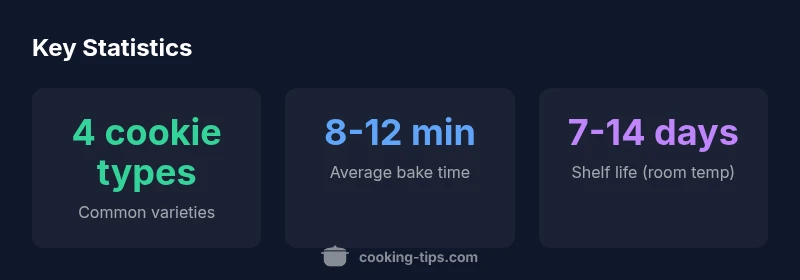
Cookie lists usually group by baking method or texture. The main families include drop cookies (scoop-and-bake), bar cookies (sheet-pan slices), molded cookies (shaped by hand or press), and rolled cookies (cutouts). Each category has distinct handling, chilling needs, and texture expectations—from crisp edges to chewy centers. Within these groups you’ll find variations like chocolate-dipped cookies, spice cookies, or cookies featuring nuts or dried fruit. By organizing your list into these buckets, you create a quick-reference map that helps you plan flavor pairings, seasonal recipes, and substitutions with ease.
Popular Cookies You'll See on Every List
A practical cookie list prioritizes familiar favorites for reliability and crowd-pleasing appeal. Core examples include classic chocolate chip (soft center, crisp rim), tangy lemon sugar cookies (thin, melt-in-your-mouth), chewy oatmeal raisin (hearty bite with cinnamon warmth), and buttery shortbread (rich, crumbly texture). Each entry should include notes on texture, primary flavors, and common add-ins so you can compare at a glance and decide which cookies to bake first for guests or holidays.
Building Your Own List: A Step-by-Step Guide
Creating a personalized cookie list begins with a quick audit of what you and your household enjoy. Step 1: list your favorite textures (chewy, crisp, soft, cakey). Step 2: note preferred methods (drop, bar, molded, rolled). Step 3: add at least 3 core recipes from each category. Step 4: include common add-ins and substitutions (gluten-free flour, dairy-free butter, egg substitutes). Step 5: recording bake times and storage tips helps you scale up or down depending on the occasion. Finally, revisit and refresh the list seasonally to reflect tastes and available ingredients.
Practical Tips for Baking and Storing Cookies
Key tips to keep cookies fresh and consistent include portion control (uniform scoops), chilling dough when indicated, and rotating pans to ensure even baking. Store cookies in airtight containers away from heat to preserve texture; cooler environments help maintain crunch for longer. Label containers with bake date and best-by information to track freshness. If you bake in batches, freeze dough or baked cookies for later pulling, then thaw or bake as needed. A well-maintained list makes shopping simpler and supports faster weekly meal prep.
Variations and Dietary Considerations
Dietary needs are common in modern kitchens. Your cookie list should include at least a few gluten-free, dairy-free, or nut-free options. When substituting, start with equal-weight replacements to preserve texture, then adjust leavening if necessary. Note which cookies rely on ingredients like oats, nuts, or dairy, so you can tailor your list for guests or family members with restrictions. Carry a few plant-based options such as oat-milk butter or coconut oil-based doughs to diversify your catalog.
Quick Reference: Cookie Types and Subtypes
- Drop cookies: Chocolate chip, peanut butter, snickerdoodle
- Bar cookies: Blondies, brownie cookies, lemon bars (cookie-style)
- Molded cookies: Peanut butter cutouts, almond crescents
- Rolled cookies: Sugar cookies, gingerbread cutouts, vanilla pinwheels
Each subtype has its own tips for chilling, shaping, and baking temperatures. Keeping a short glossary within your list helps you stay organized while you bake for holidays or weeknights.
Cookie Types and Baking Characteristics
| Cookie Type | Texture | Common Add-ins | Approx Bake Time |
|---|---|---|---|
| Chocolate Chip | Chewy with crisp edges | Chocolate chips; walnuts | 8-12 minutes |
| Sugar Cookie | Creamy-soft to crisp | Vanilla; lemon zest | 6-9 minutes |
| Oatmeal Raisin | Chewy, hearty | Rolled oats; raisins; cinnamon | 9-11 minutes |
Quick Answers
What is a 'list of cookies' in baking?
A cookie list is an organized catalog of cookie varieties, grouped by type and texture. It helps bakers plan, compare flavors, and adapt recipes for dietary needs. A good list also includes storage tips to ensure freshness.
A cookie list is an organized catalog of cookie varieties—grouped by type and texture. It helps you plan, compare flavors, and adapt recipes. It also includes storage tips to keep cookies fresh.
How many types are typically on a cookie list?
There is no fixed number. A solid list covers core families (drop, bar, molded, rolled) with a mix of textures and flavors. You can expand over time as you try new recipes.
There isn’t a fixed number. A good list covers the core cookie families—drop, bar, molded, rolled—with varied textures and flavors, and you can add more as you explore recipes.
Are cookies suitable for dietary restrictions?
Yes, you can include gluten-free, dairy-free, and nut-free options. When substituting ingredients, start with weight-based replacements and note texture changes to maintain balance in your list.
Yes. You can include gluten-free, dairy-free, and nut-free cookies. When substituting, start with weight-based replacements and note any texture changes.
What storage methods keep cookies fresh longest?
Store cookies in airtight containers away from heat. For crisp cookies, keep them separate from chewy ones. Freeze dough or baked cookies for longer shelf life and label with dates for freshness tracking.
Store cookies in airtight containers away from heat, separated by texture. Freeze dough or baked cookies for longer shelf life and label dates.
Can I create a cookie list for holiday baking?
Absolutely. A holiday-focused list should include crowd-pleasers and show-stoppers, with notes on spice profiles, decorations, and make-ahead options. Planning ahead helps you scale recipes for guests.
Yes. For holidays, include crowd-pleasers and show-stoppers, note spice profiles and decorations, and pick make-ahead options to scale for guests.
How do I substitute ingredients without changing texture?
Substitutions work best when you replace by weight and keep fat and leavening balance. Start with milder swaps (butter to butter substitutes) and test in small batches to preserve texture.
Substitute by weight, keep the fat and leavening balance, and test in small batches to preserve texture.
“A well-curated cookie list helps both new bakers and seasoned pros navigate flavors, textures, and dietary needs with confidence.”
Top Takeaways
- Start with a core set of cookies to build your list.
- Organize by type, texture, and baking method for quick reference.
- Note substitutions to adapt for dietary needs.
- Keep a running list and update with new flavors seasonally.