Is It OK to Cook with Olive Oil? A Practical Guide for Home Cooks
Is it ok to cook with olive oil? Learn heat guidelines, oil types, storage, and practical tips to use olive oil confidently in everyday meals.


Is it ok to cook with olive oil? Yes—olive oil is a versatile staple for home cooking, but the key is choosing the right grade and managing heat. Use extra-virgin olive oil for low- to medium-heat tasks and finishing, while refined olive oil offers higher heat tolerance for sautéing and roasting. Store oil in a cool, dark place to preserve flavor and freshness.
Is it ok to cook with olive oil? A practical confirmation
Is it ok to cook with olive oil? Yes—olive oil is a versatile staple in home kitchens, and the Cooking Tips team agrees that it can handle many everyday tasks. It brings flavor, healthy fats, and aroma to sautéed vegetables, pasta finishes, and baked dishes. The key is choosing the right grade and keeping heat in check. According to Cooking Tips, extra-virgin olive oil shines at low to medium heat and shines as a finishing drizzle; refined olive oil offers more heat tolerance for sautéing and high-heat roasting. Use olive oil to enrich flavor instead of relying on it as a pan lubricant; this preserves texture and aroma. We’ll break down how to pick the right oil and how to use it safely across cooking methods.
Smoke points and heat levels
When you cook with olive oil, heat management is essential. Olive oil has a range of tolerances depending on its grade. For delicate tasks like dressings or finishing a hot dish, extra-virgin olive oil delivers aroma and fruitiness without overwhelming heat. For higher-heat cooking, refined olive oil is more forgiving and can help you achieve browning without breaking down flavor. The goal is to avoid reaching the oil’s smoke point, which can produce acrid fumes and off-flavors. If you see wisps or smoke, lower the heat or remove the pan briefly, then continue cooking. Cooking Tips emphasizes using olive oil to enhance texture and aroma rather than as a substitute for proper heat control.
Olive oil varieties and best uses
Olive oil comes in several grades, each with distinct flavor and heat tolerance. Extra-virgin olive oil (EVOO) is fruity, peppery, and best for low- to medium-heat cooking or finishing a dish. Virgin olive oil is slightly milder but still flavorful. Refined olive oil is more neutral and suitable for higher-heat tasks like searing or roasting without overpowering the food. Some bottles are labeled as “light” or “light-tasting”; these refer to flavor, not calories, and are usually refined for higher heat. When flavor matters, choose EVOO for sautés and dressings, and switch to refined oil when cooking at higher temperatures.
Techniques: cooking with olive oil (practical guidance)
To maximize flavor and safety, follow practical techniques. Start by selecting the right oil for the task, then heat your pan to a moderate level before adding oil if needed. Add ingredients with dry surfaces to prevent splatter and to promote even browning. Stir or flip regularly to prevent sticking and to ensure uniform browning. Finish with a light drizzle of high-quality olive oil to lift aromas just before serving. These steps help preserve the oil’s character while avoiding overheating.
Health considerations, flavor, and storage
Olive oil provides monounsaturated fats and antioxidants that contribute to heart-healthy eating when used as part of a varied diet. Heat can degrade some beneficial compounds and alter flavor, so best practice is to use EVOO for flavor at lower heat and refined oil for higher heat. Flavor compounds in EVOO can remain vibrant when not overheated, so consider finishing dishes with a drizzle after cooking. Store olive oil in a dark bottle away from heat and light; reseal tightly after use and consume within months of opening for best flavor.
Shopping for quality olive oil
Quality starts on the shelf. Look for EVOO labeled as “extra virgin,” with a harvest date or a “best by” date to indicate freshness. Choose bottles stored in dark glass or tins to protect from light. Check for a fruity aroma and a peppery finish on the palate. If possible, buy from reputable producers and taste before purchasing large quantities. Freshness matters more than size when you want pronounced olive-oil flavor in everyday meals.
Tools & Materials
- Olive oil (extra-virgin for flavor, refined for high heat)(Choose a bottle you enjoy smelling and tasting; dark glass helps preserve freshness.)
- Heavy-bottom skillet or sauté pan(Cast iron or stainless steel with even heat distribution.)
- Spatula or tongs (heat-resistant)(Silicone or wooden to avoid scratching pans.)
- Chef’s knife and cutting board(Prep vegetables and proteins before you start.)
- Paper towels or clean cloth(For blotting and cleaning splatters and spills.)
- Airtight bottle or dark glass bottle for storage(Keep oil away from light after opening.)
- Optional thermometer (infrared or probe)(Helpful to gauge pan temperature when learning heat control.)
Steps
Estimated time: 30-45 minutes
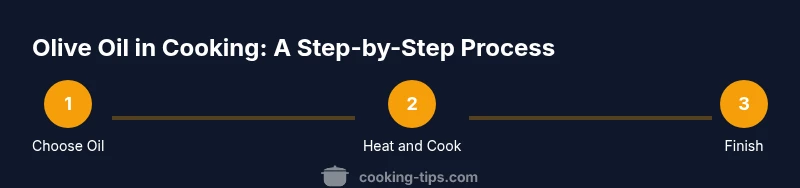
- 1
Choose your olive oil
Select appropriate olive oil depending on the cooking task: extra-virgin for low heat and finishing, refined for higher heat.
Tip: Check harvest date and aroma before purchasing. - 2
Preheat your pan correctly
Place pan on medium heat and allow it to warm for 1–2 minutes before adding oil if needed to prevent sticking.
Tip: A drop of water should dance on the surface briefly. - 3
Add oil and ingredients
Add oil to the pan; if using a cold pan, let oil warm slightly before adding ingredients to prevent sticking.
Tip: Pat dry ingredients to reduce splatter. - 4
Cook with gentle heat
Maintain medium heat; stir or toss frequently for even browning and to avoid smoking the oil.
Tip: Use a silicone spatula for easy flipping. - 5
Finish and taste
Drizzle a small amount of extra oil at the end to lift flavors; avoid overcooking.
Tip: Taste and adjust seasoning after cooking. - 6
Store properly
Once cooled, transfer any unused oil to a dark bottle in a cool place.
Tip: Keep away from heat sources and light.
Quick Answers
Is it safe to cook with extra virgin olive oil?
Yes, EVOO is safe for cooking at low to medium heat and for finishing dishes. Avoid heating EVOO to the point of smoking.
Yes, EVOO is great for low and medium heat and finishing dishes; just avoid letting it smoke.
Can I reuse olive oil after cooking?
You can reuse olive oil a few times if it’s strained and stored properly in a sealed container, but flavor and smoke point diminish with each reuse.
You can reuse olive oil a few times if it's strained and stored properly, but flavor and heat tolerance drop with each use.
What’s better for high-heat cooking: EVOO or refined olive oil?
For high-heat tasks, refined olive oil is more stable and less likely to burn, while EVOO remains ideal for flavor at lower heat.
For high heat, use refined olive oil; EVOO is best for flavor at lower heat.
Does olive oil go rancid, and how can I tell?
Yes, olive oil can go rancid. Look for sour or off smells and a flat, dull taste. If in doubt, discard.
Yes, it can go rancid. If it smells off or tastes flat, it’s time to replace it.
Can olive oil be used for deep frying?
Olive oil can be used for shallow frying, but for deep frying you’ll get better stability and neutral flavor from more heat-tolerant oils.
Olive oil works for shallow frying, but for deep frying, consider oils with higher heat tolerance.
How should I store olive oil to maximize shelf life?
Store olive oil in a cool, dark place in a tightly sealed bottle. Use within a reasonable time after opening to preserve aroma and flavor.
Keep it in a dark, cool place and seal it tightly; use it within a reasonable time after opening.
Watch Video
Top Takeaways
- Choose EVOO for flavor at low heat; reserve refined oils for high heat
- Avoid smoking the oil; monitor pan temperature
- Store olive oil properly for freshness