Is Cooking the Same as Grilling? A Thorough Comparison
Explore how cooking and grilling differ and overlap. This analytical side-by-side guide covers heat sources, flavor goals, gear, and where each method shines for home cooks.


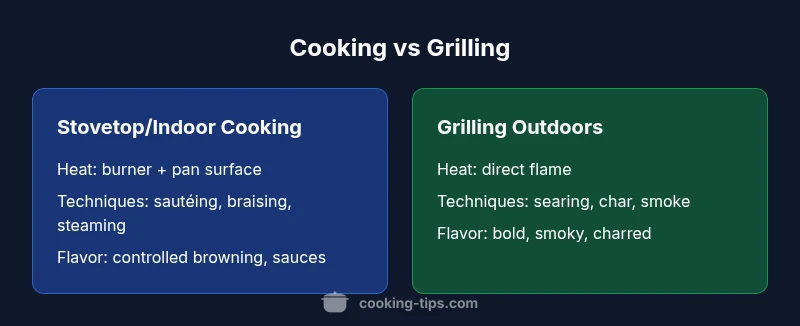
Is cooking the same as grilling? The short answer is no. Grilling is a subset of cooking that relies on direct high heat from an open flame, typically outdoors, and emphasizes char and smoky flavors. General cooking includes methods like boiling, sautéing, roasting, and steaming, often indoors, with a broader range of heat sources and techniques. Understanding this distinction helps home cooks choose the right method for texture, flavor goals, and practicality.
Is cooking the same as grilling? A foundational distinction
According to Cooking Tips, the terms refer to different contexts of heat and flavor. Grilling is a form of cooking that uses direct radiant heat from an open flame, typically outdoors, to sear the surface and impart smoky character. General cooking, meanwhile, encompasses techniques like boiling, roasting, sautéing, steaming, and braising—applied with a range of heat sources and cookware. Recognizing this difference helps home cooks tailor methods to dishes, environments, and time constraints. The Cooking Tips team emphasizes that developing proficiency in both domains expands what you can reliably prepare for family meals and entertaining.
The main difference in approach lies in heat delivery and flavor expectations, which cascades into equipment choices, techniques, and even food safety considerations.
Heat source and its influence on outcomes
Heat is the defining variable that sets grilling apart from many other cooking techniques. When you grill, the primary heat source is direct radiant heat from flames or charcoal, often spread across a grate. This configuration produces rapid surface browning, distinct grill marks, and a pronounced smoky flavor when wood or charcoal is used. In contrast, many cooking methods rely on heat transferred through a medium—oil, water, air, or the pan itself—to gradually raise the internal temperature of food. The pan or oven can deliver more even heat over time, reducing the risk of scorching and allowing gentle texture development in delicate proteins or vegetables. Temperature control becomes a dialogue between heat intensity and distance from the heat source. Grilling typically demands quick attention to flare-ups and rotation to prevent uneven charring, while stovetop and oven cooking encourage steady heat management with less outdoor variables.
Practical takeaway
- Grilling emphasizes direct, high heat and rapid surface changes.
- Pan- or oven-based cooking relies on indirect or distributed heat for control and even texture.
Flavor development and texture dynamics
The characteristic flavors of grilling—char, smoke, and caramelized edges—derive from the Maillard reaction accelerated by direct contact with hot grates and, when used, wood smoke. Pan or oven cooking achieves browning through surface contact and warm air circulation, but without the same smoke signature. Texture outcomes differ as well: grilling can yield crisp edges with juicy interiors when done right, while stovetop or oven methods often provide steady moisture management and uniform doneness. Both pathways rely on proper timing, temperature, and technique to avoid drying out proteins or overcooking vegetables.
Equipment, setup, and practical constraints
Choosing between cooking and grilling begins with tools. A well-seasoned cast-iron pan, grill pan, or stockpot enables precise indoor cooking with reliable browning. Outdoors, a gas or charcoal grill introduces airflow, fuel management, and flare-ups that demand vigilance. Accessories such as thermometers, wire racks, and oven-safe lids broaden what you can do indoors, while charcoal, smokers, and grill brushes expand outdoor options. Weather, space, and maintenance considerations further shape feasibility: indoor cooking is year-round, weather can constrain outdoor grilling, and grills require cleaning and fuel planning. Across both paths, investing in decent cookware and proper safety practices pays dividends in results and convenience.
Quick practical guidance when choosing a method
- Prioritize texture and flavor goals: searing and smoke point favor grilling; even browning favors pan/oven.
- Consider environment: indoors favors cooking; outdoors favors grilling.
- Use thermometers to prevent overcooking in either method.
Food types and best practices
Foods with high fat content or delicate textures often benefit from indoor cooking to maintain moisture and control. hearty meats and vegetables that respond to flame contact excel on a grill, especially when you want char marks and smoky notes. For complex dishes with sauces, braising, or multiple components, a combination approach—grill components briefly, finish sauces or sides indoors—offers flexibility and efficiency.
Time, doneness, and safety considerations
Grilling requires quick heat management and attention to flare-ups; indoor cooking leans on precise controls and timers. Regardless of method, use a thermometer or cut test to confirm doneness, and be mindful of food safety practices for poultry, beef, and fish. Marinades and seasonings should be adjusted to method, as salt and sugar can intensify browning.
Common mistakes and how to fix them
A frequent error is crowding food, which steams rather than browns. On grills, uneven heat can cause scorching if you don’t rotate items. Indoors, insufficient preheating leads to pale browning. To fix, preheat adequately, manage space, and monitor heat with a reliable thermometer.
Practical side-by-side scenarios
Consider chicken breast: pan-searing and finishing in the oven yields even doneness, while grilling gives a smoky exterior but requires careful attention to avoid drying. For vegetables, grill trays or skewers produce flavor and speed; indoors, roasting or sautéing can deliver uniform texture with less smoke. For steak, grilling can maximize flavor via char and smoke, though pan-searing with a hot skillet and finishing in the oven can provide tighter temperature control and consistency across thicker cuts.
Indoor grilling alternatives and tips
A grill pan or cast-iron skillet is a powerful indoor stand-in for outdoor grilling. Preheat to a high surface temperature, pat food dry to improve browning, and use minimal oil beyond a light coating to avoid splatter. If using an indoor grill, keep a close eye on smoke and ventilation.
Outdoor considerations and weather resilience
Weather complicates outdoor grilling: wind, rain, and cold can affect heat stability and safety. Build a stable grilling setup, shield the grill from moisture, and plan heat zones to accommodate different foods. When weathered constraints limit outdoor cooking, indoor methods remain a reliable fallback with consistent results.
Quick-reference decision guide
- Want smoky flavor and quick searing? Grill outdoors.
- Need precise doneness and year-round cooking? Use indoor methods.
- Cooking a complex dish with sauce? Indoors is often easier; finish components on the grill if desired.
When to choose which method: a structured framework
Assess the dish’s flavor goals, texture targets, and practical constraints. If you prioritize char and smoke, and weather allows, grill. If you need control, consistency, and year-round access, cook on the stove or in the oven. Both paths share fundamentals, but their strengths differ in heat delivery, flavor outcomes, and equipment demands.
Comparison
| Feature | Stovetop cooking | Grilling outdoors |
|---|---|---|
| Heat source | Burner heat under a pan | Direct radiant heat from flames/grates |
| Direct heat exposure | Yes via pan surface, controlled | Yes via direct contact with grates |
| Flavor development | Controlled browning; minimal smoky input | Char, smoke, and pronounced grill flavors |
| Temperature control | High precision; gradual heat transfer | Rapid changes; prone to flare-ups |
| Best use cases | Sauces, braises, delicate proteins indoors | Seared meats and vegetables, outdoor flavor |
| Equipment cost/maintenance | Moderate cookware; indoor setup | Grill, tools, and regular cleaning |
Benefits
- Versatile and year-round indoors
- Precise control over temperature and moisture
- Broad range of techniques (sautéing, braising, steaming)
- Easier to manage safety and ventilation indoors
Cons
- Lacks the direct smokiness of grilling
- Indoor methods may miss outdoor flavor and sear
- Requires cookware for browning and finishing
- Cleanup can involve multiple appliances and surfaces
Grilling and pan-based cooking aren’t the same, but they’re complementary; choose based on flavor goals, weather, and equipment.
Grilling emphasizes direct heat and smoke, producing char and bold flavors. Indoor cooking offers precision and year-round practicality. Mastery of both expands your repertoire and ensures you can deliver reliable results in any setting.
Quick Answers
Is cooking the same as grilling?
No. Grilling is a direct-heat cooking method, typically outdoors, that produces char and smoky flavors. General cooking includes many techniques, often indoors, with a broader range of heat sources and temperatures.
No. Grilling is a direct-heat subset of cooking, usually outdoors, that imparts smoke and char. Indoor cooking encompasses many methods with varied heat sources.
What are the main differences between grilling and pan cooking?
Grilling relies on direct flame and rapid surface browning with smoky notes, while pan cooking uses controlled heat through a pan to achieve even browning and moisture retention. The gear, timing, and flavor outcomes differ accordingly.
Grilling uses direct flame and smoke; pan cooking uses controlled heat in a pan for even browning.
Can you grill indoors?
Yes, with grill pans, electric grills, or stovetop grills. Indoor grilling can mimic outdoor searing but typically produces less smoky flavor and requires good ventilation.
Yes, you can grill indoors with grill pans or electric grills; ventilation is important.
Which foods are best suited for grilling vs pan cooking?
Grilling shines for meats, vegetables, and items that benefit from high-heat searing and smoky notes. Pan cooking suits delicate proteins, sauces, and foods that need steady moisture control.
Grilling for bold sear and smoke; pan cooking for control and delicate textures.
Is grilling healthier than other cooking methods?
Health outcomes depend on preparation. Grilling can reduce fat by allowing excess fat to drip away, but charred portions may introduce potentially harmful compounds if overdone. Balance and moderation matter.
Grilling can reduce fat due to dripping, but avoid over-charring for health-safety reasons.
What equipment do I need to start grilling?
A basic setup includes a grill (gas or charcoal), tongs, a thermometer, a brush for cleaning, and a heat-safe rack or grate. For indoor use, a grill pan can suffice.
Start with a grill and thermometer; add tools as you grow.
Top Takeaways
- Grilling uses direct high heat for char and smoke; cooking covers a broader set of indoor methods.
- Heat delivery drives flavor and texture differences; choose method by dish and context.
- Indoor cooking offers consistency and year-round feasibility; grilling excels in outdoor flavor and speed.
- Use a thermometer to guide doneness in any method to avoid overcooking.