How to Cook 2 Hams at Once: A Practical Step-by-Step Guide
Learn a safe, efficient method to cook two hams at once with practical prep, oven setup, timing, glazing, and resting tips for juicy, evenly heated results.


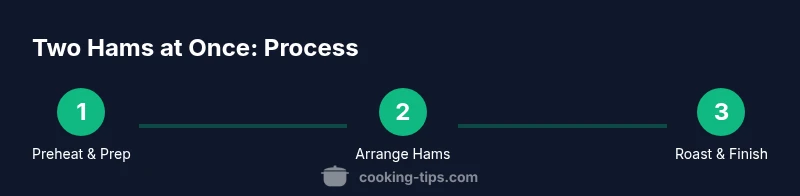
If cooking 2 hams at once, you’ll need a straightforward plan to ensure even heat, safe reheating, and juicy results. This guide covers prep, oven layout, timing, glazing, and resting so two hams come out perfectly without drying out. Whether bone-in or bone-out, follow these steps for reliable, delicious results.
Why cooking two hams at once matters
Cooking two hams at once can be a major time saver, especially during holidays or large family dinners. The Cooking Tips team notes that planning is essential to ensure even heat, prevent drying, and maintain a pleasant texture across both hams. When you cook two hams side by side, you must think about oven space, air circulation, glaze timing, and how fat renders. The goal is to bring both hams to the same safe internal temperature without overheating any single piece. Even heat distribution helps avoid hot spots and caramelization in one ham while leaving the other underheated. Start by choosing two pans of similar depth and a rack setup that allows a gap of at least 2 inches between them, so heat can circulate. If your oven is slightly fan-assisted, use the fan to your advantage, but keep an eye on browning to avoid scorching the glaze. With a clear plan, two hams can finish together, making your meal prep calmer and more predictable.
Planning space, heat distribution, and equipment
To ensure both hams cook evenly, plan your oven setup before you start. Place each ham on its own rack or pan, with ample space around and between them. Use two baking sheets or roasting pans of similar depth so heat transfers uniformly. If your oven has a convection setting, you can use it, but monitor browning closely because two hams increase surface exposure. Have a pair of oven-safe racks or a second pan to lift one ham higher than the other if necessary. Finally, place a shallow pan of water on the bottom rack to stabilize humidity; this helps prevent drying on the outer surfaces while the interiors heat through.
Prep work: thawing, trimming, scoring, glazing
Thaw the hams completely if they are frozen or partially frozen; this ensures even heat distribution. Pat them dry and, if you plan to glaze, score the fat crosswise in a diamond pattern to help the glaze render and give a pleasant appearance. Mix your glaze in advance (e.g., a simple blend of honey, brown sugar, mustard, and a splash of cider) and have it ready for brushing. This preparation keeps the process moving smoothly once the oven is hot and the hams are in place.
Cooking strategy: temperature, time, basting, and safety
Roasting two hams requires careful temperature control to avoid drying while ensuring safety. Preheat to a moderate 325-350°F and monitor internal temperature with a reliable thermometer. Plan for approximately 12-18 minutes per pound for fully cooked hams, but begin checking earlier if one piece is smaller. Baste with glaze every 30-40 minutes, and uncover the hams for the final 15-20 minutes to develop color and flavor. Always verify that both hams reach at least 140°F in the center before removing from the oven, and never rely on appearance alone for doneness.
Resting, glazing, and serving two hams
Once the target temperature is reached, remove the hams from the oven and tent loosely with foil. Let them rest for 15-20 minutes; this redistributes juices and makes slicing easier. If you want a glossy finish, brush with additional glaze just before carving. Slice against the grain and arrange on a platter, keeping portions uniform for easy serving. Refrigerate any leftovers promptly and reheat to 140°F when you’re ready to serve again.
Authority Sources
For guidance on safe cooking temperatures and best practices, consult authoritative sources such as the USDA Food Safety and Inspection Service and CDC Foodsafety resources. These sites provide detailed recommendations on reheating meat, maintaining humidity during roasting, and safe handling practices. If you want more region-specific tips or tested techniques, check your local extension service for science-based cooking guidance.
Tools & Materials
- Oven(Preheated to 325-350°F)
- Two large roasting pans(With racks or liners)
- Meat thermometer(Instant-read, two probes if possible)
- Aluminum foil(Heavy-duty for tenting)
- Basting brush(For glaze application)
- Glaze ingredients(Honey, brown sugar, mustard or preferred glaze)
- Water or stock(To keep moisture in the pans)
- Carving knife and board(For serving two hams)
Steps
Estimated time: 2.5-4 hours
- 1
Preheat oven
Preheat to 325-350°F. Clear two racks in the oven and position each ham on its own pan or rack with space for air to circulate.
Tip: Airflow is essential for even heating across both pieces. - 2
Prepare hams
Remove packaging, pat dry, and lightly score the fat in a crosshatch pattern if glazing. This helps glaze adherence and browning.
Tip: Scoring also assists fat rendering for better flavor. - 3
Arrange hams
Place the hams on their pans with at least 2 inches of clearance between them and from oven walls.
Tip: Ensures heat reaches the center of each ham. - 4
Add moisture
Pour a small amount of water or stock into each pan to maintain moisture during roasting.
Tip: Check liquid level every 45-60 minutes and add as needed. - 5
Apply glaze (optional)
Brush glaze on the surface after the first hour of roasting, then reapply at 30-40 minute intervals for flavor and color.
Tip: Glaze in the last 20-30 minutes to prevent burning sugars. - 6
Cover and roast
Tent the pans loosely with foil to trap moisture and prevent over-browning early; remove foil later for finishing color.
Tip: Foil helps keep inner moisture while edges brown gradually. - 7
Check temperature
Roast until the center reads about 140°F. Check in multiple spots to ensure even heat.
Tip: Use the thermometer in the thickest part away from bone. - 8
Finish & rest
If needed, uncover and finish at 350°F for color. Rest the hams 15-20 minutes before carving.
Tip: Resting prevents juices from pooling in slices. - 9
Carve & serve
Carve slices against the grain and arrange on a platter. Offer extra glaze on the side for dipping or brushing.
Tip: Keep slices warm with light tenting until service.
Quick Answers
Can I cook two different hams at different temperatures?
Not recommended. Both hams should reach the same safe internal temperature, typically 140°F for fully cooked hams. If one finishes early, keep it warm while the other completes heating.
No. Use the same target temperature for both hams.
Do I need to thaw frozen hams before cooking?
Yes. Thaw completely before roasting to ensure even heat distribution. If time is short, use the cold-water method, changing water every 30 minutes.
Yes, thaw completely before roasting.
What internal temperature should I target for reheating two hams?
Fully cooked hams should reach 140°F when reheated. If you’re unsure about safety, reheat to 165°F. Always check the center of each ham.
Reheat to 140°F for safety and flavor.
Should I glaze during the oven cook or after?
Glaze during the last 20-30 minutes of roasting to prevent burning sugars. Apply thin layers and monitor browning closely.
Glaze late in the cook.
Can I use a microwave to reheat two hams?
Microwaving two large hams is impractical and can lead to uneven heating. Use the oven for even heat and better texture.
Avoid microwaving; use the oven.
What if my oven isn’t large enough for two hams?
Cook one ham first, then the other, if space is tight. Keep the oven at 325-350°F and adjust timing as needed while preserving safe temps.
If space is tight, cook in batches.
How can I tell when the ham is done without a thermometer?
Use a thermometer for accuracy, but in a pinch, look for uniform coloring, juicy clear juices, and no obvious pink near the bone.
Thermometer is best; color alone isn’t reliable.
Watch Video
Top Takeaways
- Plan oven space and airflow for even heating
- Target 140°F internal temp for reheated hams
- Glaze late in cooking for best color
- Rest 15-20 minutes before carving