How to Keep Cooked Noodles from Sticking: Easy, Reliable Techniques
Discover practical, repeatable methods to keep cooked noodles from sticking. Learn boiling tips, draining, saucing, rinsing, and storage strategies so your pasta stays silky and separate every time.


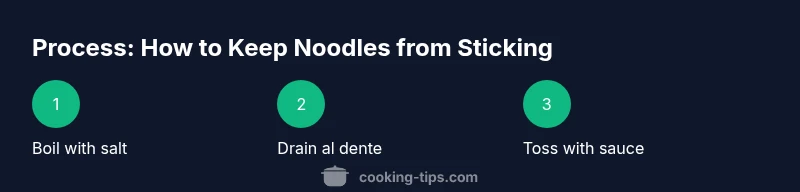
According to Cooking Tips, keep cooked noodles from sticking by boiling in a large pot of salted water, stirring during the first minute, draining while al dente, and tossing with sauce or a light oil while hot. For salads, rinse with cold water and pat dry before mixing. The Cooking Tips team found these steps work across pasta shapes and starch-based noodles.
Why Noodles Tend to Stick
Noodles tend to stick after cooking when their surface releases starch and the strands crowd together in a warm, moist environment. The heat softens the surface, and if the noodles sit in a pool of steam or cling to each other, they can form clumps. Understanding how to keep cooked noodles from sticking starts with controlling starch release, heat, and moisture. By using ample water, keeping the noodles moving during the first minutes of boil, and coating them immediately after draining, you minimize surface tension and keep strands separate. The Cooking Tips team found that small adjustments—like starting with plenty of water and draining promptly—significantly reduce stickiness across common noodle varieties.
Additionally, the right noodle type for your dish matters: flattish tagliatelle, long spaghetti, or Asian rice noodles each behave differently when hot. Tailoring your approach to the noodle type is part of how to keep cooked noodles from sticking in everyday cooking.
Understand Your Noodle Type
Different noodle families release starch at varying rates and have different surface textures. Wheat-based pastas like spaghetti, fettuccine, and penne benefit from immediate coating after draining, while fresh pasta can clump more easily if not cooled and separated quickly. Rice noodles, glass noodles, and soba have unique cooking times and starch profiles that change how you apply sauce or oil. The key to how to keep cooked noodles from sticking is to know your noodle’s starch content, cooking time, and texture so you can act promptly after draining. Practically, plan for a quick sauce or oil station ready as soon as the pot is off the heat.
Cooking Tips analysis shows that prepping sauce or oil in advance is a major factor in preventing stickiness across noodle varieties.
Prep: Water Volume, Salt, and Temperature
A common mistake when learning how to keep cooked noodles from sticking is using insufficient water. A large pot with at least 4–6 quarts of water per pound of pasta, plus a generous amount of salt, creates an environment where starch can disperse rather than form sticky clusters. Bring water to a rolling boil before adding noodles, and keep the water at a steady boil for the entire cooking process. Stirring during the first minute helps to separate strands and reduce early sticking. Once the timer is set for al dente, remove the noodles promptly to avoid overcooking and excessive starch release.
For extra reliability, consider reserving a small amount of pasta water before draining. If your sauce thickens too much, this starch-rich water can help emulsify and loosen without adding additional stickiness.
The Ideal Boiling Method: Salt, Temperature, and Timing
To keep cooked noodles from sticking, maintain a vigorous boil and use salt to taste, not to mask starch. Salt enhances flavor and helps keep surface texture from collapsing too quickly. Add salt after the water has reached a rolling boil and stir again to prevent clumping. The goal is al dente texture—firm to the bite—so strands separate easily when tossed. Do not overcook, as overcooked noodles shed more starch and become gummy, increasing the likelihood of sticking once sauced.
If you’re cooking multiple batches, keep the first batch warm but not dry, and don’t stack noodles in a single container until they’re coated.
Draining Techniques: When and How to Drain
Drain promptly once noodles reach al dente and avoid letting them sit in the colander for too long. The heat stored in the strands keeps moving the surface starch, which can rebind if left to cool too slowly. A quick shake of the colander helps remove excess water without chilling the noodles, which can make them cling together. If you’re serving immediately, transfer to a warm bowl or directly into your sauce and toss vigorously to coat every strand evenly.
For salads, cool quickly under cold running water to stop the cooking process and prevent further stickiness, then drain thoroughly before mixing.
Immediate Coating: Sauce or Oil After Draining
The moment you drain, you should coat the noodles in your chosen finish: warm sauce, a splash of pasta water, or a light coating of oil or butter. This creates a protective layer and reduces surface tension that leads to sticking. When you toss hot noodles with sauce and moisture, you form a stable emulsion that keeps strands separated. If the sauce isn’t ready yet, a thin coat of oil will help keep the noodles from sticking as you finish cooking other ingredients.
The key is acting fast while the noodles remain hot and pliable, ensuring the coating sticks to every strand.
Rinsing for Cold Dishes or Salads
Rinsing is a deliberate step in how to keep cooked noodles from sticking for cold dishes or salads. Rinse with cold water to stop the cooking process and rinse away surface starch that can cause clumping. After rinsing, drain thoroughly and spread the noodles out on a tray or plate to prevent re-clumping while they cool. If you plan to dress the noodles later, a light drizzle of oil can help maintain separation.
Note that rinsing is not recommended if you’re serving the noodles hot with sauce, as it removes starch that helps sauces cling.
Saucing Strategy: Emulsions and Sticking Prevention
A well-emulsified sauce clings to noodles evenly and prevents them from sticking by creating a smooth coating across every strand. When making sauces, reserve some pasta water to adjust consistency and to help emulsify with the starch on the noodles. Pour sauce over the noodles off the heat, toss vigorously, and continue tossing for 20–30 seconds to create a glossy, cohesive finish. Avoid layering too much sauce at once, which can overwhelm the surface and cause clumping rather than separation.
Reheating and Storage: How to Keep Noodles From Sticking Overnight
Storing leftovers is a common time when sticks happen again. Cool noodles quickly and store them in a light coat of oil or sauce to keep strands separated. When reheating, add a splash of water or broth and toss to re-emulsify the coating and separate strands. If you’re reheating in a pan, add heat gradually and stir often to prevent sticking. The general rule for how to keep cooked noodles from sticking is to avoid drying noodles out and to reintroduce moisture in a controlled way.
Special Cases: Rice Noodles and Gluten-Free Options
Rice noodles and gluten-free noodles behave differently from standard wheat pasta. Rice noodles require careful soaking and gentle heating to avoid mushiness and sticking. Gluten-free noodles benefit from frequent stirring and shorter cooking times as their starch profiles differ. For all variants, finishing with a sauce or oil immediately after draining remains a central tactic in how to keep cooked noodles from sticking. Always follow the package’s guidance for timing, since different brands and shapes melt differently.
Quick Hacks for Common Scenarios
If you’re in a rush, toss hot noodles with a spoonful of sauce and a small amount of pasta water to quickly emulsify. For large batches, consider keeping noodles loosely separated on a sheet pan with a light coating of oil, then portion into serving bowls and reheat with a splash of water or sauce. A wide-bottom pan helps keep heat even and prevents tight clumps from forming. These practical tweaks are proven approaches in how to keep cooked noodles from sticking for busy weeknights.
A Simple 3-Step Plan You Can Try Tonight
- Boil pasta in a large, salted pot and stir during the first minute. 2) Drain al dente and immediately toss with sauce or a light coating of oil. 3) If serving cold, rinse with cold water and pat dry; otherwise, serve right away with your prepared sauce. This concise plan captures the essence of how to keep cooked noodles from sticking and works with most common noodle varieties.
Tools & Materials
- Large pot (6-8 quart)(Enough water to cover noodles by 4 inches; aim for 4-6 quarts per pound of pasta)
- Water(Use plenty of water; maintain a rolling boil throughout cooking)
- Salt(Add about 1-2 tablespoons per 4-6 quarts water; adjust to taste)
- Colander/strainer(Drain quickly to minimize starch buildup)
- Tongs or fork(Gentle handling for tossing while hot)
- Spoon or spatula(Mix noodles with sauce evenly)
- Neutral oil or butter(Light coating to prevent quick re-sticking if sauce isn’t ready)
- Sauce or ready-to-use cooking liquid(Have sauce warm and ready to toss with hot noodles)
- Bowl for sauce(Optional; for tossing if not using pan)
Steps
Estimated time: Total time: 25-35 minutes
- 1
Gather ingredients and tools
Collect a large pot, salt, colander, and your sauce or oil. Have your noodles measured and ready to go so you can act quickly after draining. This prep minimizes sticking by ensuring you can move fast once pasta is cooked.
Tip: Set up near the stove so you can drain and toss immediately. - 2
Boil water with salt
Fill the pot with ample water and bring to a rolling boil. Add salt once the water boils; this seasons the pasta and helps maintain surface texture, which reduces stickiness. Stir occasionally to prevent clumping at the start.
Tip: Use a wide pot to maximize water surface area and reduce crowding. - 3
Add noodles and cook to al dente
Add the noodles and stir to separate. Start checking for al dente a minute before the package timing. Drain as soon as they reach the desired texture to limit starch release.
Tip: Keep a timer handy and taste-test for the perfect bite. - 4
Drain promptly
Pour noodles into the colander and shake gently to remove excess water. Do not let them sit in the colander for too long, or they’ll start to clump as they cool.
Tip: If sauce isn’t ready, transfer to a warm bowl and coat lightly with oil to maintain separation. - 5
Coat immediately with sauce or oil
Return hot noodles to the pot or a large bowl and add your sauce or a light oil. Toss vigorously for 20–30 seconds to form a glossy, even coating that keeps strands apart.
Tip: Add a splash of reserved pasta water to loosen a thick sauce without making it greasy. - 6
Toss until evenly coated
Continue tossing until every strand is coated and no dry patches remain. If the sauce seems dry, add a little more sauce or pasta water in small increments.
Tip: Avoid dumping sauce all at once; gradual addition helps achieve even emulsification. - 7
For cold dishes, rinse and chill
If you’re making a pasta salad, rinse the hot noodles with cold water immediately after draining. Pat dry and spread on a sheet to prevent sticking as they cool, then toss with your dressing later.
Tip: Drying the surface prevents water from diluting your dressing and helps with texture. - 8
Reheat leftovers carefully
When reheating, add a splash of water or sauce and toss to re-emulsify. Reheating slowly helps prevent new stickiness and keeps strands separate.
Tip: Avoid microwaving directly in a solid mass; heat in a pan with a bit of liquid for best separation.
Quick Answers
Why do cooked noodles stick together after cooking?
Noodles stick when surface starch becomes sticky and strands crowd together while still hot. Keeping them moving during cooking and coating them immediately after draining helps prevent this.
Noodles stick because starch on the surface makes strands cling when hot. Move them around while cooking and coat them right after draining to stop sticking.
Should I rinse pasta after cooking?
Rinsing removes surface starch that helps sauces cling, so it’s best only for cold noodle dishes or salads. For hot pasta with sauce, skip the rinse to keep the coating intact.
Only rinse if you’re making a pasta salad or cold dish; otherwise, skip rinsing to help sauce cling.
How long should I boil pasta to stay non-sticky?
Boil until al dente and test early; overcooking increases stickiness due to extra starch release. Remove from heat promptly when the bite is just tender.
Boil until al dente and taste-test a bit early to avoid overcooking, which can cause sticking.
Does adding oil to the boiling water prevent sticking?
Adding oil to the boiling water is not necessary and can make sauce adherence worse later. It’s more effective to coat with sauce or a light oil after draining.
Oil in the water isn’t usually helpful and can hinder sauce clinging. Coat with sauce or a light oil after draining.
What about gluten-free noodles?
Gluten-free noodles often release starch differently; rinse if you’re making a cold dish. For hot dishes, coat quickly with sauce and consider adding a touch of pasta water to adjust texture.
Gluten-free noodles can be trickier; coat quickly and re-emulsify with a little pasta water if needed.
Watch Video
Top Takeaways
- Drain promptly after al dente cooking
- Toss immediately with sauce or oil
- Reserve pasta water for emulsified sauces
- Rinse only for salads or cold noodles
- Reheat with moisture to maintain separation