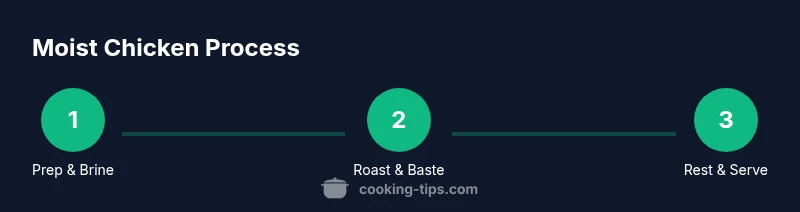
How to Keep a Cooked Chicken Moist
Discover practical steps to keep a cooked chicken moist from prep to reheating. Brining, resting, proper temperatures, and finishing sauces explained by Cooking Tips for home cooks seeking reliable guidance.


To keep a cooked chicken moist, choose gentle finishing methods, rest the meat, and add moisture when serving. Let the chicken rest for 5-10 minutes after cooking to redistribute juices, then slice. Finish with a light sauce or pan juices, and reheat gently with added moisture if needed. Brining or basting during cooking helps retain moisture.
Why moisture matters in cooked chicken
If you’re asking how to keep a cooked chicken moist, moisture management is the difference between a succulent roast and a dry slice. Juiciness comes from proper heat, resting, and finishing with moisture. In this block, we’ll explore the science of juiciness and outline practical steps you can apply in your kitchen to preserve moisture through every stage of cooking and service. Understanding where moisture hides—within the muscle fibers, on the surface, and in the pan juices—helps you tailor your approach for different cuts and cooking methods.
Core moisture-retention principles
Moisture loss during cooking is driven by heat, time, and surface exposure. The goal is to minimize evaporation while preserving tenderness. Key principles include cooking to a safe internal temperature promptly, letting the meat rest to redistribute juices, and finishing with a light sauce or pan juices. A dry surface will absorb juices, so a light coating or glaze helps keep surface moisture in. Equally important is choosing the right cooking method for the cut—oven roasting, gentle braising, or low-heat pan searing all offer different moisture advantages.
Pre-cook preparation that boosts moisture
Choosing the right bird and pre-treatments can dramatically improve moisture retention. Brining or dry-brining introduces salt that helps proteins retain water during cooking. Pat the chicken dry, season evenly, and allow the skin to render fat properly. If you’re short on time, a quick pat-dry and light seasoning is enough to promote even browning and juiciness. For larger birds, consider tying legs to promote even cooking and reduce dry spots on thicker areas.
Finishing and serving tips to lock in juices
Finishing with a glaze or a light pan sauce traps residual moisture and makes every slice feel juicier. Use the juices in the pan after resting to create a simple jus, then spoon it over carved meat. Slice against the grain for tenderness and serve immediately to preserve warmth and moisture. A light brushing of hot pan juices on the surface before serving can also seal in moisture without creating a lasagna-like glaze.
Reheating leftovers without drying them out
Leftover chicken dries quickly if reheated improperly. Reheat with a splash of broth, water, or sauce and cover to trap steam. Gentle warming in the oven (around 300–325°F / 150–165°C) or on the stove with a lid keeps moisture intact much better than a quick microwave reheat. If reheating in the microwave, cover and heat in short intervals, letting the food rest briefly between bursts to reduce hotspots and moisture loss.
Troubleshooting: common issues and fixes
If the chicken turns out dry, it’s usually from overcooking, rough handling, or insufficient resting. Solutions include checking with a thermometer, lowering oven temperature, and finishing with moisture-rich sauces. If the skin is pale, briefly return to the oven to brown while keeping meat moist by covering with foil. For very thick cuts, consider a brief braise after initial roasting to finish with moist interiors.
Practical checklists for home cooks
Use these quick prompts: Did you pat dry before seasoning? Is your oven calibrated? Are you allowing 5–10 minutes of resting time? Is there a light sauce or pan juices ready for serving? Keeping a small jar of pan juices on hand can be a simple safety net for moisture when plating at the table.
Tools & Materials
- Meat thermometer(Instant-read preferred; target 165°F (74°C) internal temperature)
- Roasting pan with rack(Elevates the bird for even heat and collects drippings)
- Aluminum foil(For resting and light cover during reheats)
- Carving knife(Sharp blade for clean slices and minimal juice loss)
- Basting brush(Optional for applying pan juices during cooking)
- Liquid for moistening (broth or water)(Use during reheating or finishing to add moisture)
Steps
Estimated time: 1 hour 20 minutes
- 1
Choose brine strategy
Decide between a wet brine, dry brine, or no brine. A brine adds salt that helps retain moisture during roasting, while a dry brine seasons and helps skin render for browning. Your choice sets the baseline for juiciness.
Tip: Brine type should match your timeline and bird size. - 2
Prepare your brine or dry-brine
If using a wet brine, dissolve salt in water and submerge the chicken for several hours. For a dry brine, rub salt (and optional spices) onto the skin and refrigerate. Ensure all surfaces are salted evenly for consistent moisture retention.
Tip: Even salt distribution matters; use a bag or tray to cover all surfaces. - 3
Pat the chicken dry and season
Pat dry the chicken after brining with paper towels to remove excess moisture. Apply a light coat of oil and season evenly for browning and moisture retention. Dry surfaces help skin crisp while locking in juices.
Tip: Don’t oversalt after brining; taste and adjust seasoning lightly. - 4
Preheat oven and set moisture-friendly temps
Preheat to a moderate roasting temp (about 375°F/190°C). Lower temperatures over longer times can improve moisture but watch for safe internal temp. If you’re short on time, keep it at a steady 375°F with gentle monitoring.
Tip: Use a thermometer to monitor doneness rather than relying on time alone. - 5
Roast with moisture retention
Roast the chicken breast-side up initially to render fat but avoid overcooking the breast; consider basting once or twice with pan juices. Keep the oven door closed as much as possible to preserve humidity.
Tip: Mid-roast, rotate the pan for even browning if your oven heats unevenly. - 6
Baste and monitor internal temp
Baste with pan juices and monitor the thickest part; remove from heat when 160–165°F (71–74°C) and allow carryover to finish cooking. Resting will finish the process and improve juiciness.
Tip: Carryover cooking continues after removal; plan for a 5–10°F rise. - 7
Rest before carving
Let the bird rest for 5–10 minutes, loosely tented with foil. Resting redistributes juices, improving tenderness and overall moisture. This pause prevents a rush to serve dry slices.
Tip: Do not rush carving; slicing too early leaks juices. - 8
Reheat leftovers gently
Reheat sliced portions with a splash of broth or sauce, covered, until steaming. Serve with additional pan juices if available to preserve moisture and texture.
Tip: Low heat prevents moisture loss and preserves texture.
Quick Answers
What is the best way to keep a cooked chicken moist?
Rest the chicken for 5–10 minutes after cooking, then finish with a light sauce or pan juices. Reheat gently with added moisture to avoid drying out.
Rest the chicken for 5 to 10 minutes, then add a little sauce or pan juices before serving.
Should I brine chicken before cooking to keep it moist?
Brining can improve juiciness by enhancing water retention. A light dry-brine also helps without requiring overnight prep.
Brining or dry-brining helps retain moisture during cooking.
Can I keep cooked chicken moist when reheating leftovers?
Yes. Add moisture like broth or sauce and reheat slowly with a lid on to trap steam and prevent drying.
Add a splash of broth and reheat slowly with a lid.
Is it better to cook chicken to a lower internal temp to stay moist?
Always aim for a safe internal temperature of about 165°F (74°C). Moisture retention comes from proper rest and finishing techniques, not undercooking.
Always reach a safe temperature; rest and finish with moisture afterward.
What are signs that chicken is dry?
Dry chicken looks pale with dense texture and little juice. Juices should be visible when cut; absence signals dryness.
Dry chicken dries out quickly; check for scorch and lack of juices.
Does resting really affect juiciness?
Yes. Resting redistributes juices away from the surface into the meat, improving tenderness and juiciness.
Resting matters a lot; it keeps slices juicy.
Watch Video
Top Takeaways
- Rest chicken to redistribute juices
- Finish with pan juices or light sauce
- Reheat leftovers with added moisture
- Brine or dry-brine to boost initial moisture
- Monitor internal temperature, not time