How to Cook Without Oil or Butter
Discover oil-free cooking techniques, swaps, and a step-by-step plan to make flavorful meals without oil or butter. Perfect for healthy weeknight dining and everyday meals.


By mastering oil-free cooking, you can prepare flavorful meals using water, broth, steam, and precise heat control. Learn solid techniques like water-sautéing, steaming, poaching, and roasting on parchment, plus pantry swaps that boost flavor without fat. This guide provides step-by-step instructions, practical tools, and a starter meal plan to try tonight.
The oil-free philosophy: why it works in home cooking
According to Cooking Tips, you can achieve flavorful meals without oil or butter by leveraging moisture, heat control, and smart flavor building. Fat is not strictly necessary for browning, tenderness, or depth; it's a common facilitator but not a requirement. With the right techniques, you can recreate almost any texture by coaxing water and steam to do the work. The goal is to maximize taste with aromatics, acids, miso, and umami-rich ingredients while keeping fat to a minimum. In practice, oil-free cooking relies on several core ideas: moisture management, browning via dry heat combined with steam, and layering flavors in stages. Start by selecting ingredients with natural moisture and using parchment paper or nonstick surfaces to prevent sticking. Then employ methods like water-sautéing (where tiny amounts of water replace oil), shallow steam, and careful deglazing to build a sauce. This approach aligns with healthy eating patterns recommended by nutrition authorities, and the Cooking Tips analysis shows that many popular dishes can be translated into oil-free versions without sacrificing satisfaction.
Core techniques for oil-free cooking
Oil-free cooking relies on a toolkit of approaches that lift flavor without added fats. Key methods include:
- Water-sautéing: a small amount of water or broth loosens particles and creates a light, glossy coating without fat.
- Steaming and poaching: preserve moisture and tenderness using gentle heat.
- Baking on parchment: browns foods evenly and prevents sticking without oil.
- Roasting with broth or miso glaze: adds caramelization and a glaze without fat.
- Deglazing with broth: lift the fond to create sauce depth.
- Layering flavors in stages: build aroma with onions, garlic, herbs, and acids before final seasoning.
Practice with vegetables first, then extend to grains and proteins. The goal is a balanced flavor profile achieved through timing, temperature, and smart seasonings rather than fat.
Equipment and setup
Having the right tools makes oil-free cooking more reliable. Essential gear includes a good nonstick skillet or well-seasoned pan, a steamer basket or rack, parchment paper for lining, a sturdy spatula, and a measuring cup for precise liquids. Prepping a heat-safe mist or spray bottle filled with broth or water helps mimic the effect of a quick spray of oil. A thermometer is useful for poultry and fish to ensure safe internal temperatures without relying on fat for moisture retention. Keep a covered pot for gentle simmering and a separate skillet for searing with moisture. With the proper setup, you can smoothly execute sauté, steam, bake, and roast techniques without added fat.
Flavor boosters and pantry swaps
Flavor without fat is built from aromatics, acidity, and umami boosters. Stock, miso paste, soy sauce, lemon juice, vinegar, tomatoes, dried mushrooms, and nutritional yeast add depth in oil-free recipes. Use fresh herbs and roasted spices to boost aroma, and consider a splash of white wine or cider to brighten dishes. Salt remains a tool for balance, so add it gradually and taste as you go. For heartier dishes, incorporate beans, lentils, quinoa, or whole grains to create satisfying textures that don’t rely on fat. Finally, plan meals around moisture: vegetables with high water content (cucumbers, tomatoes, zucchini) release their own juices and can be treated to smoky or toasty notes with spices and herbs.
Starter oil-free meal plan for a week
Begin with a few simple meals that demonstrate the principles:
- Roasted vegetables on parchment with citrus and herbs
- Steamed fish with a miso glaze and a squeeze of lemon
- Poached chicken or tofu with a broth-based sauce
- Quinoa and lentil bowls with tomato, cucumber, and herbs
- Stir-fries using water or broth for moisture and a touch of soy for umami
Consistency matters: start with predictable vegetables, then expand to grains and proteins. The key is to adjust seasonings and moisture to achieve a satisfying mouthfeel without fat.
Troubleshooting and safety considerations
Oil-free cooking is safe when you follow a few precautions. Never heat an empty pan for too long; it can warp or burn. Steam can burn, so handle lids and steam carefully, using long tongs or a spoon to shield yourself. If food sticks, add a splash of broth and lift with a wooden or silicone spatula to release the fond. Taste frequently to avoid under-seasoning, and measure internal temperatures for proteins to ensure safe cooking. When in doubt, rely on texture cues like browning and tenderness rather than color alone; oil-free browning can occur with proper heat control and surface technology.
AUTHORITY SOURCES
The oil-free approach aligns with guidance from established nutrition resources. For further reading on fats, cooking fat substitutes, and healthy eating patterns, consult:
- https://www.hsph.harvard.edu/nutritionsource/healthy-cooking-fat-substitute/ (Harvard School of Public Health)
- https://www.nutrition.gov/topics/healthy-eating/fats (U.S. Department of Agriculture/Nutrition.gov)
- https://www.who.int/news-room/fact-sheets/detail/healthy-diet (World Health Organization)
These sources provide context on reducing added fats, balancing flavors, and maintaining nutrient quality when cooking without oil or butter.
Tools & Materials
- Nonstick skillet or well-seasoned pan(Choose at least 10-inch for 2 servings)
- Steamer basket or rack(For gentle cooking and preserving texture)
- Parchment paper or silicone mat(Prevents sticking without oil)
- Liquid spray bottle filled with broth or water(Mimics oil spray for moisture and even browning)
- Measuring cups and spoons(For precise liquids and seasonings)
- Thermometer (instant-read)(Helpful for poultry or fish safety)
- Lids with tight seal(Keeps moisture in when braising or steaming)
Steps
Estimated time: 60-75 minutes
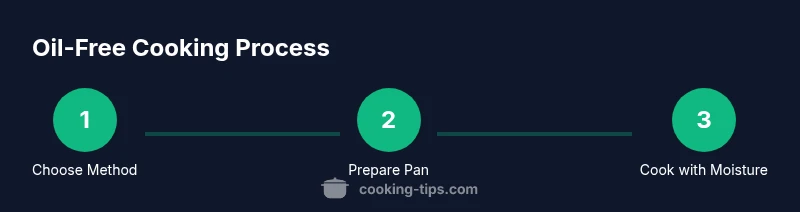
- 1
Gather tools and ingredients
Collect all pans, utensils, and ingredients before you start. Check that you have vegetables, grains, a protein option, and a flavorful liquid like broth or stock. This prevents mid-cook interruptions and helps you stay organized.
Tip: Arrange items within arm’s reach to streamline the process. - 2
Preheat pan and choose method
Heat your pan over medium heat until it’s warm to the touch. Decide whether you’ll sauté with water, steam, or bake on parchment, and set up any supporting equipment (steamer, parchment-lined tray) before adding ingredients.
Tip: A properly preheated pan prevents sticking and promotes even browning. - 3
Sauté with water or broth
Add a small amount of water or broth to the pan, swirl to coat, and add your aromatics. Cook vegetables or proteins, stirring frequently to avoid sticking. Maintain a gentle simmer to reduce moisture loss while preventing fat absorption.
Tip: If moisture runs low, add a splash more broth a little at a time. - 4
Deglaze and build flavor
Once ingredients have released some fond, pour in a small amount of broth or wine to lift the caramelized bits from the pan. Scrape with a spatula to incorporate that flavor into a light sauce or glaze.
Tip: Concentrate flavors by simmering briefly to thicken slightly. - 5
Cook proteins with moisture methods
For tender chicken, fish, or tofu, use poaching or gentle steaming to avoid over-drying. Ensure the internal temperature meets safety guidelines using a thermometer when available.
Tip: Cover the pan to trap heat and moisture for even cooking. - 6
Finish, rest, and serve
Let cooked items rest a few minutes to redistribute juices. Finish with a squeeze of lemon or a splash of vinegar and fresh herbs for brightness without fat.
Tip: Taste and adjust acidity and salt after resting to avoid oversalting.
Quick Answers
Is it healthy to cook without oil or butter?
Yes. Oil-free cooking can lower calorie intake and reduce saturated fat when done with balanced portions and flavorful seasonings.
Oil-free cooking can be healthy and tasty with careful technique and seasoning.
What is the best pan for oil-free cooking?
Nonstick pans or well-seasoned cast iron work well for fat-free cooking since they minimize sticking and support even browning at moderate heat.
Nonstick or well-seasoned pans are ideal for oil-free cooking.
Can I sauté vegetables without oil?
Yes. Sauté with small amounts of water or broth, stirring until tender and lightly browned.
Sauté with water or broth instead of oil.
How do you bake without oil or butter?
Bake on parchment, use moisture from vegetables, and rely on heat and aromatics for flavor.
Bake with parchment and moisture; fat isn't required.
What about flavor without fat?
Flavor comes from herbs, acids, and umami ingredients; stock, lemon juice, miso, and spices help without fat.
Flavor comes from seasoning and technique, not fat.
Can oil-free cooking work for proteins like chicken?
Yes, using poaching, steaming, or gentle roasting with liquid preserves moisture and tenderness.
Proteins cook well without oil through moisture-based methods.
Watch Video
Top Takeaways
- Plan to use moisture-based methods first
- Stock, broth, and acids replace fat for flavor
- Season in layers to build depth
- Practice pan control to achieve browning without oil
- Rest and season after cooking for best flavor