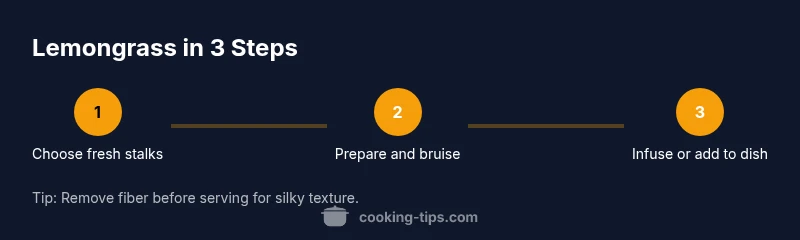
How to Cook with Lemongrass: A Practical Guide
Learn to select, prep, and cook with lemongrass to brighten soups, curries, and stir-fries. Master bruising, infusion, and flavor pairing with practical, chef-tested tips from Cooking Tips.


Lemongrass brightens soups, curries, and stir-fries with citrusy aroma. This guide shows how to select stalks, prep without wasting flavor, and infuse or simmer for peak brightness. You’ll learn bruising, infusion times, and practical substitutions to cook confidently.
Lemongrass: What It Is and Why It Works
Lemongrass is a tall, aromatic herb used extensively in Southeast Asian cooking. Its lemony aroma comes from essential oils like citral and limonene, which brighten dishes without adding heat. The edible portion is a pale, tender core surrounded by a tougher, woody outer stalk. Use the tender base for most recipes and trim away the fibrous base when it’s especially tough. Fresh lemongrass delivers the brightest aroma, while dried or frozen varieties are less vibrant. For best results, store fresh stalks in the fridge wrapped in a damp towel for up to two weeks, or freeze them for longer shelf life. When cooking, plan to infuse heat gently to extract aroma rather than boiling aggressively, which can dull brightness.
How to Select Fresh Lemongrass
Choose stalks that are firm with a clean white base and bright green tops. Avoid stalks with brown spots, limp textures, or a dull or sour smell. A fresh stalk should give off a clean lemon fragrance when you rub the base. If you’re buying pre-cut stalks, ensure the exposed surfaces are moist and not dried out. For dried or frozen lemongrass, check packaging for moisture and aroma quality; dried bits should still smell lemony when crushed.
Prep Work: Preparing Stalks for Cooking
Start by removing the dry, outer leaves until you reach the pale, tender core. Cut stalks into 2–3 inch pieces so they fit easily into pots or tea infusers. Bruise or lightly crush the pieces with the back of a knife to rupture cellular walls and release essential oils. If you only need a hint of lemongrass, finely mince the pale base; for a strong infusion, leave larger chunks. The leaves at the top can be finely chopped and added toward the end for a fresh note, but avoid eating the very tough base in large pieces.
Techniques: Infuse, Bruise, and Balance Flavors
Infusion is the most reliable extraction method. Add bruised stalks to simmering broth or curry sauce and cook gently for 10–15 minutes, then strain. Bruising increases surface area and oil release for brighter aroma. For quick stir-fries or lighter dishes, add finely minced base toward the end or blend with garlic and chilies to create a fragrant paste. Balance lemongrass with aromatics like garlic and ginger, and complement with coconut milk, fish sauce, or lime juice to achieve a harmonious flavor profile.
Flavor Pairings and Recipe Ideas
Lemongrass pairs beautifully with coconut milk, ginger, garlic, chili, cilantro, and lime. Use it in soups like a Tom Yum-style broth, green or red curries, and chicken or seafood dishes. It also works well in rice recipes—cook rice with a bruised stalk and remove before serving for subtle aroma. Try grilled shrimp or fish marinated with a lemongrass paste, or brew a refreshing lemongrass tea with a touch of honey. For fusion dishes, combine lemongrass with lemongrass oil or paste to add brightness to marinades and dressings.
Storage, Substitutes, and Common Pitfalls
Store fresh lemongrass in the fridge for up to two weeks wrapped in a damp towel. For longer storage, freeze either whole stalks or chopped pieces in a freezer bag. Substitutes include lemon zest with kaffir lime leaves or lemon verbena to mimic brightness; dried lemongrass can be rehydrated but will not match fresh in intensity. Pitfalls include the woody base, which can be bitter; trim and discard, and avoid long boiling that can dull aroma. When in doubt, start with a small amount and taste as you go to maintain balance.
Safety, Allergies, and Clean-Up Tricks
Lemongrass is generally safe for most home cooks. If you experience any sensitivity, discontinue use. After chopping, wash surfaces and utensils to prevent aroma transfer to other foods. Clean up by wiping surfaces and storing unused stalks properly to preserve aroma for the next cook. A quick tip: keep any released lemongrass oils away from delicate herbs to maintain their freshness.
Tools & Materials
- Fresh lemongrass stalks(2–4 stalks per dish; choose firm, pale-green stalks with tight bulbs)
- Sharp chef’s knife(12–14 inch or 20 cm; helps trim and bruise stalks)
- Cutting board(Stable surface; prevents slips while trimming and bruising)
- Pestle or muddler(Optional for bruising to release oils)
- Stock pot or wok(Used for simmering broths or curries with lemongrass)
- Fine-mesh strainer(To remove fibers after infusion)
- Storage container or zip-top bag(For refrigerating unused stalks)
Steps
Estimated time: 30-60 minutes
- 1
Identify fresh stalks and prep workspace
Scan for firm stalks with a clean white base and bright green tops. Rinse quickly if needed, then lay out on a stable cutting board. This initial check ensures you start with aromatic, usable stalks before any trimming or bruising.
Tip: Tip: Use a sharp knife and a stable board to prevent slips; fresh stalks should give off a lemony scent at the base. - 2
Trim outer leaves and cut to usable lengths
Peel away the tougher outer layers until you reach the pale core. Cut into 2–3 inch pieces so they fit easily into pots or infusers. Trimming ensures even extraction and prevents woody bits from slipping into the dish.
Tip: Tip: If you only want subtle aroma, cut smaller pieces; for stronger flavor, keep chunks a bit larger to bruise later. - 3
Bruise or crush the pieces
Lightly bruise each piece with the blunt side of the knife or a muddler to rupture cells and release oils. Bruising dramatically increases aroma without needing longer simmer times. This is especially helpful in curries and broths.
Tip: Tip: Don’t over-crush; you want surface area but not mushy bits that can complicate strain strain later. - 4
Infuse in simmering liquid or marinade
Add bruised stalks to a simmering broth, sauce, or curry and let it gently infuse for 10–15 minutes. If you’re making a quick stir-fry, add minced base toward the end for a bright finish. Avoid vigorous boiling to preserve aroma.
Tip: Tip: For best aroma, keep the heat steady at a gentle simmer rather than a rolling boil. - 5
Strain or chop for serving
If you’ve used whole pieces, strain the liquid to remove fibers before serving. If you’ve chosen to finely mince the pale base, ensure it’s evenly incorporated and distributed through the dish. This step prevents textural distraction from woody fibers.
Tip: Tip: Use a fine-mesh strainer to remove small fibers for a silkier final dish. - 6
Taste, balance, and finish
Taste the dish and adjust brightness with lime juice, fish sauce, or salt as needed. Fresh lemongrass is bright but can be overpowering if used excessively; balance it with coconut milk, chili, and herbs to achieve harmony.
Tip: Tip: A little goes a long way—start with a small amount and add gradually while tasting.
Quick Answers
What does lemongrass taste like?
Lemongrass offers bright citrus notes with a grassy undertone. Fresh stalks deliver the strongest aroma, while dried versions are less vibrant. It complements coconut, chilies, ginger, and cilantro well.
Lemongrass tastes citrusy and grassy, especially when fresh. For the brightest aroma, use fresh stalks and balance with coconut milk and herbs.
Do I need to peel or trim lemongrass before cooking?
Yes. Trim away the dry outer leaves and base to reach the pale core. Rinse, then cut into usable pieces. Bruising helps release aroma more quickly.
Trim off the tough outer layers and bruise the stalks to release aroma.
Can I eat lemongrass raw?
Lemongrass is usually used for flavor and not eaten in large raw pieces. If you finely mince the pale base, it can be incorporated, but the fibrous parts should be avoided in large bites.
Lemongrass is best used for flavor; avoid large raw pieces, and mince the pale base if used raw.
How long should I simmer lemongrass in soup?
Simmer gently for about 10–15 minutes to extract aroma without overcooking. Longer simmering can dull brightness and introduce bitterness if the base remains in the liquid.
Simmer gently for 10–15 minutes to release aroma, then strain.
Can I freeze lemongrass?
Yes. Freeze whole stalks or chopped pieces in a freezer bag. Frozen lemongrass is convenient for future dishes and helps preserve aroma longer than keeping it fresh in the fridge.
Yes, you can freeze lemongrass; it keeps aroma well and saves prep time later.
What are good substitutes if I don’t have lemongrass?
Lemon zest plus a few kaffir lime leaves or a touch of lemon verbena can approximate brightness. They won’t perfectly replicate lemongrass, but they add a similar citrusy note to soups and curries.
Try lemon zest with lime leaves, or lemon verbena as a bright stand-in when lemongrass isn’t available.
Watch Video
Top Takeaways
- Choose firm stalks with bright aroma.
- Bruise and chop for maximum oil release.
- Infuse gently; avoid boiling to preserve brightness.
- Use substitutes thoughtfully when needed.
- Strain or puree to avoid fibrous textures.