How to Cook in Minecraft: A Practical Guide
Learn how to cook in Minecraft with a practical, step-by-step guide. Discover furnaces and smokers, fuel choices, and a repeatable workflow to cook meals and survive longer.


Master how to cook in Minecraft by using furnaces or smokers to turn raw food into cooked meals, understand which foods you can cook, and learn a reliable, repeatable workflow for preparing your first dish and scaling up as you explore, mine, and survive longer in any world.
Why Cooking Matters in Minecraft
In Minecraft, food is more than nourishment—it's a lifeline during long expeditions, building projects, and hard-mode nights. Cooking turns raw ingredients into cooked meals that are more effective at restoring hunger and saturation, helping you stay ready for exploration, mining, or defending your base. According to Cooking Tips, cooking foods with a furnace or smoker is a reliable way to maintain stamina and survive longer between trips to your next resource patch. This section explains why players invest in a simple cooking station and how it fits into everyday play. You don't need rare resources to start; a basic furnace, some fuel, and a handful of raw foods will get you cooking in minutes. As you play, you’ll notice that different foods yield different results, and that planning your meals ahead keeps you moving rather than stopping for long breaks.
Core Tools: Furnace, Smoker, and Fuel
Your essential cooking setup starts with the furnace. A furnace smelts one item at a time using fuel from your inventory, turning raw meat and other ingredients into cooked versions. If you want faster results, upgrade to a smoker, which processes items more quickly but uses fuel at a similar rate. For large batches of food, consider a blast furnace for ore-related tasks, but keep in mind it’s not the primary cooking tool. The fuel you choose matters: coal and charcoal are common, and wooden planks or sticks can keep you going when you’re out of minerals. Stock a small reserve of fuel next to your cooking station so you don’t have to run off mid-smelt. This section also covers how to place blocks for a compact kitchen and how to optimize the layout for quick access to raw foods and finished meals.
Foods You Can Cook and Their Benefits
Minecraft offers several cookable foods that boost your readiness for danger and exploration. Examples include cooked beef (steak), cooked porkchop, and cooked chicken, each restoring more hunger than their raw counterparts. Cod and salmon can be cooked into their respective cooked variants, while potatoes can be baked to yield baked potatoes. Some players also cook rabbit and other edible items when available. The exact numbers can vary by version, but the general rule is clear: cooking typically yields better results per item, and understanding what you can cook helps you optimize your inventory for longer journeys.
Setting Up a Simple Cooking Station
A basic cooking setup can be very compact. Place a furnace on solid ground, with a fuel source nearby and a stack of raw items within reach. If you have a smoker, position it adjacent to the furnace to switch quickly when you want faster results. Keep a crafting table or chest nearby for tools and fuel management. A clean, organized station reduces time wasted moving between storage and cooking, letting you focus on exploration or building rather than logistics.
Step-by-Step Cooking Workflow Overview
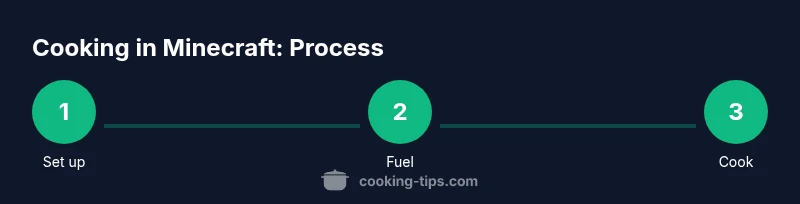
A smooth cooking workflow follows a clear sequence: gather items, place the furnace, add fuel, load raw items, wait for smelting, collect cooked items, and, if possible, upgrade to a smoker for speed. You can extend this workflow by batch-cooking multiple items in one session and by planning fuel use in advance. The goal is reliable, repeatable results that keep you fed as you roam the world.
Fuel Efficiency and Inventory Management
Fuel management is a critical part of cooking in Minecraft. Coal and charcoal are common choices, with charcoal often sourced from wood-based resources, which can help you sustain cooking when mining is limited. If you’re short on minerals, wooden planks can serve as a temporary fuel, though they burn out quickly. Batch cooking small groups of items reduces the number of refuels and speeds up your overall workflow. Keeping raw foods, cooked foods, and fuels organized in separate chests accelerates decisions during tense moments.
Common Mistakes and Quick Fixes
Common pitfalls include forgetting to add fuel, misplacing items in the wrong slot, or leaving a furnace unattended with an empty output. A quick fix is to always carry a small stack of fuel and a few raw items in your hotbar so you can start cooking the moment you arrive at your station. Another mistake is ignoring the smoker option; if you have one, switching to it when cooking meat makes a noticeable difference in time and fuel efficiency.
Advanced Techniques: Batch Cooking and Smokers
For players who want to optimize resource use, batch cooking with a smoker can dramatically cut cooking times per item. Smoker recipes are the same as furnaces, but the process uses fuel more efficiently in practice and yields cooked items faster. You can pair batch cooking with a chest-based storage system to pre-load raw foods and fuel, then run a continuous cycle of smelting and cooking to maintain a steady supply of cooked meals for longer expeditions.
Practice Scenarios to Apply These Skills
Practice by setting up a prefab kitchen near your mining area. Start with a basic furnace, add coal, and smelt a few raw meat items. Then add a few baked potatoes or cooked cod to diversify your meals. As you grow more confident, upgrade to a smoker and experiment with batch cooking multiple items in one session. Regular practice helps you internalize the steps and speeds up decision-making in survival situations.
Tools & Materials
- Furnace(Craft with 8 cobblestone; place on solid ground)
- Smoker(Faster cooking for meat and other items)
- Blast Furnace(For ore smelting, not primary cooking tool)
- Coal(Primary fuel source)
- Charcoal(Alternative fuel when mining coal is slow)
- Wood/Planks(Secondary fuel when scarce)
- Raw Food Items(Beef, porkchop, chicken, cod, salmon, potatoes)
- Cooking Tools (optional)(Chest, crafting table for efficiency)
Steps
Estimated time: 15-20 minutes
- 1
Place the furnace
Choose a stable spot near your work area and place the furnace on solid ground. This gives you quick access to inputs and outputs without moving far.
Tip: Keep the furnace at chest height for easy access to both the input and output slots. - 2
Add fuel to the furnace
Open the furnace and place a fuel source in the bottom slot. Coal or charcoal are reliable choices; you can use wood if coal is scarce.
Tip: Stock a small reserve of fuel nearby to avoid interruptions during cooking. - 3
Load raw food into the furnace
Place raw food items in the top slot. You can smelt one item at a time; plan a small batch to keep a steady flow.
Tip: Batch cooking saves time and reduces the number of fuel refills. - 4
Wait for cooking to complete
Allow the furnace to process the items. You’ll know it’s finished when the item is fully cooked and the output slot shows the cooked item.
Tip: If you’re running multiple items, stage your inputs so you can swap quickly without losing time. - 5
Collect cooked items
Retrieve the cooked item from the output slot and add it to your inventory. Dispose of any waste or unused items properly.
Tip: Move cooked items to a dedicated storage area to simplify meal planning. - 6
Optional upgrade: use a smoker
If you have a smoker, switch to it to cook items faster and improve fuel efficiency for meat and other foods.
Tip: Place the smoker next to the furnace to switch between tools without moving far.
Quick Answers
Do I need a furnace to cook in Minecraft, or are there alternatives?
A furnace is the standard tool for cooking in Minecraft, with the smoker offering faster results for food. Other cooking options are limited, but you can use a campfire in some scenarios for slower roasting. Always start with a furnace to ensure reliable results.
You’ll mostly use a furnace to cook in Minecraft; a smoker is faster. Campfires exist but are slower options.
What’s the difference between a furnace and a smoker?
The furnace cooks items at a steady pace using fuel, while the smoker speeds up cooking for food items, often using fuel at a similar rate. For meat-heavy meals, the smoker is usually the better choice to save time.
A smoker cooks faster than a furnace for most foods, but it uses fuel at a similar rate.
Which fuels are best for cooking efficiently?
Coal and charcoal are reliable and long-lasting fuels. Wood can be used when you’re short on minerals, but it burns faster. Stockpile fuel to keep cooking uninterrupted.
Coal and charcoal are solid choices; wood works in a pinch.
Can I batch cook multiple items at once?
You can cook items one by one or in small batches as you have space and fuel. Batch cooking reduces downtime between smelts and keeps your station efficient.
Yes, batch cooking is the way to go when you have fuel to spare.
What foods should I prioritize for survival?
Prioritize cooked meats (beef, pork, chicken) and baked potatoes for reliable hunger restoration. Diversify with cooked fish when you have access to fishing.
Cooked meats and baked potatoes are reliable staples.
Is there a faster option than a furnace for cooking?
The smoker offers faster cooking for most foods. For ore-related tasks, use a blast furnace, but it’s not intended for general cooking.
Yes, the smoker is faster for cooking most foods.
Watch Video
Top Takeaways
- Cooked foods restore hunger more efficiently than raw.
- A furnace is the baseline; a smoker speeds things up.
- Plan fuel supply to avoid downtime between batches.
- Organize inputs and outputs for quick access during gameplay.