How to Cook and Season Ground Beef
Master ground beef with a reliable browning technique, balanced seasoning, and practical tips for tacos, sauces, and everyday meals. This guide covers fat choices, safety, and flavor boosters to elevate every dish.


To cook and season ground beef successfully, brown it in a hot skillet until evenly caramelized, then drain excess fat and season with a simple mix of salt, pepper, garlic, and a touch of acid like vinegar or tomato product. Use lean 85/15 for everyday meals, cook to 160°F (71°C), and rest a minute before adding to tacos, sauces, or casseroles.
Why Ground Beef Quality Matters
Ground beef is a versatile staple in many kitchens, but not all packages deliver the same results. The fat content, usually listed as a lean-to-fat ratio like 85/15 or 93/7, directly affects browning, juiciness, and flavor. A higher fat ratio like 80/20 yields richer taste and a juicier texture, which is ideal for tacos, chili, and quick skillet meals. Leaner mixes, such as 90/10 or 93/7, brown faster and render less fat, making them suitable for sauces or diets that favor lower fat. The key is to match the fat level to the dish: heavier fat for bolder, saucier recipes; leaner meat for leaner sauces or meals where you’ll finish with other liquids. Beyond fat, freshness matters. Buy ground beef close to use, keep it cold, and avoid packages that show discoloration in the center. Proper storage—refrigeration at 40°F (4°C) and freezing for longer periods—preserves flavor and texture. When cooked, ground beef should reach an internal temperature of 160°F (71°C) to ensure safety. A thermometer is an essential tool to confirm doneness without overcooking.
Flavor begins with the beef, but the technique determines the outcome. A well-executed browning process creates a fond—the brown bits on the pan—that adds depth to every dish. If you crowd the pan, the meat will steam instead of sear, dulling flavor and leaving more fat pooled in the pan. Use a hot pan, work in batches if needed, and let the first batch brown without constant stirring. Resting the meat briefly after cooking helps set the juices and makes portioning easier. In short, quality beef joined with proper browning and careful handling yields the most dependable results for any ground beef recipe.
contentStrategyNotes: null
Tools & Materials
- Heavy-bottomed skillet or cast-iron pan(12-inch (30 cm) or larger for even browning; preheat before adding meat.)
- Spatula or wooden spoon(Prefer a flat edge to break up meat without malling the surface.)
- Tongs(Helpful for turning larger chunks or draining fat.)
- Instant-read thermometer(Confirm 160°F (71°C) internal temperature.)
- Colander or plate and paper towels(Drain excess fat after browning.)
- Measuring spoons(Useful for seasoning in flexible amounts.)
- Cutting board and knife(Prep aromatics like onion or garlic if using.)
- Optional: Kitchen scale(Helpful for consistent portions when pairing with sauces.)
Steps
Estimated time: 20-25 minutes
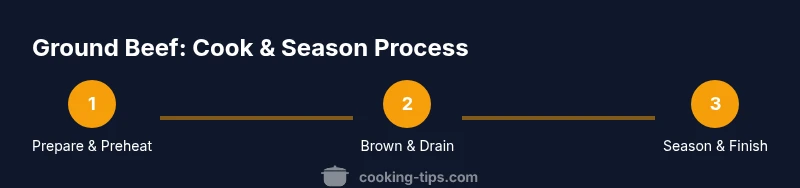
- 1
Prepare ingredients and preheat
Gather ground beef and aromatics, if using. Preheat a heavy skillet over medium-high heat until you see shimmering fat on the surface. This ensures immediate browning when the meat hits the pan, reducing sticking and promoting even color.
Tip: A hot pan is essential—start to heat early so your meat hits a hot surface, not a cold one. - 2
Add beef and break apart
Add the ground beef in a single layer and avoid crowding the pan. Let it sear without stirring for 1–2 minutes to form a brown crust, then start breaking the meat into smaller pieces with your spatula.
Tip: Minimal stirring initially helps develop fond for better flavor. - 3
Brown evenly and render fat
Continue cooking, breaking up the meat as needed, until most pink is gone and the meat is evenly browned. If you see a lot of fat pooling, tilt the pan or carefully drain excess fat at this stage.
Tip: Aim for a deep caramel color rather than pale brown for richer flavor. - 4
Season in layers
Sprinkle salt lightly as you break down the meat, then add black pepper and any dry seasonings. The goal is to season while the meat browns, so flavor develops with the fond on the pan.
Tip: Avoid salting heavily at the start to prevent drawing out too much moisture. - 5
Add aromatics (optional) and deglaze
If using aromatics like minced onion or garlic, add them after the beef browns and cook briefly until fragrant. For extra depth, splash a small amount of acid (vinegar, wine, or tomato product) to deglaze and lift the fond.
Tip: Acids brighten flavors and help integrate seasonings with the beef. - 6
Finish to safe temperature
Continue cooking until the beef reaches an internal temperature of 160°F (71°C) and juices run clear. Remove from heat promptly to prevent overcooking.
Tip: Use a thermometer for accuracy rather than relying on color alone. - 7
Rest briefly and portion
Let the meat rest for 1–3 minutes before using in dishes. Resting redistributes juices and makes it easier to portion for tacos, sauces, or casseroles.
Tip: Resting improves texture and prevents hot juices from splattering when added to sauces. - 8
Use or store safely
If not using immediately, cool quickly and refrigerate within two hours. For longer storage, freeze in airtight containers or bags and label with the date.
Tip: Proper cooling minimizes bacterial growth and preserves flavor.
Quick Answers
What is the best lean-to-fat ratio for ground beef?
For everyday cooking, an 85/15 or 80/20 blend offers a good balance of flavor and juiciness. Leaner blends work well when you’re adding other liquids or toppings, while fatter blends are excellent for tacos and fast-sear dishes where extra moisture is welcome.
For most recipes, aim for 85/15 or 80/20 to balance flavor and moisture.
Should I drain the fat after browning?
Yes, drain excess fat if you want a leaner finish or if you’re making a sauce that doesn’t require extra grease. If you’re finishing a sauce, you can leave a small amount of fat for richness. Always wipe the pan if there’s a lot of oil, to prevent splatter in the next step.
Drain excess fat if you want a leaner finish, or keep a little for richness if making a sauce.
Can I season ground beef while browning?
Yes. Season lightly as you break up the meat, then taste and adjust after browning. If you’re adding aromatics, do so after the beef has started to brown to avoid scorching them.
Season in layers as you brown, then adjust once it’s cooked.
How should I store cooked ground beef?
Cool cooked beef quickly and refrigerate within two hours. Store in airtight containers for 3–4 days, or freeze for longer storage. Reheat to 165°F (74°C) before use.
Refrigerate within two hours and reheat to 165°F before eating.
How can I tell ground beef is cooked safely?
The safest method is to use a meat thermometer to reach 160°F (71°C) internal temperature. Color alone isn’t reliable for doneness, especially with blends containing fat.
Use a thermometer to reach 160°F; color isn’t a reliable indicator.
Watch Video
Top Takeaways
- Sweat flavor through proper browning, not prolonged stirring
- Season in layers for depth, not a single dump
- Cook to 160°F (71°C) and rest briefly for best texture
- Drain fat if using lean meat and finishing sauces to avoid greasiness